Douglas Fir Rough Lumber — Vertical-Grain, Best Strength-to-Weight, Priced per Board Foot
Buy Douglas Fir lumber by the board foot. Kiln-dried Doug Fir in 4/4, 8/4, and 10/4. Rough sawn, S2S, or S4S. The standard structural and timber-frame softwood, with the vertical-grain stock prized for trim, flooring and doors. Factory direct.
Random-width, 8 ft rough sawn boards sized to the board feet you enter.
Douglas Fir is the workhorse structural and timber-frame softwood of North America — the wood with the best strength-to-weight ratio of any common building lumber. Buy kiln-dried Doug Fir by the board foot: select thickness and milling, enter the quantity you need, and add to cart.
Choose Rough Sawn for shop stock you'll mill yourself. Choose S4S for boards surfaced to 150-grit and ready to use. Choose S2S for face-surfaced material you'll joint yourself. Ask us for vertical-grain (VG) stock for trim, flooring and doors.
About Our Douglas Fir
- Douglas Fir ( Pseudotsuga menziesii ) — a softwood, and despite the name not a true fir
- The best strength-to-weight ratio of any common building wood — the standard for timber framing, beams and structural work
- Vertical-grain (VG) stock stays flat and reads cleanly — prized for trim, flooring, doors and windows
- Warm reddish-tan heartwood with a pale yellowish sapwood; a bold, straight grain
- Janka hardness ~660 — soft compared to hardwoods, so it dents more easily than oak or maple
- Moderately rot-resistant heartwood; finish and detail it for exterior use
- Available 4/4 through 10/4 thickness, rough sawn, S2S or S4S
If you are timber framing, building doors or trim, or want a strong, dimensionally reliable softwood, this is the species to buy. For a naturally rot-resistant outdoor wood, see White Oak and Cypress instead.
What Builders Make from Douglas Fir
- Timber frames, beams and posts — the default heavy structural softwood, chosen for strength-to-weight
- Vertical-grain flooring and stair parts — VG stock wears evenly and lays flat
- Doors, windows and trim — straight-grained and stable, the traditional VG fir millwork stock
- Plywood and structural veneer — the benchmark softwood plywood species
- Boat framing and heavy construction — strong, stiff and readily available in long lengths
Grade, Thickness and Board-Foot Pricing
Our Douglas Fir is kiln-dried and sold by the board foot — one board foot is 144 cubic inches (a 12×12×1″ board). We stock 4/4 through 10/4; vertical-grain stock, beams and timbers, wide or long boards, and truckload quantities are quoted on request through the form below.
Call 412.641.0177 with questions or custom quantity requests.
- Douglas Fir Finished Boards — Cut to exact width and length, per piece
- Douglas Fir Bulk — 500 BF minimum, LTL and truckload
- All Species Rough Lumber — 16 species available
- Douglas Fir Beams & Timbers — quoted on request
- White Oak Lumber — Appalachian, closed-pore and rot-resistant
- Red Oak Lumber — Appalachian, #1 Common and better
- Walnut Lumber — American Black Walnut, no stain needed
- Cherry Lumber — Appalachian Black Cherry, patinas with light
- Maple Lumber — Maple, Janka 1,450
- Cypress Lumber — Southern Cypress, naturally rot-resistant
- Western Red Cedar Lumber — light, aromatic, weather-resistant
- Spanish Cedar Lumber — the traditional door and window softwood
- Poplar Lumber — the value paint-grade hardwood
Douglas Fir at a Glance
The technical properties builders, woodworkers and specifiers ask about most, for Douglas Fir (Pseudotsuga menziesii) — a softwood, so its numbers read differently from the hardwoods.
| Botanical name | Pseudotsuga menziesii — family Pinaceae; a softwood, and not a true fir (the genus name means "false hemlock") |
|---|---|
| Also known as | Doug fir, Douglas-fir, Oregon pine, Coast Douglas fir, red fir |
| Where it grows | Western North America — Coast Douglas Fir along the Pacific from British Columbia to California, and a Rocky Mountain variety inland |
| Average dried weight | ~32 lbs/ft³ (510 kg/m³) — moderate; light for its strength |
| Specific gravity | 0.45 basic / 0.51 at 12% MC |
| Janka hardness | ~660 lbf (2,900 N) — soft (a softwood); it dents more easily than oak or maple, so the hardness framing differs from our hardwood pages |
| Strength | Exceptional — the best strength-to-weight ratio of any common building wood, with high stiffness (MOE) and bending strength; the standard structural and timber-frame lumber |
| Rot & insect resistance | Moderately durable heartwood — better than pine or spruce, but not in the class of White Oak, Cypress or Teak; finish and detail it for exterior use |
| Grain & texture | Generally straight-grained with a medium-coarse texture and a pronounced contrast between soft light earlywood and hard dark latewood; vertical-grain (VG) stock shows tight, even parallel lines |
| Color | Warm reddish-tan to light reddish-brown heartwood; pale yellowish-white sapwood |
| Machinability | Works well with sharp tools and holds fasteners strongly, but the hard/soft earlywood-latewood bands can tear out or wear tooling unevenly — sharp blades help; VG stock machines most predictably |
| Gluing & finishing | Glues well; can be resinous, so seal knots and pitch pockets before finishing |
| Paintability | Takes paint and stain, but the earlywood/latewood banding can telegraph and stain blotchy — use a conditioner or gel stain; VG stock finishes far more evenly and holds paint well over primer |
| Stability | Dimensionally reliable once kiln-dried; vertical-grain stock stays the flattest and moves least across its width |
| Sustainability | One of the most abundant and heavily managed timber species in North America; widely and sustainably harvested, not a listed or threatened species |
The Story of Douglas Fir
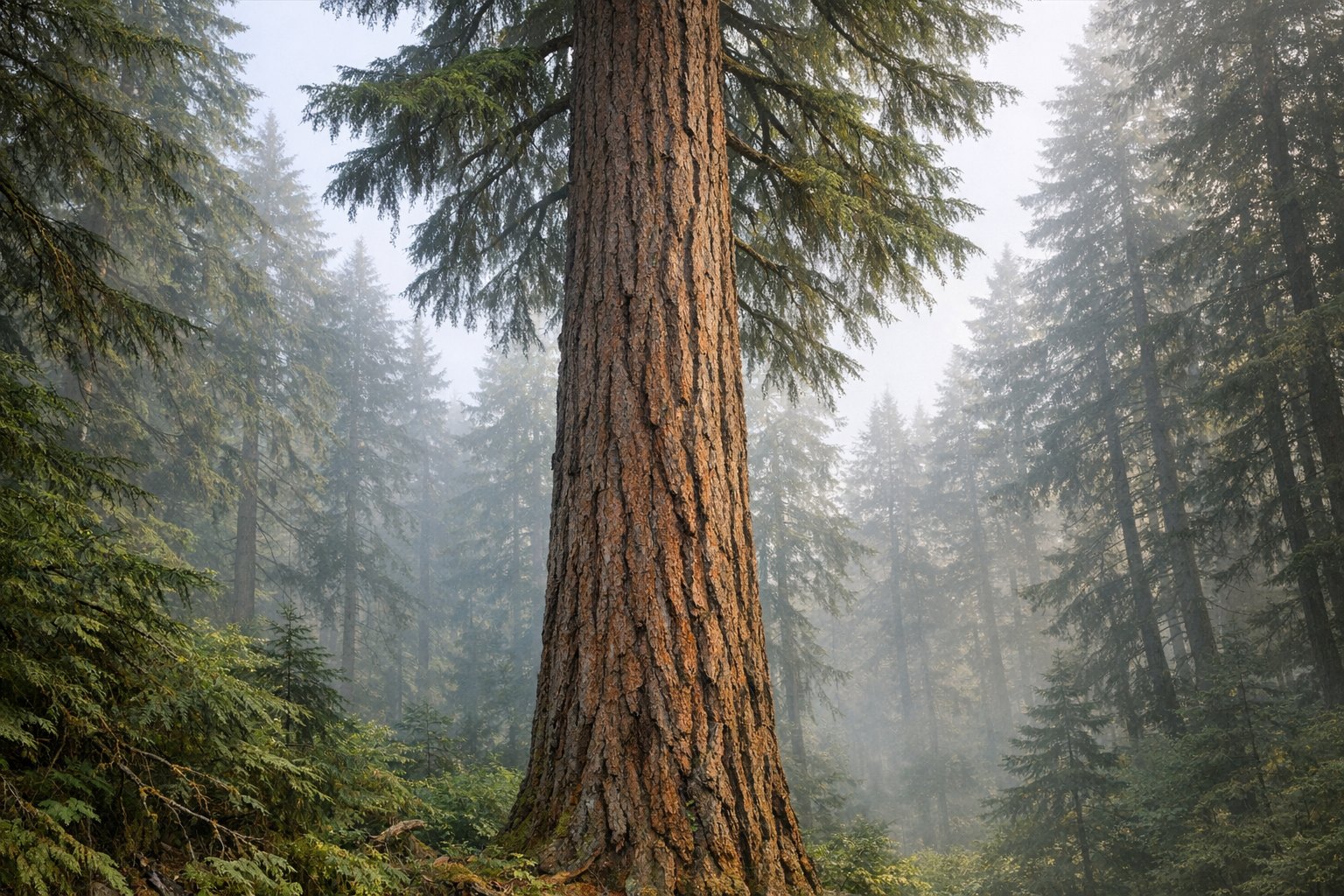
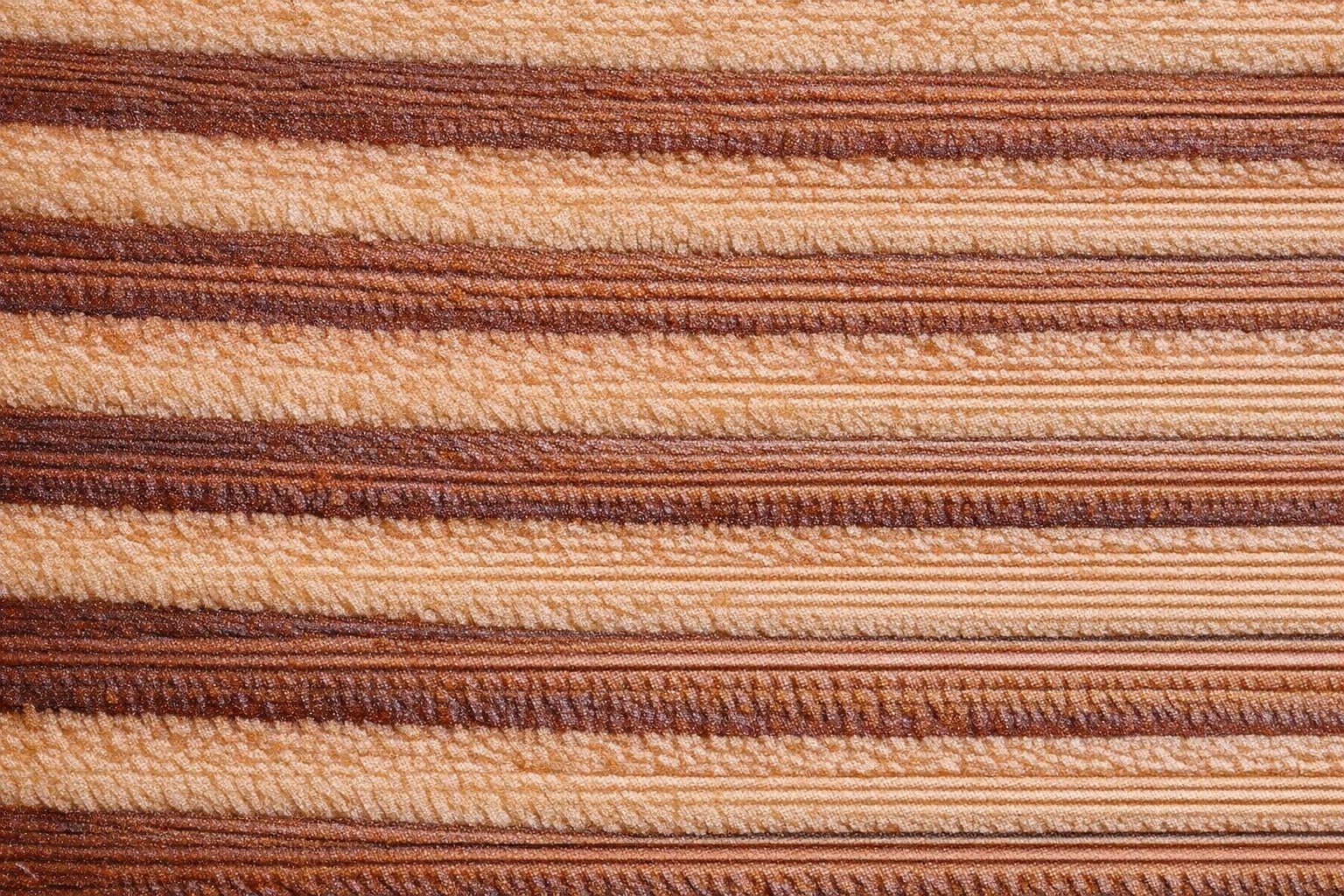
Douglas Fir is Pseudotsuga menziesii, a towering coniferous softwood of western North America — Coast Douglas Fir runs the Pacific slope from British Columbia to California, and a Rocky Mountain variety grows inland. A mature tree can reach well over 200 feet on a tall, straight, spire-topped trunk, which is exactly why it yields the long, clear, structurally reliable timber that built the West. Its name is a standing puzzle: despite being called a fir, it is not a true fir at all.
Not a fir, not a hemlock
The genus Pseudotsuga literally means "false hemlock," and Douglas Fir belongs to neither the true firs (Abies) nor the hemlocks — which is why careful writers hyphenate it "Douglas-fir." The lumber trade has called it Oregon pine and red fir over the years, but by any name it is prized for one thing above all: strength. Pound for pound it has the best strength-to-weight ratio of any common building wood, with high stiffness and bending strength, and that made it the default framing, beam and timber-frame lumber across the continent.
What it is made into today
Douglas Fir is first a structural wood — timber frames, exposed beams and posts, wall and floor framing, and the benchmark softwood plywood and veneer. But its vertical-grain (VG) stock has a second life as fine millwork: cut so the growth rings run perpendicular to the face, VG fir shows tight, straight, even lines, stays flat, and wears predictably, which is why it is the traditional choice for flooring, stair parts, doors, windows and trim. It also goes into boat framing and heavy construction wherever long, strong, available lengths are wanted.
Working with it
At roughly 660 on the Janka scale Douglas Fir is a softwood — strong and stiff, but softer than the hardwoods, so it dents more readily than oak or maple. The trait to plan around is its pronounced contrast between soft, light earlywood and hard, dark latewood: sharp tooling keeps the soft bands from crushing or tearing out, and a conditioner or gel stain evens out the blotchy way it can otherwise take stain. Seal any knots or pitch pockets before finishing. Choose vertical-grain stock when you want the cleanest machining, the flattest boards and the most uniform finish.
Douglas Fir — Common Questions
How is Douglas Fir lumber sold and priced?
Is Douglas Fir a hardwood or a softwood?
Is Douglas Fir actually a true fir?
What is vertical-grain (VG) Douglas Fir and why is it prized?
How rot-resistant is Douglas Fir for exterior use?
Is Douglas Fir easy to work and does it machine well?
Can Douglas Fir be painted or stained?
What do people build with Douglas Fir?
Where does Douglas Fir grow and is it sustainable?
Built to order in Douglas Fir
The same Douglas Fir we sell here goes into our custom millwork
Estate Millwork mills this stock into finished, made-to-size doors, shutters, and cabinet doors — priced to your exact dimensions and shipped nationwide. Start with the product you need:
Custom & Bulk Quotes
Get a Custom Douglas Fir Lumber Quote
Vertical-grain stock, beams and timbers, truckload bulk, surfaced (S2S / S4S) stock, extra-wide or long boards, or a species that isn’t on the calculator — tell us what you need and we’ll price it, usually within 1–2 business days.
Prefer to talk it through? Call 412.641.0177.