Cypress Rough Lumber — Southern Bald Cypress, Rot-Resistant, Priced per Board Foot
Starting at $11.75 per board foot — 4/4 rough sawn Cypress, priced live as you configure
Buy kiln-dried Cypress lumber by the board foot. Southern Bald Cypress in 4/4, 8/4 and 10/4. Rough sawn, S2S or S4S. Naturally rot-resistant, paint-grade exterior stock. Factory direct.
Random-width, 8 ft rough sawn boards sized to the board feet you enter.
Cypress is the wood Estate Millwork reaches for when a shutter or an exterior door is going to be painted and then forgotten about for thirty years. Buy that same kiln-dried Southern Bald Cypress by the board foot — select thickness and milling, enter the quantity you need, and add to cart.
Choose Rough Sawn for shop stock you'll mill yourself. Choose S4S for boards surfaced to 150-grit and ready to use. Choose S2S for face-surfaced material you'll joint yourself.
About Our Cypress
- Southern Bald Cypress ( Taxodium distichum ) — a deciduous conifer out of the river bottoms of the Gulf and lower Atlantic states
- The heartwood carries cypressene, a natural preservative oil that is the reason cypress fence posts and porch decks outlast the houses they were cut for
- Janka hardness 510 — softer than oak, which is exactly why it cuts, shapes and sands without fighting you on a stuck-lite or a louver run
- Color runs from pale straw to honey-brown with a straight, even grain and very little figure to telegraph through paint
- Dimensionally stable once dry — it moves less across the seasons than most softwoods, so painted joints stay closed
- Kiln-dried to 6–8% moisture content, Select and better grade
- Available 4/4, 8/4 and 10/4 — call for thicker or for 5/4 requests
What We Build With It
Painted exterior shutters, porch and pergola parts, exterior door stiles and rails, garden structures, and anything else that will be primed on all six sides and left outdoors. Cypress holds paint better than almost any species we stock: low resin, low density, and no aggressive grain to raise under a waterborne primer. It is also the honest choice when a customer wants “rot-resistant” without the cost of Teak or genuine Mahogany.
One caution: sapwood is not decay-resistant — only the heartwood is. We pull the sap for exterior orders, and you should too. If you want the character grade with the pecky voids, ask for it by name; it is a specialty pull, not what ships by default.
What Builders Make from Cypress
- Exterior doors and siding — naturally rot-resistant, “the wood eternal”
- Porch, pergola and outdoor structures — holds paint and weathers well
- Outdoor furniture — light, stable and decay-resistant
- Beams and timbers — available in long lengths and heavy sections
- Boatbuilding — traditional Southern small-craft planking
Grade, Thickness and Board-Foot Pricing
Our Cypress is Southern (bald) Cypress, Select and better, kiln-dried to 6–8%, and sold by the board foot — one board foot is 144 cubic inches (a 12×12×1″ board). We stock 4/4 through 8/4; pecky Cypress, beams and timbers, long lengths, and truckload quantities are quoted on request through the form below.
Call 412.641.0177 with questions or custom quantity requests.
- Cypress Shutters — Louvered, raised panel and board-and-batten, made to size
- Cypress Doors — Exterior and interior doors in the same stock
- Cedar Rough Lumber — Spanish Cedar and Western Red Cedar, per board foot
- Teak Rough Lumber — Plantation Teak, the marine standard
- Sapele Rough Lumber — African ribbon-stripe, Janka 1,410
- All Species Rough Lumber — 16 species available
- Red Oak Lumber — Appalachian, #1 Common and better
- White Oak Lumber — Closed pore, rot-resistant, exterior grade
- Walnut Lumber — American Black Walnut, no stain needed
- Cherry Lumber — Appalachian Black Cherry, patinas with light
- Maple Lumber — Maple, Janka 1,450
- Mahogany Lumber — Genuine mahogany, stable and rot-resistant
- Sapele Lumber — African ribbon-stripe, Janka 1,410
- Teak Lumber — Plantation Teak, the marine standard
- Cedar Lumber — Spanish Cedar and Western Red Cedar
Bald Cypress at a Glance
The technical properties builders, woodworkers and specifiers ask about most, for Bald Cypress (Taxodium distichum).
| Botanical name | Taxodium distichum — family Cupressaceae; a deciduous conifer (a softwood, botanically) despite dropping its needles each fall |
|---|---|
| Also known as | Bald cypress, Southern cypress, swamp cypress, red cypress, yellow cypress, gulf cypress, tidewater red cypress; old-growth heartwood earned the name “the wood eternal” |
| Where it grows | Native to the wetlands, river bottoms and swamps of the southeastern United States — the Gulf and lower Atlantic coastal plain and up the Mississippi valley |
| Average dried weight | ~32 lbs/ft³ (510 kg/m³) — light |
| Specific gravity | 0.42 basic / 0.46 at 12% MC |
| Janka hardness | ~510 lbf (2,270 N) — soft; it cuts, shapes and sands without fighting you on a louver run or a stuck lite |
| Rot & insect resistance | Durable to very durable heartwood; a natural preservative oil (cypressene) makes it decay- and insect-resistant — the classic exterior, siding, shingle and water-tank wood. Sapwood is not durable and is pulled for exterior orders |
| Grain & texture | Straight grain with a medium, even texture and little figure; occasionally shows a decorative “pecky” pattern from a fungus that grows in the living tree |
| Color | Heartwood light yellowish-brown to reddish-brown; pale, nearly white sapwood — a quiet, even color that does not telegraph through paint |
| Machinability | Works easily with both hand and machine tools; holds fasteners and glues well. Occasional pitch pockets and a slightly greasy feel are the only things to watch |
| Gluing & finishing | Glues, stains and finishes readily and takes clear finishes cleanly |
| Paintability | Excellent — low resin, low density and a mild grain make it one of the best paint-holding softwoods we stock, which is why it is our go-to for a painted exterior shutter or door |
| Stability | Good — once kiln-dried it moves less across the seasons than most softwoods, so painted joints stay closed |
| Sustainability | Abundant and harvested across the southeastern United States; not a threatened species and carries no CITES listing |
The Story of Bald Cypress
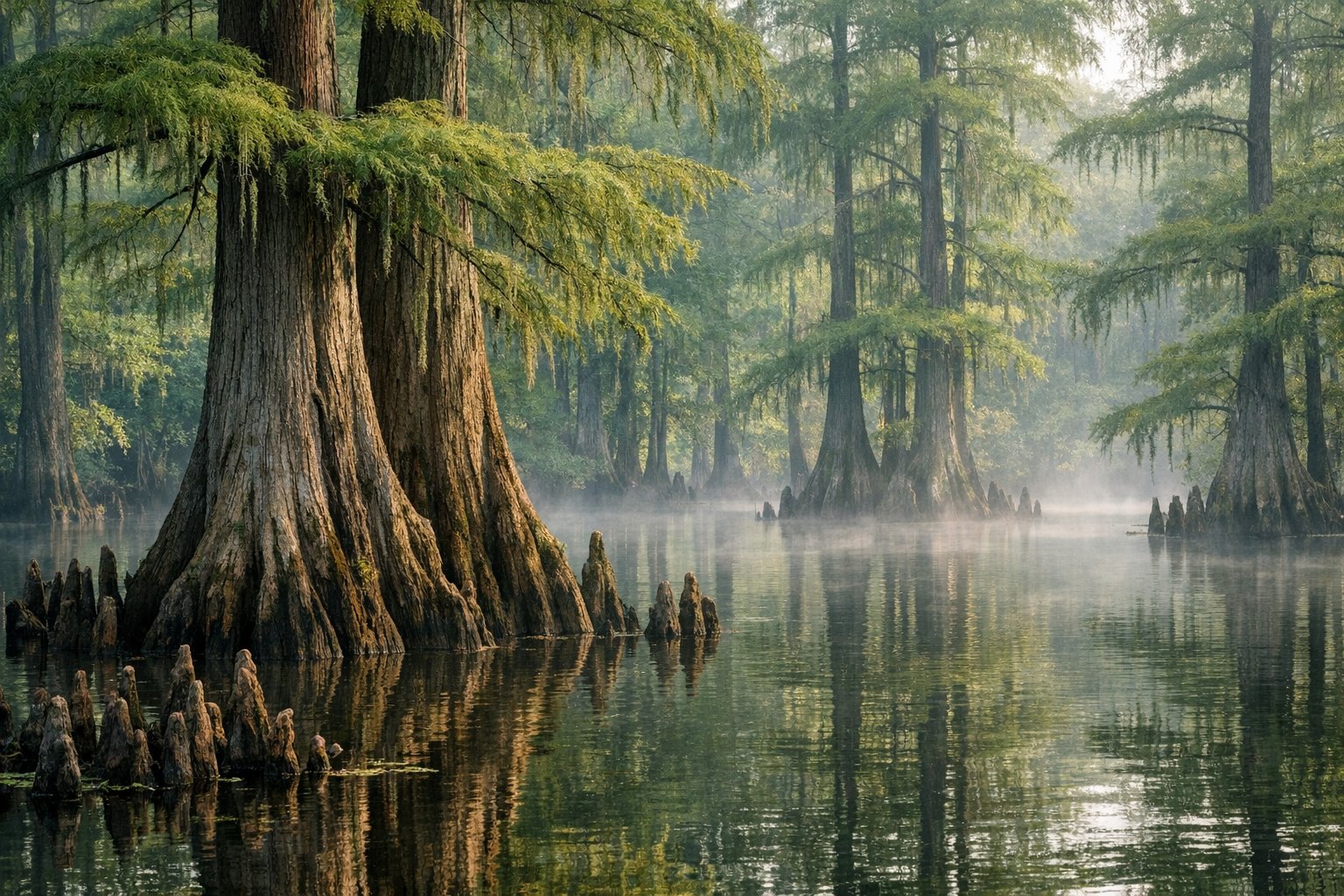
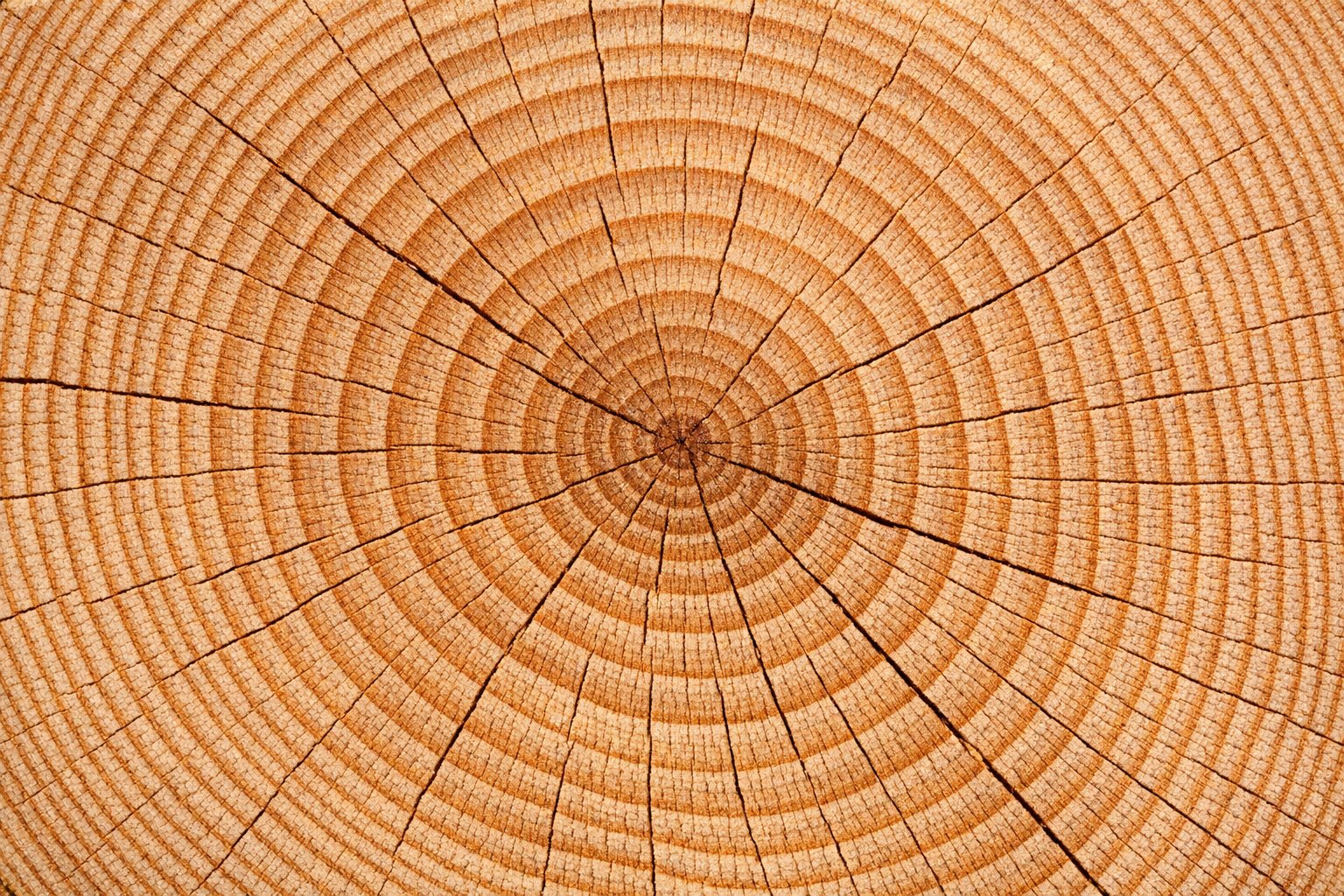
Bald Cypress is Taxodium distichum, a large deciduous conifer of the family Cupressaceae that grows in the standing water and river bottoms of the southeastern United States, sending up the knobby “knees” anyone who has paddled a Gulf swamp will recognize. It is a softwood botanically — and sheds its needles like a hardwood each fall — but the trade sells it as what it is: a light, straight-grained, naturally rot-resistant exterior wood.
The wood eternal
Slow-grown old-growth cypress from the coastal swamps built a reputation over two centuries as the wood that would not rot. Its heartwood carries cypressene, a natural preservative oil, and cypress went into the things that had to survive standing water and weather — shingles, siding, water tanks, greenhouse benches, docks, fence posts and porch decks that routinely outlasted the houses they were attached to. That durability is what earned old-growth stock the name “the wood eternal.”
What it is made into today
Today cypress is the honest rot-resistant choice for anything that will be primed on all six sides and left outdoors: painted exterior shutters, exterior door stiles and rails, siding, porch and pergola parts, garden structures and outdoor furniture. It is also milled into beams and timbers in long, heavy sections, and it still serves as traditional planking for Southern small craft — a durable exterior wood without the cost of Teak or genuine Mahogany.
Working with it
At about 510 on the Janka scale cypress is soft and friendly at the bench — it cuts, shapes and sands easily, and it holds paint better than almost any species we stock. Two things to know: only the heartwood is decay-resistant, so specify heart for anything going outdoors (we pull the sapwood for exterior orders), and the tree occasionally throws small pitch pockets. If you want the character grade with the “pecky” voids, ask for it by name — it is a specialty pull, not what ships by default.
Bald Cypress — Common Questions
How is Cypress lumber sold and priced?
What is Bald Cypress used for?
How hard is Cypress and is it easy to work?
Is Cypress good for exterior and outdoor work?
Does Cypress hold paint well?
How stable is Cypress — will it move or warp?
Where does Cypress grow and is it sustainable?
What is “pecky” cypress?
How does Cypress compare to Western Red Cedar?
Built to order in Cypress
The same Cypress we sell here go into our custom millwork
Estate Millwork mills this stock into finished, made-to-size doors, shutters, and cabinet doors — priced to your exact dimensions and shipped nationwide. Start with the product you need:
Custom Wood Doors From Our Hardwoods
The same kiln-dried stock on this page is what we mill into custom solid-wood doors — built to your exact opening, in any species. Browse by type:
- Interior Doors — solid-wood passage, closet and panel doors, any species
- Entry Doors — exterior-grade front and entry doors, built to the rough opening
- Louvered Doors — fixed or operable louver doors, cabinet height to full height
- Oak Doors — Red and White Oak, our most-ordered door species
- All Custom Doors — every style, priced live in the door designer
Custom & Bulk Quotes
Get a Custom Cypress Lumber Quote
Truckload bulk, surfaced (S2S / S4S) stock, extra-wide or figured boards, or a species that isn’t on the calculator — tell us what you need and we’ll price it, usually within 1–2 business days.
Prefer to talk it through? Call 412.641.0177.