Cherry Rough Lumber — American Black Cherry, Priced per Board Foot
Starting at $5.20 per board foot — 4/4 rough sawn Cherry, priced live as you configure
Buy American Black Cherry lumber by the board foot. Appalachian kiln-dried Cherry in 4/4, 8/4, and 10/4. Rough sawn, S2S, or S4S. Any quantity, factory direct pricing.
Random-width, 8 ft rough sawn boards sized to the board feet you enter.
Estate Millwork uses Appalachian Black Cherry for cabinet doors and interior work where the wood earns its own finish. Buy that same kiln-dried Cherry by the board foot — select thickness and milling, enter the quantity you need, and add to cart.
Choose Rough Sawn for shop stock you'll mill yourself. Choose S4S for boards surfaced to 150-grit and ready to use. Choose S2S for face-surfaced material you'll joint yourself.
About Our Cherry
- American Black Cherry ( Prunus serotina ) — Appalachian stock, the traditional source
- Cherry darkens with light exposure: what leaves here pale pink deepens to a rich red-brown over the first year and keeps going
- Janka hardness 950 — soft enough to machine cleanly, hard enough for cabinetry and furniture
- Kiln-dried to 6–8% moisture content, #1 Common and better grade
- Expect small gum pockets and pin knots — they are characteristic of the species, not a defect
- Available 4/4 through 10/4 thickness
Do not stain Cherry to force the color. Let it patina — a clear finish and a year of daylight does what no stain matches.
What Builders Make from Cherry
- Fine furniture and casework — the American cabinetmaker's wood; ages to a deep red-brown
- Interior doors and cabinet fronts — a clear finish is all it needs
- Turnings and carving — machines cleanly and holds crisp detail
- Mouldings and architectural millwork — mantels, panelling and trim
- Boxes and small goods — humidors, jewelry and keepsake boxes
Grade, Thickness and Board-Foot Pricing
Our Cherry is Appalachian #1 Common and better, kiln-dried to 6–8%, and sold by the board foot — one board foot is 144 cubic inches (a 12×12×1″ board). We stock 4/4 through 10/4; wide, long or figured boards and truckload quantities are quoted on request through the form below.
Call 412.641.0177 with questions or custom quantity requests.
- Cherry Finished Boards — Cut to exact width and length, per piece
- Cherry Bulk — 500 BF minimum, LTL and truckload
- All Species Rough Lumber — 16 species available
- Red Oak Rough Lumber — Appalachian, priced per board foot
- Red Oak Lumber — Appalachian, #1 Common and better
- White Oak Lumber — Closed pore, rot-resistant, exterior grade
- Walnut Lumber — American Black Walnut, no stain needed
- Maple Lumber — Maple, Janka 1,450
- Mahogany Lumber — Genuine mahogany, stable and rot-resistant
- Sapele Lumber — African ribbon-stripe, Janka 1,410
- Teak Lumber — Plantation Teak, the marine standard
- Cypress Lumber — Southern Cypress, naturally rot-resistant
- Cedar Lumber — Spanish Cedar and Western Red Cedar
American Black Cherry at a Glance
The technical properties builders, woodworkers and specifiers ask about most, for American Black Cherry (Prunus serotina).
| Botanical name | Prunus serotina — family Rosaceae, the rose family |
|---|---|
| Also known as | American cherry, black cherry, wild black cherry, cabinet cherry, rum cherry, whiskey cherry |
| Where it grows | Native to the eastern United States; the finest cabinet stock comes from the Appalachian and Allegheny highlands of Pennsylvania, New York and West Virginia |
| Average dried weight | ~35 lbs/ft³ (560 kg/m³) — medium-light |
| Specific gravity | 0.47 basic / 0.50 at 12% MC |
| Janka hardness | ~950 lbf (4,230 N) — medium; soft enough to machine and carve cleanly, hard enough for cabinetry and furniture that gets daily use |
| Rot & insect resistance | Moderately durable to non-durable heartwood — an interior wood; not recommended for ground contact or unprotected exterior exposure |
| Grain & texture | Fine, straight and closed grain with a smooth, satiny texture and excellent natural luster; expect occasional small gum pockets and pin knots, which are characteristic of the species rather than defects |
| Color | Milled a light pinkish-brown, it is the most photo-sensitive of the domestic hardwoods — darkening dramatically with light and time to a rich, warm reddish-brown patina |
| Machinability | Excellent; machines, turns and carves beautifully and holds crisp detail with low cutting resistance |
| Gluing & finishing | Glues well and takes a superb natural or oil finish; it blotches easily when stained, so use a conditioner or gel stain — or finish it clear and let it patina on its own |
| Paintability | Accepts paint over primer, but is almost never painted — the reason to buy cherry is the color it develops for itself |
| Stability | Good once kiln-dried; moderate seasonal movement in service, stable enough for wide furniture panels and casework |
| Sustainability | Abundant and sustainably harvested across its native eastern U.S. range; not listed on CITES |
The Story of American Black Cherry
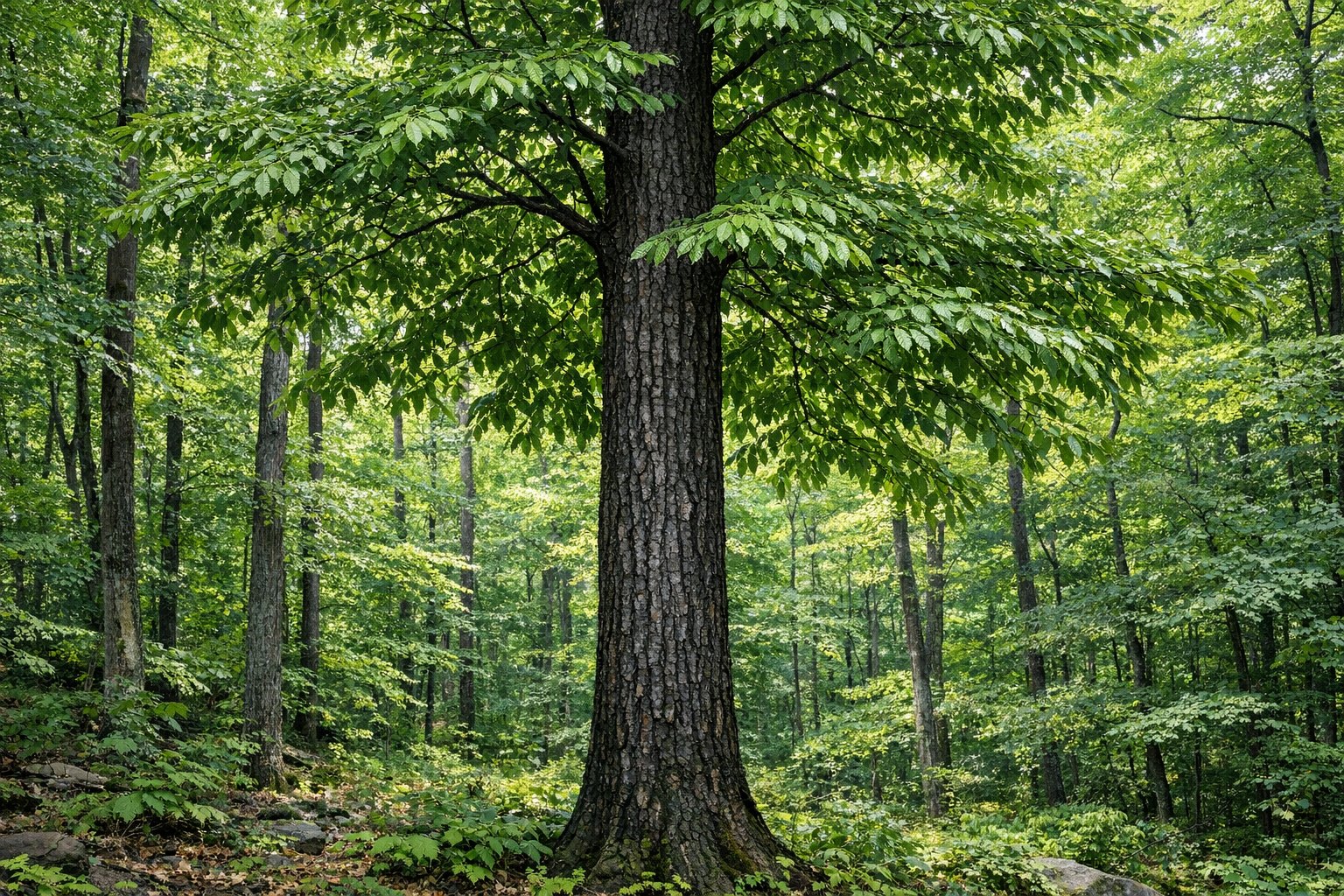
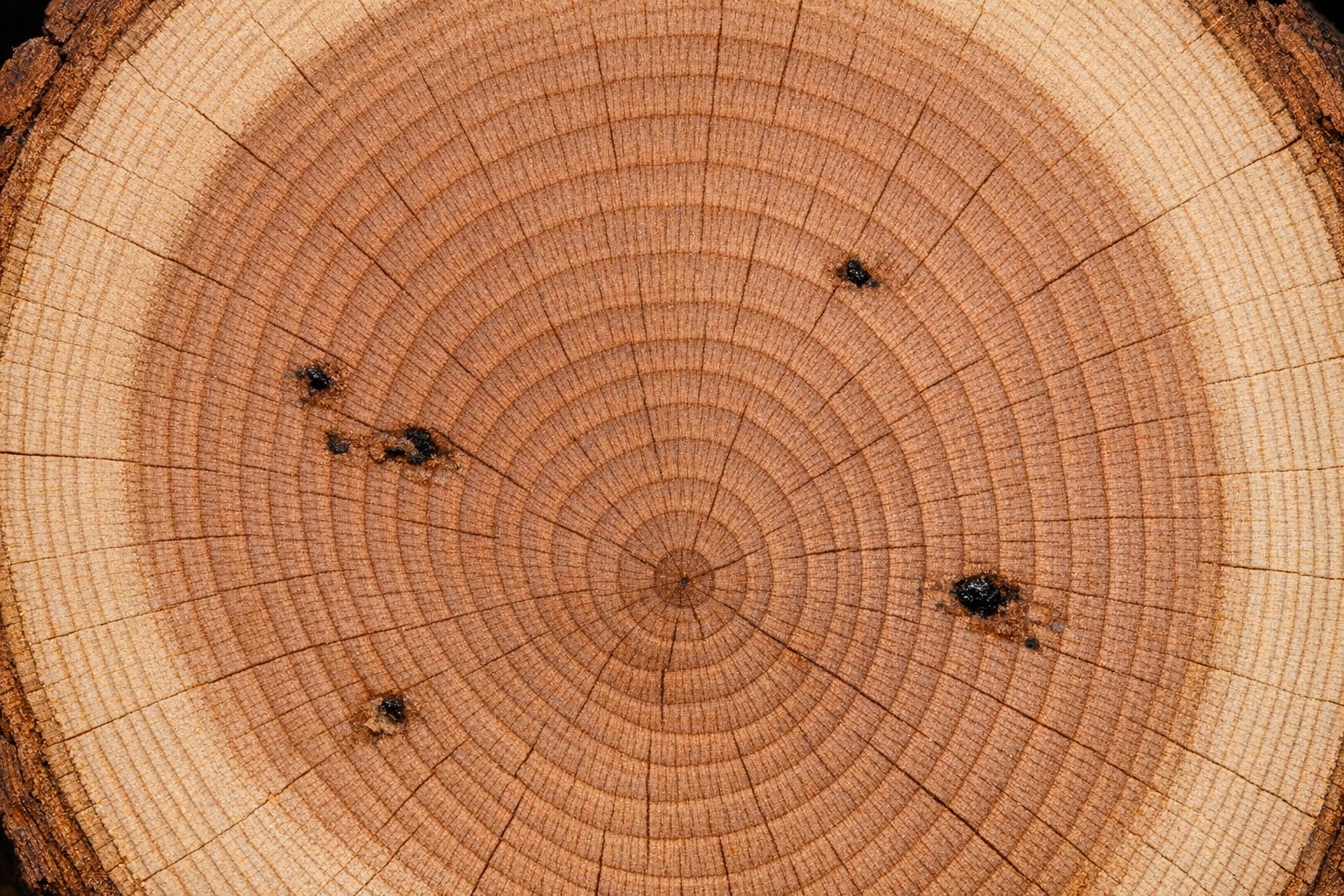
American Black Cherry is Prunus serotina, a member of the rose family (Rosaceae) and the largest of the native North American cherries — a forest tree that can reach 80 to 100 feet in the rich soils of the eastern United States. The prized furniture stock comes from the Appalachian and Allegheny highlands, where slow growth on the Pennsylvania and New York plateaus produces the tight, even grain cabinetmakers ask for by name.
The American cabinetmaker's wood
Long before mahogany was widely available inland, cherry was the wood colonial and Federal-era American furniture makers reached for — worked so consistently in New England and Pennsylvania that it earned the name "New England mahogany." Its fine closed grain, warm color and willingness to hold crisp carved and turned detail made it the domestic answer to the imported cabinet woods, and it has held that place in American furniture for more than two centuries.
What it is made into today
Cherry remains a first-choice wood for fine furniture and casework, kitchen and cabinet doors, interior doors and paneling, mouldings and mantels, and turnings and carvings. It is also a favorite for humidors, jewelry and keepsake boxes, and other small goods, where its satiny surface and deepening color show to their best. In our own shop we build cabinet doors and interior millwork from the same Appalachian stock we sell here by the board foot.
Working with it
At around 950 on the Janka scale cherry sits in an easy middle ground: it planes, turns and carves cleanly, sands to a glassy surface and glues without trouble. The two things to plan for are color and staining. Cherry is the most light-sensitive of the domestic hardwoods — a board that leaves the shop pale pink will deepen to a rich red-brown over its first year and keep going — so lay out a project from stock that has aged together. And because flat surfaces blotch under pigment stain, most makers skip the stain entirely and finish clear or with oil, letting daylight do the work.
American Black Cherry — Common Questions
How is Cherry lumber sold and priced?
What do people build with Cherry?
How hard is Cherry and is it easy to work?
Is Cherry suitable for exterior use?
Does Cherry need to be stained to get its color?
Why does my Cherry blotch when I stain it, and what can I do?
How stable is Cherry — will it move or warp?
Where does Cherry grow and is it sustainable?
How does Cherry compare to Walnut?
Built to order in Cherry
The same Cherry we sell here go into our custom millwork
Estate Millwork mills this stock into finished, made-to-size doors, shutters, and cabinet doors — priced to your exact dimensions and shipped nationwide. Start with the product you need:
Custom Wood Doors From Our Hardwoods
The same kiln-dried stock on this page is what we mill into custom solid-wood doors — built to your exact opening, in any species. Browse by type:
- Interior Doors — solid-wood passage, closet and panel doors, any species
- Entry Doors — exterior-grade front and entry doors, built to the rough opening
- Louvered Doors — fixed or operable louver doors, cabinet height to full height
- Oak Doors — Red and White Oak, our most-ordered door species
- All Custom Doors — every style, priced live in the door designer
Custom & Bulk Quotes
Get a Custom Cherry Lumber Quote
Truckload bulk, surfaced (S2S / S4S) stock, extra-wide or figured boards, or a species that isn’t on the calculator — tell us what you need and we’ll price it, usually within 1–2 business days.
Prefer to talk it through? Call 412.641.0177.