Teak Rough Lumber — Plantation-Grown, Marine Grade, Priced per Board Foot
Starting at $43.00 per board foot — 4/4 rough sawn Teak, priced live as you configure
Buy kiln-dried Teak lumber by the board foot. Plantation-grown Tectona grandis in 4/4, 8/4 and 10/4. Rough sawn, S2S or S4S. The marine-grade standard. Factory direct.
Random-width, 8 ft rough sawn boards sized to the board feet you enter.
Teak is the species you buy when nothing else will hold up: coastal exposure, salt air, a door that faces west with no overhang. Estate Millwork stocks plantation-grown kiln-dried Teak and sells it by the board foot — select thickness and milling, enter the quantity you need, and add to cart.
Choose Rough Sawn for shop stock you'll mill yourself. Choose S4S for boards surfaced to 150-grit and ready to use. Choose S2S for face-surfaced material you'll joint yourself.
About Our Teak
- Teak ( Tectona grandis ), plantation-grown — we do not buy old-growth Burmese stock
- Janka hardness 1,070 — mid-range on paper, but hardness is not why anyone buys Teak
- The heartwood is loaded with natural oils and silica: it resists rot, marine borers and insects with no finish at all, and it is the only species we stock that can genuinely be left bare outdoors
- Golden to medium brown when fresh, weathering to a silver-grey patina if you let it; a clear penetrating oil holds the gold
- Exceptionally stable — among the lowest shrinkage of any commercial hardwood, which is why it is the standard for boat decks and exterior thresholds
- Kiln-dried to 6–8% moisture content, FAS and better grade
- Available 4/4, 8/4 and 10/4 — Teak is priced well above our domestic species; request a quote for volume
What We Build With It
Coastal and oceanfront entry doors, exterior thresholds and sills, shutters on salt-exposed elevations, outdoor furniture and boat trim. When a customer on the water tells us their last door failed in five years, this is the conversation we have.
Working notes: the silica in Teak dulls cutting edges fast — carbide only, and expect to sharpen more often than you would on Mahogany. Wipe the surface with acetone or denatured alcohol immediately before gluing or finishing, because the same oils that keep water out also keep adhesives and film finishes from grabbing.
What Builders Make from Teak
- Boatbuilding and marine decking — the marine standard; naturally oily and rot-proof
- Outdoor furniture — weathers to silver-grey and lasts decades untreated
- Exterior doors and thresholds — stable through wet and dry cycles
- Shower, bath and wet-room joinery — resists water and mildew
- Cutting boards and galley work — dense, close-grained and food-safe
Grade, Thickness and Board-Foot Pricing
Our Teak is plantation-grown, kiln-dried to 6–8%, and sold by the board foot — one board foot is 144 cubic inches (a 12×12×1″ board). We stock 4/4 through 8/4; wide decking stock, long lengths, and truckload quantities are quoted on request through the form below.
Call 412.641.0177 with questions or custom quantity requests.
- Teak Shutters — For salt air and full weather exposure
- Teak Doors — Coastal entry doors in the same stock
- Cypress Rough Lumber — Southern Bald Cypress, rot-resistant, per board foot
- Cedar Rough Lumber — Spanish Cedar and Western Red Cedar, per board foot
- Sapele Rough Lumber — African ribbon-stripe, Janka 1,410
- All Species Rough Lumber — 16 species available
- Red Oak Lumber — Appalachian, #1 Common and better
- White Oak Lumber — Closed pore, rot-resistant, exterior grade
- Walnut Lumber — American Black Walnut, no stain needed
- Cherry Lumber — Appalachian Black Cherry, patinas with light
- Maple Lumber — Maple, Janka 1,450
- Mahogany Lumber — Genuine mahogany, stable and rot-resistant
- Sapele Lumber — African ribbon-stripe, Janka 1,410
- Cypress Lumber — Southern Cypress, naturally rot-resistant
- Cedar Lumber — Spanish Cedar and Western Red Cedar
Teak at a Glance
The technical properties builders, boatwrights and specifiers ask about most, for plantation-grown Teak (Tectona grandis).
| Botanical name | Tectona grandis — family Lamiaceae, the mint family |
|---|---|
| Also known as | Genuine teak, Burmese teak, plantation teak, teca, kyun, sagwan, sagon |
| Where it grows | Native to south and Southeast Asia — India, Myanmar (Burma), Thailand and Laos; now widely plantation-grown across Indonesia and the rest of Southeast Asia, and in Central America and Africa |
| Average dried weight | ~41 lbs/ft³ (655 kg/m³) — medium |
| Specific gravity | 0.55 basic / 0.66 at 12% MC |
| Janka hardness | ~1,070 lbf (4,740 N) — medium; mid-range on paper, but hardness is not why anyone buys Teak |
| Rot & insect resistance | Very durable — the marine benchmark. High natural oil and silica content resist water, rot, marine borers and insects with no finish at all; the one species we stock that can genuinely be left bare outdoors |
| Grain & texture | Straight, occasionally wavy; coarse, uneven texture with a distinctly oily, waxy feel and low natural luster |
| Color | Golden to medium brown when milled, weathering to a silver-grey patina if left unfinished — a clear penetrating oil holds the gold |
| Machinability | Works reasonably well by hand and machine, but the silica content blunts cutting edges quickly — carbide tooling recommended, and expect to sharpen more often than on Mahogany |
| Gluing & finishing | Requires care: the natural oils resist adhesives and film finishes, so wipe surfaces with acetone or denatured alcohol immediately before gluing or finishing |
| Paintability | Rarely painted — the oils fight paint adhesion and the point of Teak is its own color; almost always left bare or oiled |
| Stability | Excellent — among the lowest shrinkage of any commercial hardwood, which is why it is the standard for boat decks, exterior thresholds and salt-exposed joinery |
| Sustainability | Plantation-grown Tectona grandis is not CITES-restricted; we source plantation stock and do not buy old-growth Burmese timber |
The Story of Teak
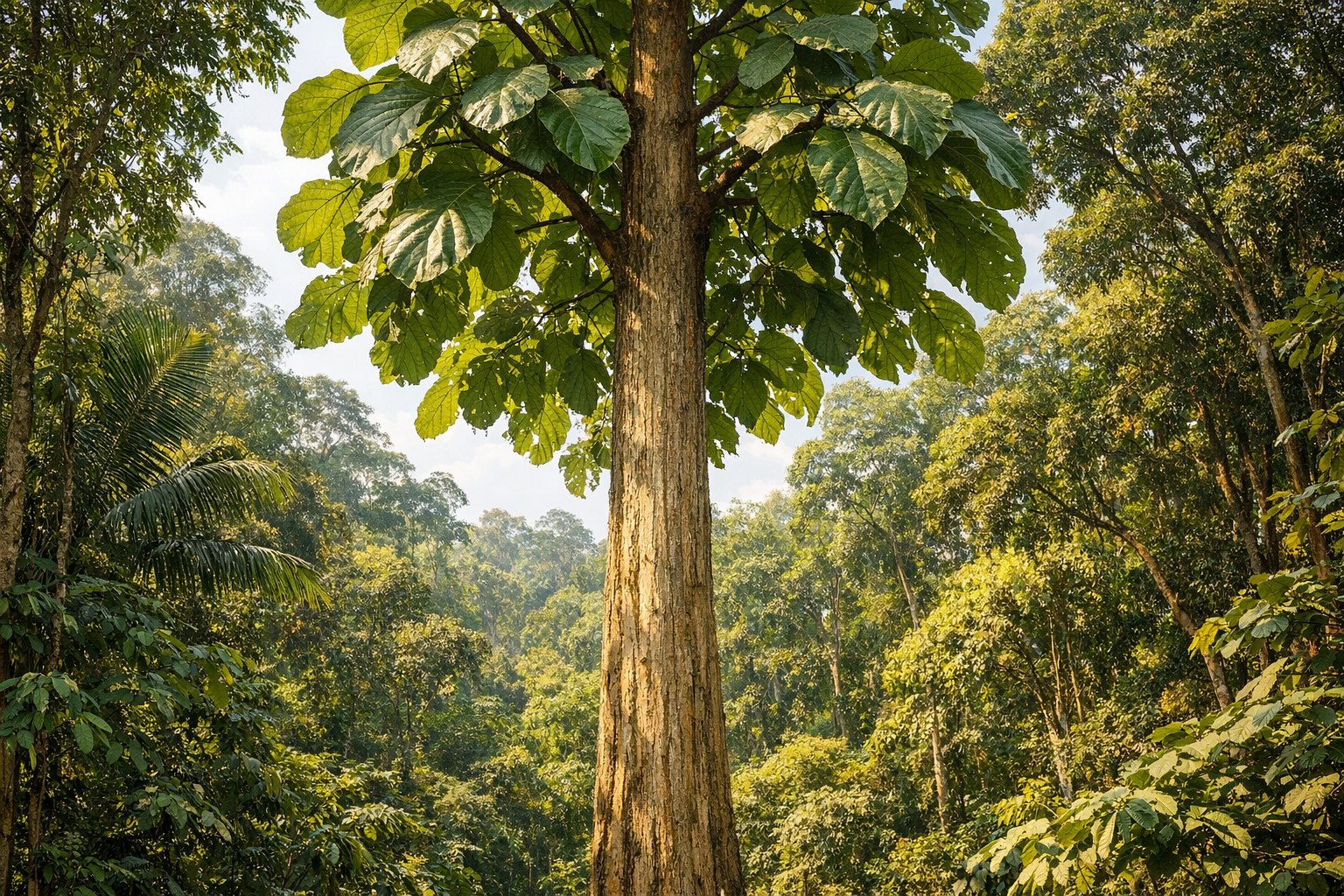
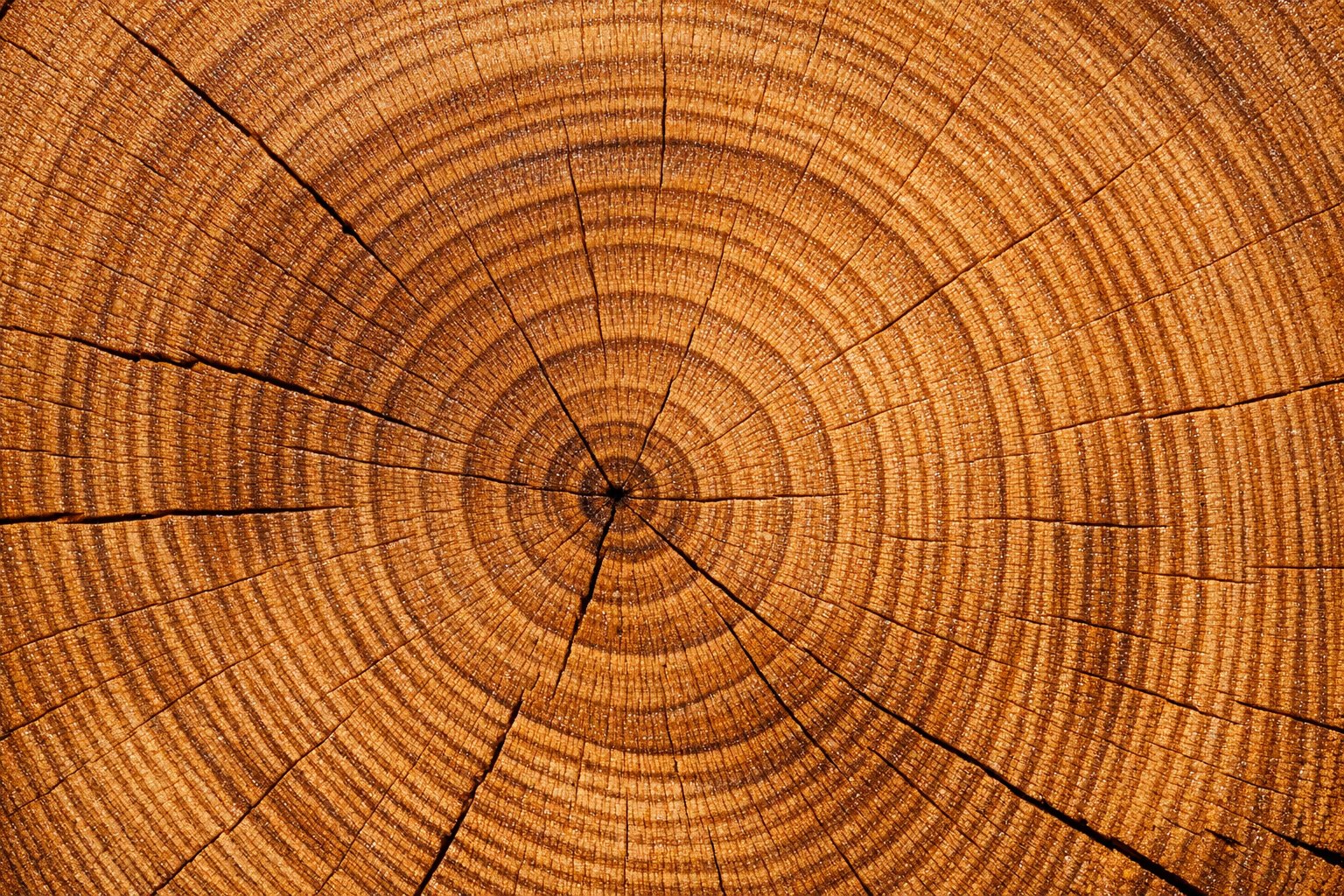
Teak is Tectona grandis, a large deciduous hardwood of the mint family (Lamiaceae) native to the monsoon forests of India, Myanmar, Thailand and Laos, where it grows well over 100 feet with a tall, clean trunk and enormous leaves. What sets it apart is chemistry rather than density: the heartwood is saturated with natural oils and fine silica, and that combination — not its middling 1,070 Janka hardness — is why Teak has been the world's benchmark for weather resistance for centuries.
The wood that went to sea
Teak's reputation was made on the water. Burmese shipwrights and, later, the British and Dutch navies planked decks and hulls in Teak because it held up to salt, sun and marine borers where other woods rotted, and because its oils kept iron fastenings from corroding. Old-growth Burmese Teak was cut so heavily that most Teak in the trade today is plantation-grown — the stock we sell — which spared the natural forests while keeping the same working wood available to builders.
What it is made into today
Teak remains the default for anything that lives outdoors without cover: boat decks and brightwork, outdoor furniture that weathers to silver-grey and lasts decades untreated, coastal and oceanfront entry doors, exterior thresholds and sills, and shutters on salt-exposed elevations. Its density and closed, oily grain also make it a favorite for shower and wet-room joinery, galley work and cutting boards.
Working with it
Teak is not difficult to work, but it demands a few habits. The silica that makes it so durable dulls edges fast, so use carbide tooling and expect to sharpen often. And because the same oils that keep water out also keep adhesives and film finishes from grabbing, wipe every surface with acetone or denatured alcohol immediately before you glue or finish. Left bare, Teak silvers gracefully; a penetrating oil keeps the golden-brown color if that is what you want.
Teak — Common Questions
How is Teak lumber sold and priced?
Why is Teak the standard for boats and outdoor work?
Can Teak really be left bare outdoors?
How hard is Teak and is it easy to work?
Does Teak need to be stained, and can it be painted?
Why does Teak need special prep before gluing or finishing?
How stable is Teak — will it move or warp?
Where does Teak grow and is it sustainable?
How does Teak compare to Mahogany or Cedar for exterior use?
Built to order in Teak
The same Teak we sell here go into our custom millwork
Estate Millwork mills this stock into finished, made-to-size doors, shutters, and cabinet doors — priced to your exact dimensions and shipped nationwide. Start with the product you need:
Custom Wood Doors From Our Hardwoods
The same kiln-dried stock on this page is what we mill into custom solid-wood doors — built to your exact opening, in any species. Browse by type:
- Interior Doors — solid-wood passage, closet and panel doors, any species
- Entry Doors — exterior-grade front and entry doors, built to the rough opening
- Louvered Doors — fixed or operable louver doors, cabinet height to full height
- Oak Doors — Red and White Oak, our most-ordered door species
- All Custom Doors — every style, priced live in the door designer
Custom & Bulk Quotes
Get a Custom Teak Lumber Quote
Truckload bulk, surfaced (S2S / S4S) stock, extra-wide or figured boards, or a species that isn’t on the calculator — tell us what you need and we’ll price it, usually within 1–2 business days.
Prefer to talk it through? Call 412.641.0177.