Maple Rough Lumber — Maple, Priced per Board Foot
Starting at $7.00 per board foot — 4/4 rough sawn Maple, priced live as you configure
Buy Maple lumber by the board foot. Kiln-dried Maple in 4/4, 8/4, and 10/4. Rough sawn, S2S, or S4S. Any quantity, factory direct pricing, national shipping.
Random-width, 8 ft rough sawn boards sized to the board feet you enter.
Maple is what Estate Millwork reaches for when a paint-ready or clear-finished surface has to stay flat and take abuse. Buy that same kiln-dried Maple by the board foot — select thickness and milling, enter the quantity you need, and add to cart.
Choose Rough Sawn for shop stock you'll mill yourself. Choose S4S for boards surfaced to 150-grit and ready to use. Choose S2S for face-surfaced material you'll joint yourself.
About Our Maple
- Maple ( Acer saccharum ) — Northern stock, also sold as sugar maple or rock maple
- Janka hardness 1,450 — the hardest species we stock, and the reason it is the standard for butcher block and floors
- Pale, near-white, and very close grained; it takes a clear finish better than almost anything
- Kiln-dried to 6–8% moisture content, #1 Common and better grade
- Maple blotches under pigmented stain — use a gel stain or a dye, or leave it clear
- Available 4/4 through 10/4 thickness
If you plan to stain Maple dark, buy a board extra and test the finish first. It does not take pigment the way oak does.
What Builders Make from Maple
- Butcher block and countertops — hard maple is the food-contact standard
- Cabinetry and painted furniture — tight, pale grain that finishes glass-smooth
- Flooring — gym, bowling-alley and sports floors, Janka 1,450
- Cutting boards and turnery — closed grain, no taste or odor
- Instrument necks and drum shells — bright, stiff and stable
Grade, Thickness and Board-Foot Pricing
Our Maple is hard (sugar) Maple, #1 Common and better, kiln-dried to 6–8%, and sold by the board foot — one board foot is 144 cubic inches (a 12×12×1″ board). We stock 4/4 through 8/4; curly and birdseye figure, sap (white) selection, wide boards, and truckload quantities are quoted on request through the form below.
Call 412.641.0177 with questions or custom quantity requests.
- Maple Finished Boards — Cut to exact width and length, per piece
- Maple Bulk — 500 BF minimum, LTL and truckload
- All Species Rough Lumber — 16 species available
- Red Oak Rough Lumber — Appalachian, priced per board foot
- Red Oak Lumber — Appalachian, #1 Common and better
- White Oak Lumber — Closed pore, rot-resistant, exterior grade
- Walnut Lumber — American Black Walnut, no stain needed
- Cherry Lumber — Appalachian Black Cherry, patinas with light
- Mahogany Lumber — Genuine mahogany, stable and rot-resistant
- Sapele Lumber — African ribbon-stripe, Janka 1,410
- Teak Lumber — Plantation Teak, the marine standard
- Cypress Lumber — Southern Cypress, naturally rot-resistant
- Cedar Lumber — Spanish Cedar and Western Red Cedar
Hard Maple at a Glance
The technical properties builders, woodworkers and specifiers ask about most, for hard (sugar) Maple (Acer saccharum).
| Botanical name | Acer saccharum — family Sapindaceae (the soapberry family, formerly Aceraceae) |
|---|---|
| Also known as | Hard maple, sugar maple, rock maple, sugar tree; "hard maple" in the trade means A. saccharum and its close relative black maple |
| Where it grows | Native to the northeastern United States and eastern Canada — the Great Lakes states, New England and the Appalachian range south into the uplands |
| Average dried weight | ~44 lbs/ft³ (705 kg/m³) — heavy |
| Specific gravity | 0.56 basic / 0.63 at 12% MC |
| Janka hardness | ~1,450 lbf (6,450 N) — hard and very wear-resistant; the standard for flooring, butcher block and workbench tops |
| Rot & insect resistance | Non-durable to perishable, and susceptible to insect attack — an interior wood, not intended for exterior or ground-contact use |
| Grain & texture | Fine, even and close-grained, usually straight; occasionally wavy or figured as curly (fiddleback), quilted or birdseye — the prized decorative grades |
| Color | Near-white to cream sapwood (the sought-after part, sold as "white" maple) with light reddish-brown heartwood; ages to a warm honey tone |
| Machinability | Machines to a crisp, glassy surface but its hardness and density make it prone to burning — sharp tooling, a steady feed and clean bits are essential |
| Gluing & finishing | Glues well and turns beautifully; blotches under pigmented wiping stains, so use a gel stain, a dye, a conditioner, or finish it clear |
| Paintability | Excellent — the tight, even grain takes paint cleanly over primer with no grain telegraphing, a reason it is favored for painted cabinetry |
| Stability | Moderate — it moves more seasonally than mahogany, so quartersawn or rift stock is preferred for wide, flat panels and tops that must stay true |
| Sustainability | Abundant and sustainably harvested across its northern range; not a CITES-listed or threatened species |
The Story of Hard Maple
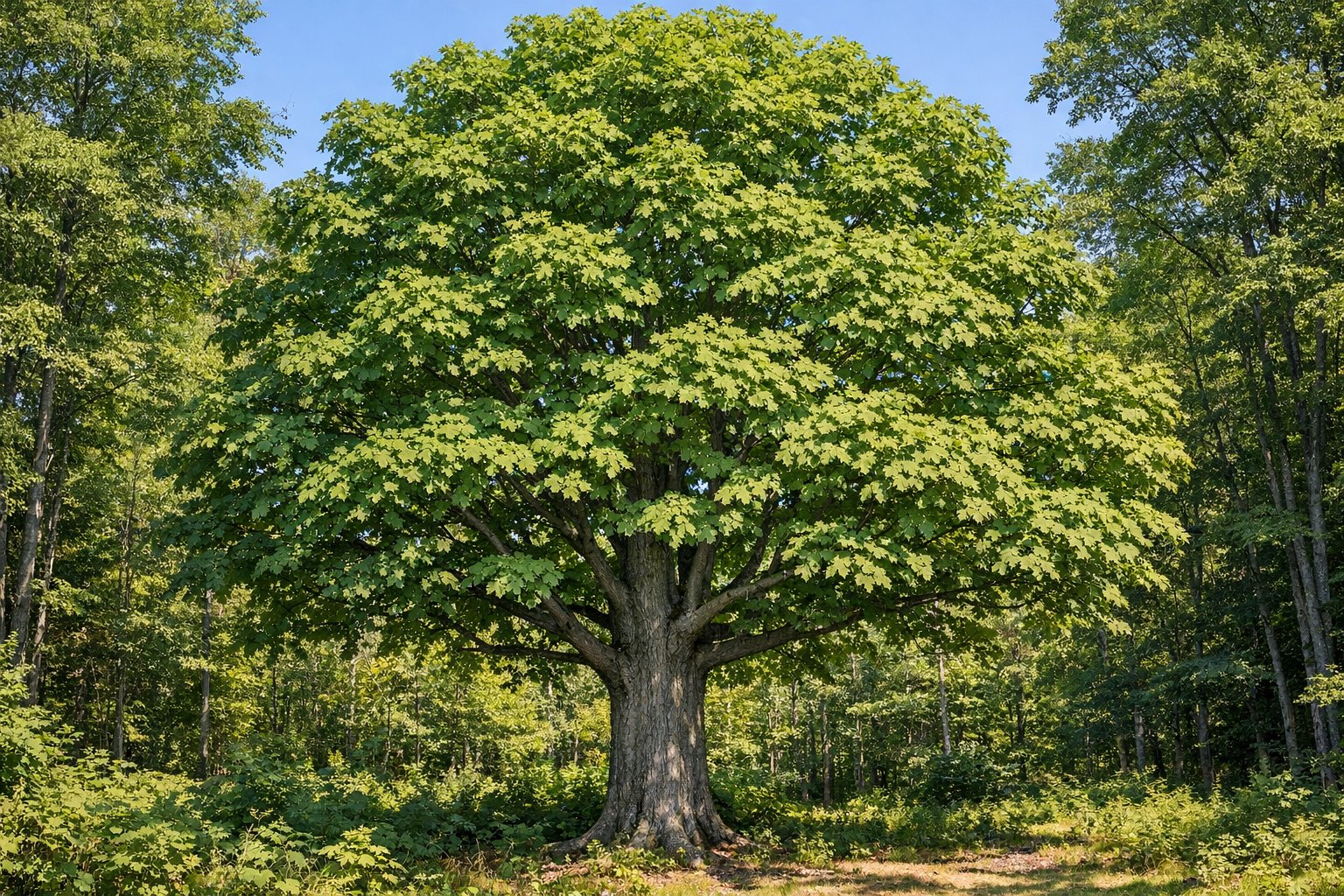
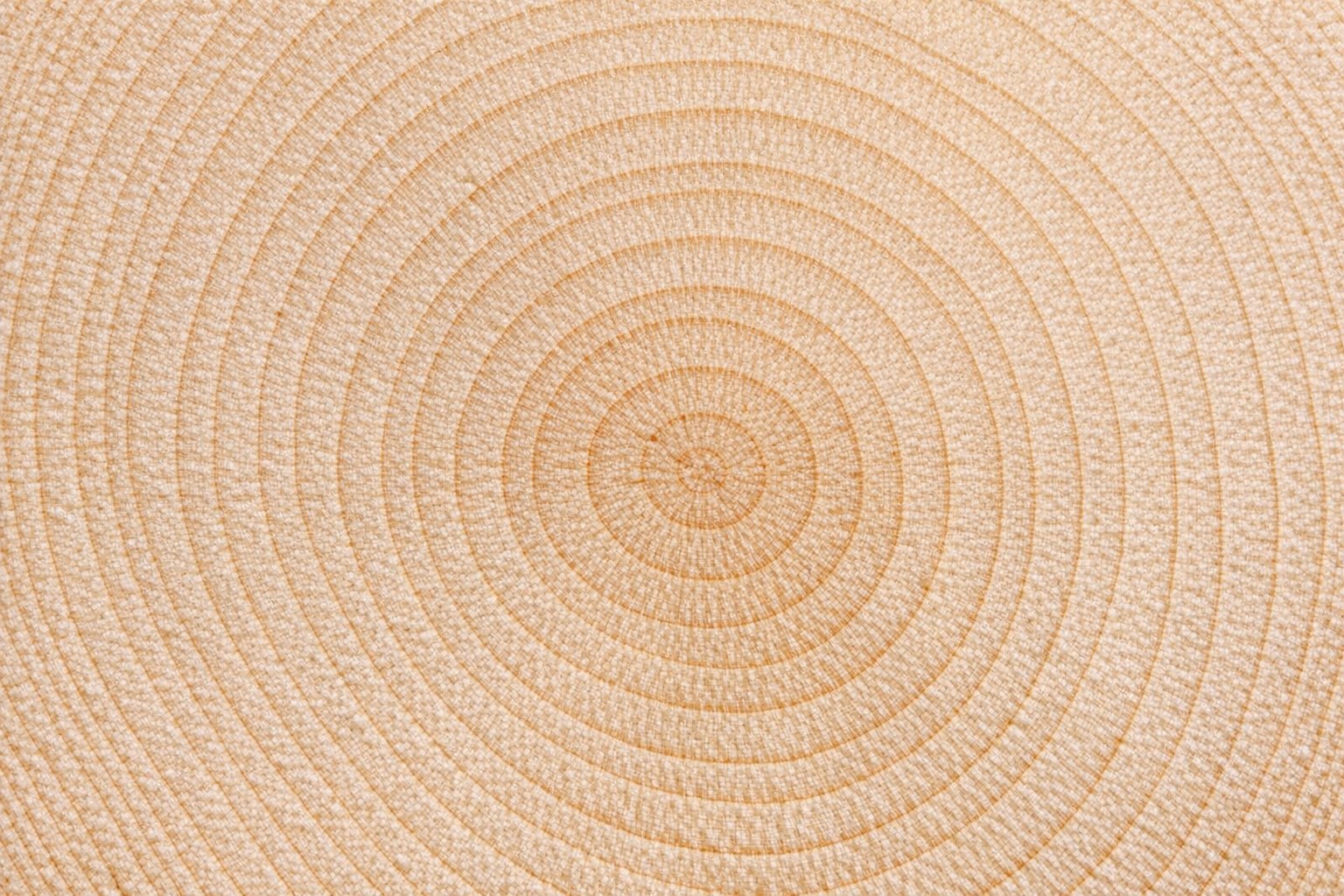
Hard Maple is Acer saccharum, the sugar maple — the same tree that gives us maple syrup and the flaming red-and-orange canopy of a northeastern autumn. It grows across the Great Lakes states, New England and the Appalachians, and it is the hardest, densest, most wear-resistant native hardwood Estate Millwork stocks. When a surface has to stay pale, take a clean finish and survive decades of daily abuse, this is the wood.
The workhorse of American hardwoods
Long before it was a cabinet wood, hard maple was valued for the punishment it could take. It became the standard for bowling-alley lanes, gymnasium and dance floors, butcher blocks, workbench tops and tool handles — anywhere a surface is struck, rolled on or cut against every day. The near-white sapwood, sold as "white" or "sap" maple, is the premium grade: bright, uniform and free of the darker heartwood, it is the face most cabinetmakers want to show.
What it is made into today
Today hard maple goes into kitchen butcher block and countertops (it is the food-contact standard, with no taste or odor), painted and clear-finished cabinetry, fine and painted furniture, flooring, cutting boards and turnery, and the necks, fingerboards and drum shells of musical instruments, where its stiffness and bright tone are prized. Figured grades — curly, quilted and birdseye — command a premium for instrument tops and decorative veneer.
Working with it
At about 1,450 on the Janka scale hard maple is roughly twice as hard as mahogany, so it dulls edges faster and, because it is so dense, it will scorch if a bit or blade lingers — keep tooling sharp and the feed steady. Its one finishing quirk is blotching: hard maple drinks pigmented wiping stains unevenly, so most builders reach for a gel stain, a dye, a wash-coat conditioner, or simply leave it clear. If you plan to stain it dark, buy an extra board and test the finish first. Note that "soft maple" (red and silver maple) is a different, lighter, easier-cutting group — what we ship on this page is genuine hard Acer saccharum.
Hard Maple — Common Questions
How is Hard Maple lumber sold and priced?
What is the difference between hard maple and soft maple?
What do people build with Hard Maple?
How hard is Hard Maple, and is it difficult to work?
Can Hard Maple be used outdoors?
Why does my Hard Maple blotch when I stain it, and how do I fix it?
How stable is Hard Maple — will it move?
Where does Hard Maple grow, and is it sustainable?
How does Hard Maple compare to Red Oak?
Built to order in Maple
The same Maple we sell here goes into our custom millwork
Estate Millwork mills this stock into finished, made-to-size doors, shutters, and cabinet doors — priced to your exact dimensions and shipped nationwide. Start with the product you need:
Custom Wood Doors From Our Hardwoods
The same kiln-dried stock on this page is what we mill into custom solid-wood doors — built to your exact opening, in any species. Browse by type:
- Interior Doors — solid-wood passage, closet and panel doors, any species
- Entry Doors — exterior-grade front and entry doors, built to the rough opening
- Louvered Doors — fixed or operable louver doors, cabinet height to full height
- Oak Doors — Red and White Oak, our most-ordered door species
- All Custom Doors — every style, priced live in the door designer
Custom & Bulk Quotes
Get a Custom Maple Lumber Quote
Truckload bulk, surfaced (S2S / S4S) stock, extra-wide or figured boards, or a species that isn’t on the calculator — tell us what you need and we’ll price it, usually within 1–2 business days.
Prefer to talk it through? Call 412.641.0177.