White Oak Rough Lumber — Appalachian, Rot-Resistant, Priced per Board Foot
Starting at $10.40 per board foot — 4/4 rough sawn White Oak, priced live as you configure
Buy Appalachian White Oak lumber by the board foot. Kiln-dried White Oak in 4/4, 8/4, and 10/4. Rough sawn, S2S, or S4S. Rot-resistant, exterior-grade. Factory direct.
Random-width, 8 ft rough sawn boards sized to the board feet you enter.
White Oak is what Estate Millwork builds exterior doors and shutters from, and has for twenty years. Buy that same Appalachian kiln-dried White Oak by the board foot — select thickness and milling, enter the quantity you need, and add to cart.
Choose Rough Sawn for shop stock you'll mill yourself. Choose S4S for boards surfaced to 150-grit and ready to use. Choose S2S for face-surfaced material you'll joint yourself.
About Our White Oak
- Appalachian White Oak ( Quercus alba ) — tighter grain than southern or western stock
- Closed pore structure: the cells are plugged with tyloses, which is why White Oak holds water out and Red Oak does not
- Naturally rot-resistant — the correct choice for anything that lives outdoors
- Janka hardness 1,360 — noticeably harder than Red Oak
- Kiln-dried to 6–8% moisture content, #1 Common and better grade
- Available 4/4 through 10/4 thickness
If you are building an exterior door, a shutter, or anything that will see weather, this is the species to buy. Rift-sawn and quartersawn White Oak are also available.
What Builders Make from White Oak
- Exterior doors and windows — closed-pore and rot-resistant, the species for weather-exposed millwork
- Boatbuilding and marine trim — the traditional boat frame and rail wood
- Barrels and cooperage — watertight by nature; the wine and whiskey standard
- Quartersawn Arts & Crafts furniture — dramatic ray fleck (tiger oak)
- Flooring and stair parts — Janka 1,360, harder and tighter-grained than Red Oak
Grade, Thickness and Board-Foot Pricing
Our White Oak is #1 Common and better, kiln-dried to 6–8%, and sold by the board foot — one board foot is 144 cubic inches (a 12×12×1″ board). We stock 4/4 through 8/4; rift and quartersawn stock (for ray-fleck figure and maximum stability), wide boards, and truckload quantities are quoted on request through the form below.
Call 412.641.0177 with questions or custom quantity requests.
- White Oak Finished Boards — Cut to exact width and length, per piece
- White Oak Bulk — 500 BF minimum, LTL and truckload
- All Species Rough Lumber — 16 species available
- Red Oak Rough Lumber — Appalachian, priced per board foot
- Red Oak Lumber — Appalachian, #1 Common and better
- Walnut Lumber — American Black Walnut, no stain needed
- Cherry Lumber — Appalachian Black Cherry, patinas with light
- Maple Lumber — Maple, Janka 1,450
- Mahogany Lumber — Genuine mahogany, stable and rot-resistant
- Sapele Lumber — African ribbon-stripe, Janka 1,410
- Teak Lumber — Plantation Teak, the marine standard
- Cypress Lumber — Southern Cypress, naturally rot-resistant
- Cedar Lumber — Spanish Cedar and Western Red Cedar
- Douglas Fir Lumber — best strength-to-weight softwood, vertical-grain trim & timber
White Oak at a Glance
The technical properties builders, woodworkers and specifiers ask about most, for American White Oak (Quercus alba).
| Botanical name | Quercus alba — family Fagaceae, the beech and oak family |
|---|---|
| Also known as | American white oak, stave oak, forked-leaf white oak |
| Where it grows | Native to the eastern United States and into southeastern Canada; our Appalachian stock is prized for its tighter, slower-grown grain |
| Average dried weight | ~47 lbs/ft³ (755 kg/m³) — heavy |
| Specific gravity | 0.60 basic / 0.68 at 12% MC |
| Janka hardness | ~1,350 lbf (5,990 N) — hard; noticeably harder and denser than Red Oak |
| Rot & insect resistance | Very durable — the heartwood pores are plugged with tyloses that make it essentially watertight, the classic wood for boats, wine and whiskey barrels and exterior joinery |
| Grain & texture | Straight-grained with a coarse, uneven texture; prominent medullary rays throw a dramatic flake or "tiger" figure when quartersawn |
| Color | Light to medium golden brown, sometimes with an olive cast; the sapwood is nearly white |
| Machinability | Machines and works well for so hard a wood, but it is dense and heavy on the tools. It reacts with iron in the presence of moisture to leave blue-black stains — use stainless or coated fasteners |
| Gluing & finishing | Glues, stains and finishes well and takes a rich color; the open latewood pores may need grain-filling for a glass-smooth surface |
| Paintability | Accepts paint well over primer, though the open grain telegraphs unless filled — most builders finish it clear or stained so the figure shows |
| Stability | Good in service once properly dried, but slow to dry and prone to checking if rushed; quartersawn and rift stock are the most dimensionally stable |
| Sustainability | Abundant and sustainably harvested across the eastern US; not a listed or threatened species |
The Story of White Oak
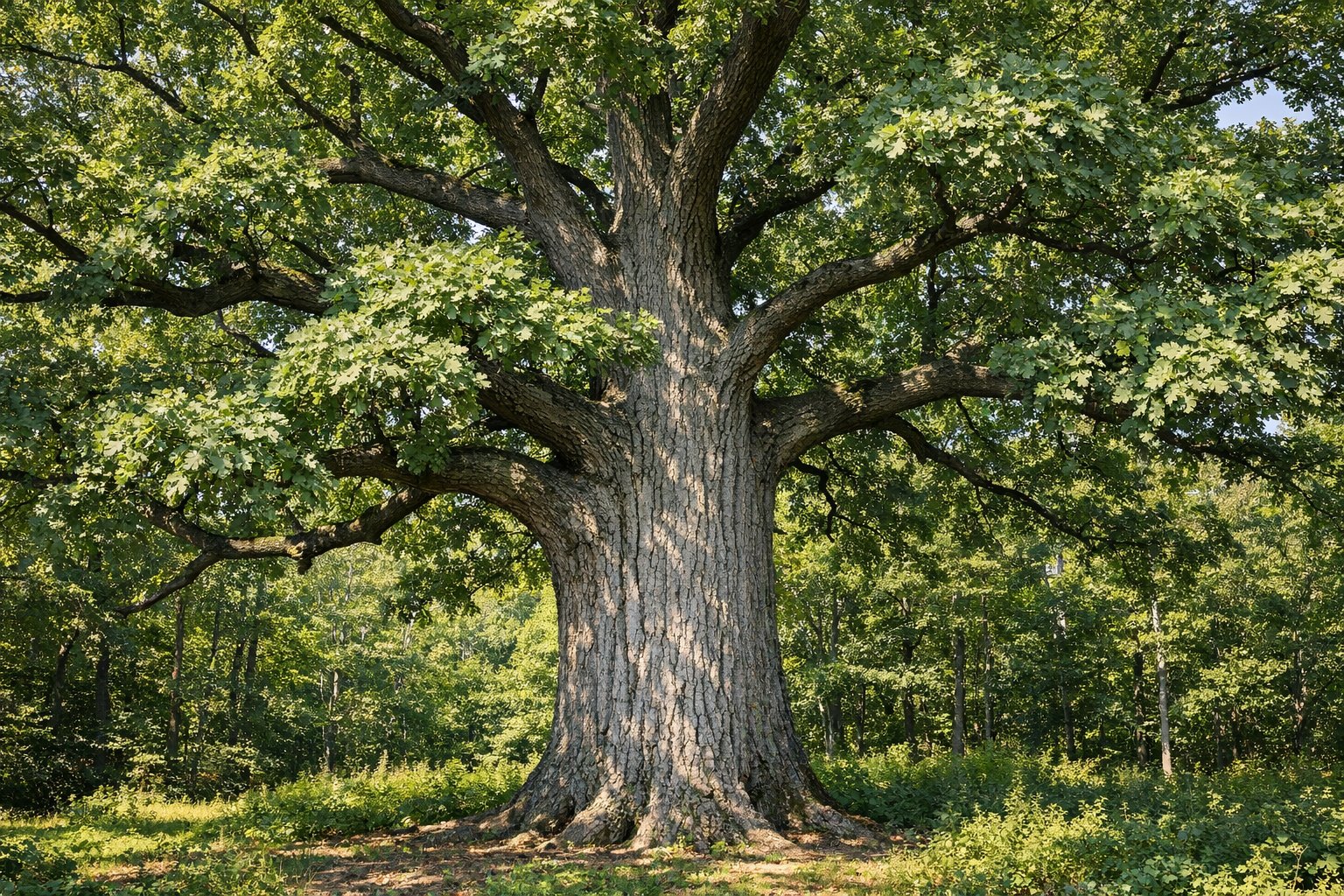
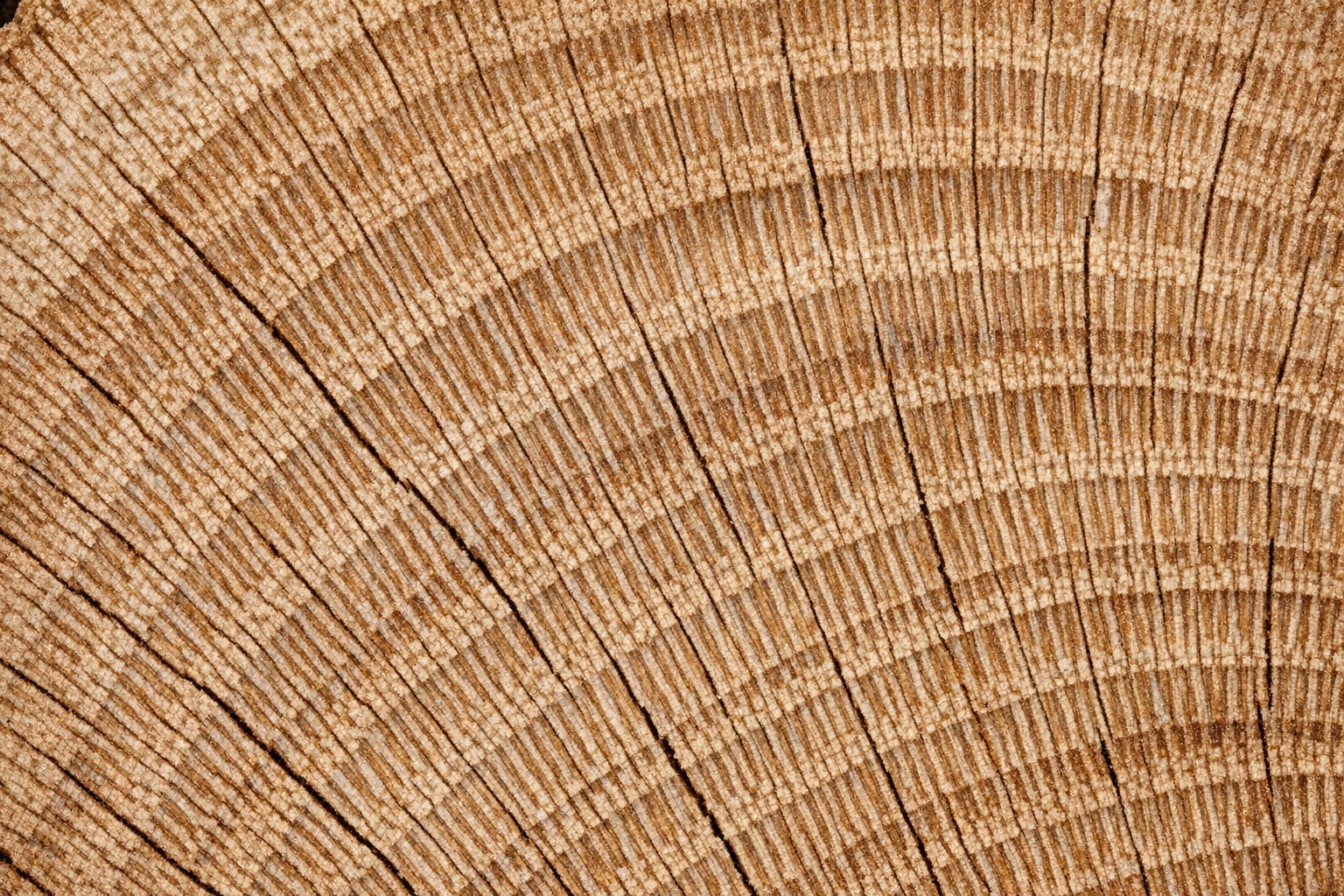
White Oak is Quercus alba, a large, long-lived hardwood of the beech family (Fagaceae) that grows across the eastern United States, from the Appalachians west to the Mississippi and up into southeastern Canada. A mature tree stands 80 to 100 feet with a broad, rounded crown, and the best of it can live three or four centuries. The one trait that sets White Oak apart from every other oak is what happens inside its pores.
The wood that keeps water out
As White Oak heartwood forms, its pores plug themselves with tiny bubble-like growths called tyloses. Red Oak's pores stay open — you can blow air through a Red Oak board end to end — but White Oak's seal shut, and that makes the wood essentially watertight. That single fact wrote its history: White Oak is the wood of tight cooperage (every wine and bourbon barrel is White Oak), of ship framing and planking — the live-oak-and-white-oak hull of the USS Constitution earned the name "Old Ironsides" — and of any exterior joinery that has to shed weather for a lifetime.
What it is made into today
White Oak is what we build exterior doors and shutters from in our own shop, and for the same reason the coopers and shipwrights chose it: it stands up to weather. Beyond doors and shutters it goes into flooring and stair parts, quartersawn Arts & Crafts and Mission furniture (the ray-fleck "tiger oak" figure is the signature of that style), wine and whiskey barrels, boat frames and rails, and outdoor furniture and timber framing.
Working with it
At roughly 1,350 on the Janka scale White Oak is hard, heavy and strong — it wears like iron and holds a crisp edge, but it is more work at the bench than a softer wood and demands sharp, well-powered tools. Two cautions: it reacts with iron in the presence of moisture to leave blue-black stains, so use stainless or coated fasteners; and it is slow to dry and will check or honeycomb if kiln-dried too fast, which is why properly dried stock like ours matters. It glues, stains and finishes beautifully once the open pores are addressed.
White Oak — Common Questions
How is White Oak lumber sold and priced?
What is the difference between White Oak and Red Oak?
Is White Oak good for exterior doors and outdoor work?
How hard is White Oak and is it easy to work?
Can White Oak be painted, and does it need staining?
How stable is White Oak — will it move or warp?
What do people build with White Oak?
Where does White Oak grow and is it sustainable?
What is quartersawn White Oak, or "tiger oak"?
Built to order in White Oak
The same White Oak we sell here go into our custom millwork
Estate Millwork mills this stock into finished, made-to-size doors, shutters, and cabinet doors — priced to your exact dimensions and shipped nationwide. Start with the product you need:
Custom Wood Doors From Our Hardwoods
The same kiln-dried stock on this page is what we mill into custom solid-wood doors — built to your exact opening, in any species. Browse by type:
- Interior Doors — solid-wood passage, closet and panel doors, any species
- Entry Doors — exterior-grade front and entry doors, built to the rough opening
- Louvered Doors — fixed or operable louver doors, cabinet height to full height
- Oak Doors — Red and White Oak, our most-ordered door species
- All Custom Doors — every style, priced live in the door designer
Custom & Bulk Quotes
Get a Custom White Oak Lumber Quote
Truckload bulk, surfaced (S2S / S4S) stock, extra-wide or figured boards, or a species that isn’t on the calculator — tell us what you need and we’ll price it, usually within 1–2 business days.
Prefer to talk it through? Call 412.641.0177.