Knotty Alder Rough Lumber — Rustic Red Alder, Priced per Board Foot
Starting at $4.90 per board foot — 4/4 rough sawn Knotty Alder, priced live as you configure
Buy Knotty Alder by the board foot — warm, rustic and full of sound knots, and it stains as evenly as cherry. Kiln-dried in 4/4, 8/4 and 10/4. Rough sawn, S2S or S4S. Any quantity, factory direct.
Random-width, 8 ft rough sawn boards sized to the board feet you enter.
Knotty Alder is the wood Estate Millwork reaches for when a project wants warmth and character — the sound, tight knots are the look, not a defect. Buy that same kiln-dried Knotty Alder by the board foot — choose thickness and milling, enter the quantity you need, and add to cart.
Choose Rough Sawn for shop stock you'll mill yourself. Choose S4S for boards surfaced to 150-grit and ready to use. Choose S2S for face-surfaced material you'll joint yourself.
About Our Knotty Alder
- Red Alder ( Alnus rubra ) in the knotty (rustic) grade — sound, tight knots left in for a rustic character
- Warm honey to reddish-brown, with a straight, fine, even grain
- Janka hardness about 590 — soft and easy to machine, carve and sand
- Stains evenly and cleanly — it takes a dark or cherry-toned finish without the blotching of maple or poplar
- Kiln-dried to 6–8% moisture content; a stable, lightweight hardwood
- An interior wood — best for cabinetry, doors and furniture, not exterior exposure
- Available 4/4 through 10/4 thickness
Alder is often finished to imitate cherry or walnut at a lower cost — it takes stain so evenly that a toned finish reads as a pricier hardwood. Knotty grade keeps the character; clear grade is available by quote.
What Builders Make from Knotty Alder
- Rustic and lodge-style cabinetry and cabinet doors — the signature knotty look
- Interior doors and rustic entry doors — warm color, even stain
- Furniture, mantels and built-ins — stable and easy to work
- Mouldings and trim — stained knotty character
- Carvings and turnery — soft, close grain that works cleanly
Grade, Thickness and Board-Foot Pricing
Our Knotty Alder is Red Alder in the knotty (rustic) grade, kiln-dried to 6–8%, and sold by the board foot — one board foot is 144 cubic inches (a 12×12×1″ board). We stock 4/4 through 8/4; clear-grade Alder, wide boards and truckload quantities are quoted on request through the form below.
Call 412.641.0177 with questions or custom quantity requests.
- Knotty Alder Finished Boards — Cut to exact width and length, per piece
- Knotty Alder Bulk — 500 BF minimum, LTL and truckload
- All Species Rough Lumber — 16 species available
- Cherry Rough Lumber — the wood Alder is often finished to resemble
- Red Oak Lumber — Appalachian, #1 Common and better
- White Oak Lumber — Closed pore, rot-resistant, exterior grade
- Cherry Lumber — Appalachian Black Cherry, patinas with light
- Maple Lumber — Maple, Janka 1,450
- Mahogany Lumber — Genuine mahogany, stable and rot-resistant
- Sapele Lumber — African ribbon-stripe, Janka 1,410
- Teak Lumber — Plantation Teak, the marine standard
- Cypress Lumber — Southern Cypress, naturally rot-resistant
- Cedar Lumber — Western Red Cedar, aromatic and rot-resistant
Knotty Alder at a Glance
The technical properties builders, woodworkers and specifiers ask about most, for Knotty Alder — the rustic, knot-in grade of Red Alder (Alnus rubra).
| Botanical name | Alnus rubra — family Betulaceae, the birch family. "Knotty Alder" is the rustic, knot-in grade of Red Alder |
|---|---|
| Also known as | Red Alder, Western Alder, Pacific Coast Alder, Oregon Alder; the rustic grade is sold as Knotty Alder |
| Where it grows | The Pacific Northwest coast of North America — from southeast Alaska through British Columbia, Washington and Oregon into northern California; the West Coast's most abundant hardwood |
| Average dried weight | ~28 lbs/ft³ (450 kg/m³) — light |
| Specific gravity | 0.37 basic / 0.45 at 12% MC |
| Janka hardness | ~590 lbf (2,620 N) — soft for a hardwood; machines, carves and sands easily |
| Rot & insect resistance | Non-durable — perishable, with poor resistance to decay and insects. An interior wood only; not for exterior or ground-contact use |
| Grain & texture | Straight grain with a fine, even texture and moderate natural luster; the knotty grade carries sound, tight knots |
| Color | Nearly white when freshly cut, oxidizing quickly to a warm honey-to-reddish-brown; little visible difference between heartwood and sapwood |
| Machinability | Excellent by hand and machine; because it is soft, sharp tooling and a light cut keep faces crisp and prevent fuzzing |
| Gluing & finishing | Glues, stains and finishes exceptionally well; stains very evenly and is the classic low-cost stand-in for cherry and walnut |
| Paintability | Takes paint and primer well, though it is most often stained so the warm color and knots show |
| Stability | Moderate — small-to-moderate seasonal movement (radial ~4.4%, tangential ~7.3% shrinkage); dries readily and stays put once kiln-dried |
| Typical uses | Rustic cabinetry and cabinet doors, interior and rustic entry doors, furniture, mantels, mouldings and trim, turnery and veneer |
| Sustainability | Fast-growing, abundant pioneer species; IUCN Least Concern — one of the most sustainable domestic hardwoods |
| Relative price tier | Economical — among the more affordable domestic hardwoods, well below cherry or walnut |
The Story of Knotty Alder
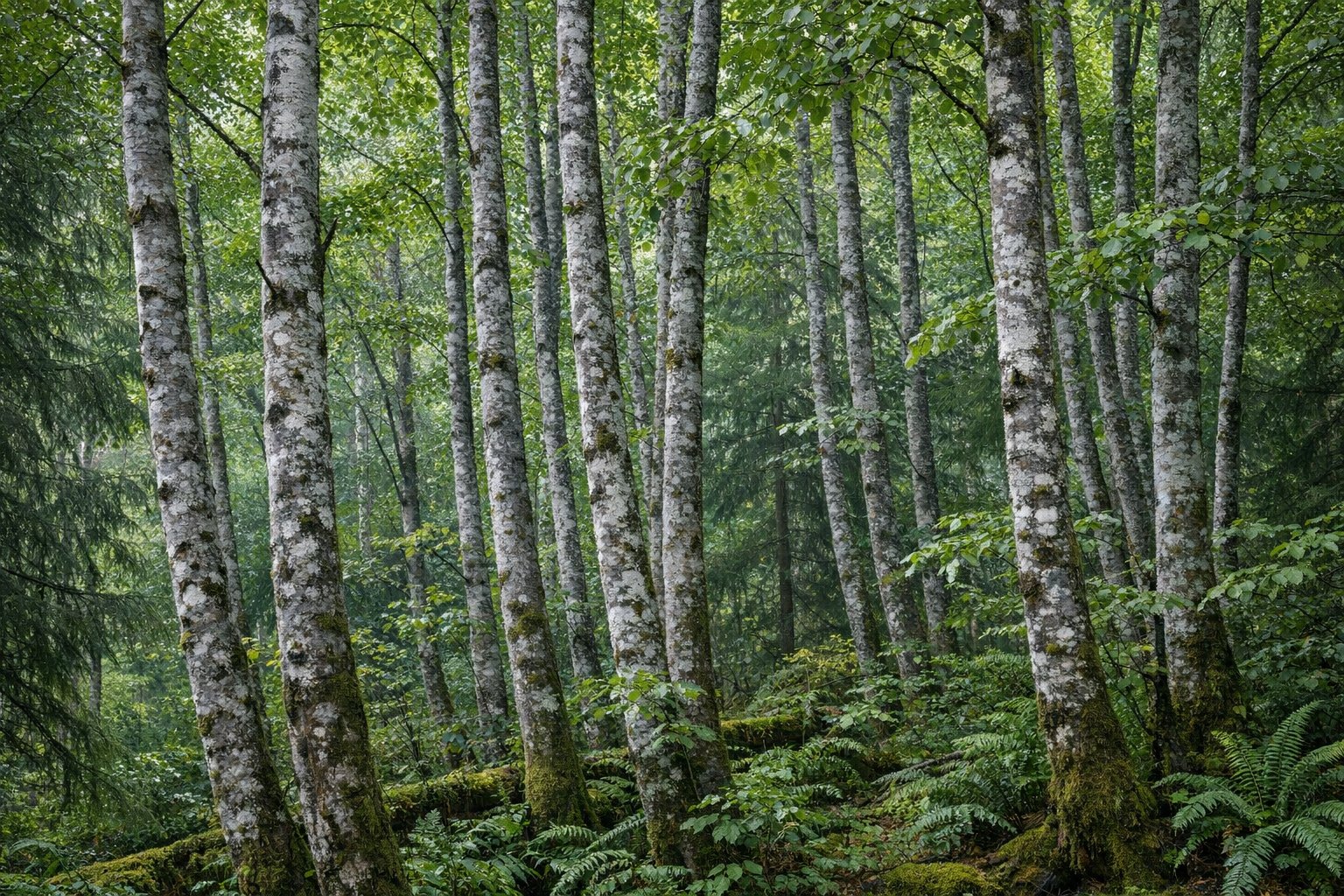
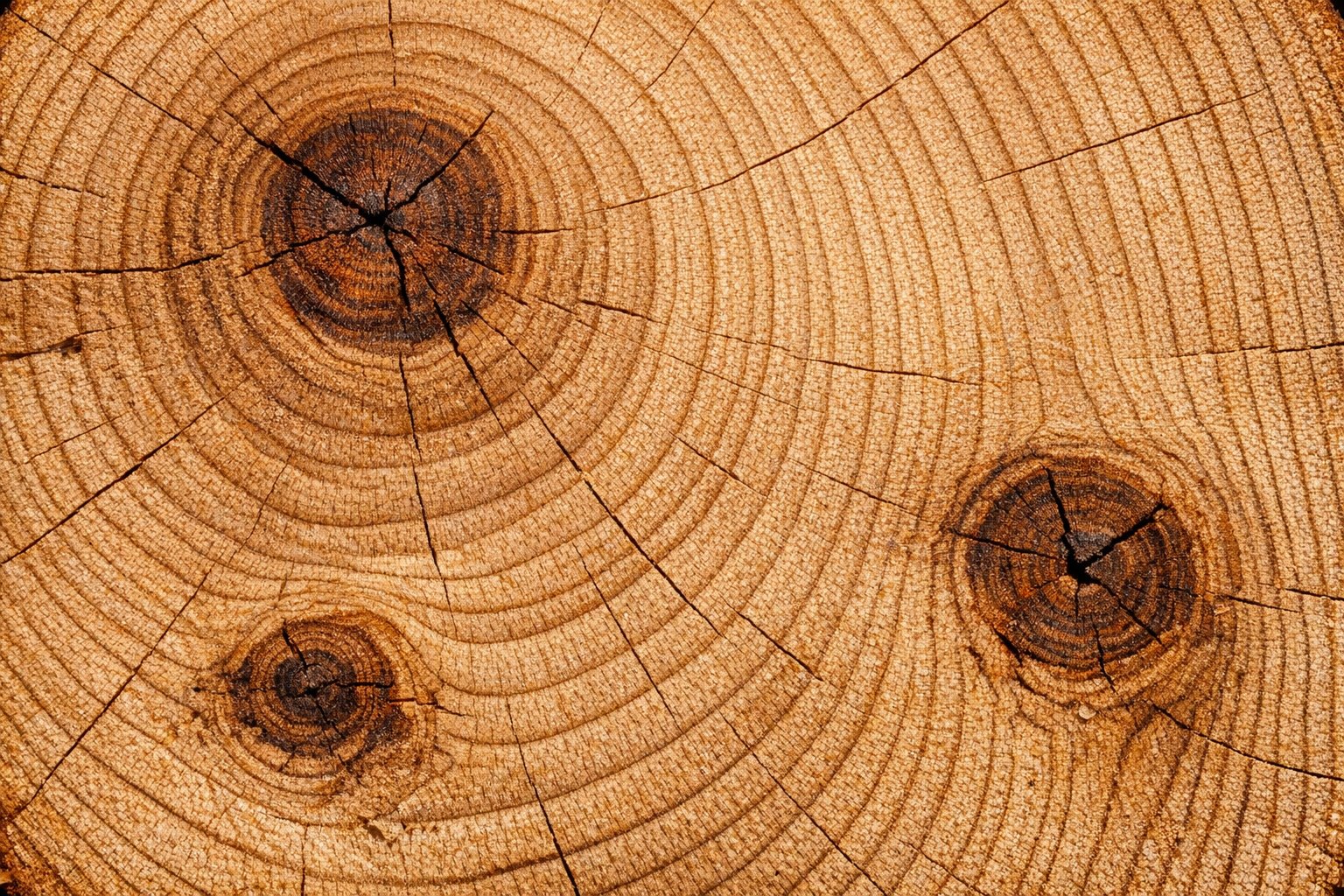
Knotty Alder is Red Alder (Alnus rubra) in its rustic, knot-in grade — a broadleaf hardwood of the birch family that lines the streams and cut-over hillsides of the Pacific Northwest. Its range runs the coast from southeast Alaska down through British Columbia, Washington and Oregon into northern California, and it is by a wide margin the most abundant commercial hardwood on the West Coast.
The Pacific Northwest's workhorse hardwood
Alder is a pioneer species: it springs up fast on disturbed and logged ground, fixes nitrogen in the soil, and matures in only a few decades — which is exactly why it is both plentiful and inexpensive. For generations it was treated as a weed tree and burned; today it is the backbone of the Northwest hardwood industry, feeding cabinet shops, furniture makers and the veneer trade. It is also the classic wood for smoking salmon, which is how many people first meet the name.
Why cabinetmakers reach for it
Alder earned its place in the shop because it stains more evenly than almost any other affordable hardwood. Freshly milled it is nearly white, oxidizing on its own to a warm honey-to-reddish-brown, and it accepts a toned finish so cleanly that a stained alder door reads as cherry or walnut at a fraction of the cost — without the blotching that plagues maple and poplar. In the knotty grade the sound, tight knots and gentle color streaks are left in on purpose: they are the whole point of the rustic, lodge and craftsman looks that made the wood popular in kitchens and great rooms.
Working with it
At roughly 590 on the Janka scale, alder is soft for a hardwood — it planes, carves, turns and sands with very little effort and takes glue and stain beautifully. The trade-offs follow from that softness: it dents and scratches more readily than oak or maple, so it belongs in cabinetry, doors and furniture rather than under hard-use traffic, and a sharp blade and light finishing cut are worth taking to keep the surface crisp. It is also a perishable, non-durable wood with no meaningful decay resistance, so alder is strictly an interior species; for anything facing the weather we steer customers to Mahogany, White Oak, Cypress or Cedar.
Knotty Alder — Common Questions
How is Knotty Alder lumber sold and priced?
Is Knotty Alder a hardwood or a softwood?
What is the difference between Knotty Alder and clear Alder?
Can Knotty Alder be used outdoors or for exterior doors?
Does Knotty Alder take stain well — can it look like cherry or walnut?
How hard is Knotty Alder, and does it dent easily?
What do people build with Knotty Alder?
Where does Knotty Alder come from, and is it sustainable?
How does Knotty Alder compare to Knotty Pine?
Built to order in Knotty Alder
The same Knotty Alder we sell here goes into our custom millwork
Estate Millwork mills this stock into finished, made-to-size rustic cabinet doors, doors and shutters — priced to your exact dimensions and shipped nationwide. Start with the product you need:
Custom & Bulk Quotes
Get a Custom Knotty Alder Lumber Quote
Truckload bulk, surfaced (S2S / S4S) stock, extra-wide or figured boards, or a species that isn’t on the calculator — tell us what you need and we’ll price it, usually within 1–2 business days.
Prefer to talk it through? Call 412.641.0177.