Mahogany Rough Lumber — Genuine Mahogany, Stable and Rot-Resistant, Priced per Board Foot
Starting at $9.80 per board foot — 4/4 rough sawn Mahogany, priced live as you configure
Buy kiln-dried Mahogany lumber by the board foot. Genuine Mahogany in 4/4, 8/4 and 10/4. Rough sawn, S2S or S4S. Stable, rot-resistant, the classic entry-door wood. Factory direct.
Random-width, 8 ft rough sawn boards sized to the board feet you enter.
There is a reason the front doors on hundred-year-old houses are mahogany and are still hanging straight: nothing else combines this much dimensional stability with this much decay resistance and this little effort at the bench. Estate Millwork sells the same kiln-dried genuine Mahogany we build entry doors from, by the board foot.
Choose Rough Sawn for shop stock you'll mill yourself. Choose S4S for boards surfaced to 150-grit and ready to use. Choose S2S for face-surfaced material you'll joint yourself.
About Our Mahogany
- Genuine Mahogany ( Swietenia macrophylla ) — plantation and legally-sourced stock, documented under CITES Appendix II
- Janka hardness around 800 — soft enough to hand-plane and carve, hard enough for a door that gets used every day
- Among the most dimensionally stable woods in commercial use: it barely moves seasonally, which is why a wide mahogany door panel does not split or bind
- Naturally rot-resistant heartwood — a proven exterior species with a maintained finish
- Pinkish-tan when milled, oxidizing to the deep reddish-brown everyone recognizes; it needs no stain to get there
- Kiln-dried to 6–8% moisture content, FAS and better grade
- Available 4/4, 8/4 and 10/4 — request a quote for wide, long or volume orders
What We Build With It
Exterior entry doors and sidelites, interior doors, window sash and screens, shutters, mouldings, mantels and stair parts. Mahogany is our default recommendation for a stain-grade exterior door: it moves the least, it carves the cleanest, and it looks like what a customer pictures when they say “wood door.”
If you are pricing this against Sapele, the trade-off is straightforward: Sapele is harder and less expensive, Mahogany is more stable and easier to work. For a carved or hand-planed door, buy Mahogany. Be aware that “mahogany” is sold loosely in the trade — Philippine, African and Santos “mahogany” are different woods. What we ship on this page is genuine Mahogany.
What Builders Make from Mahogany
- Exterior doors and windows — dimensionally stable and rot-resistant, the premium entry-door wood
- Fine furniture and casework — the traditional 18th-century cabinet wood
- Boatbuilding — planking, trim and brightwork
- Musical instruments — guitar bodies and necks, prized for tone and stability
- Architectural millwork — panelling, mantels and mouldings
Grade, Thickness and Board-Foot Pricing
Our Mahogany is genuine mahogany, FAS/Select grade, kiln-dried to 6–8%, and sold by the board foot — one board foot is 144 cubic inches (a 12×12×1″ board). We stock 4/4 through 8/4; wide and long boards, thicker door stock, and truckload quantities are quoted on request through the form below.
Call 412.641.0177 with questions or custom quantity requests.
- Mahogany Doors — Entry doors and sidelites, made to size
- Mahogany Shutters — Louvered and panel shutters in the same stock
- Cypress Rough Lumber — Southern Bald Cypress, rot-resistant, per board foot
- Cedar Rough Lumber — Spanish Cedar and Western Red Cedar, per board foot
- Teak Rough Lumber — Plantation Teak, the marine standard
- All Species Rough Lumber — 16 species available
- Red Oak Lumber — Appalachian, #1 Common and better
- White Oak Lumber — Closed pore, rot-resistant, exterior grade
- Walnut Lumber — American Black Walnut, no stain needed
- Cherry Lumber — Appalachian Black Cherry, patinas with light
- Maple Lumber — Maple, Janka 1,450
- Sapele Lumber — African ribbon-stripe, Janka 1,410
- Teak Lumber — Plantation Teak, the marine standard
- Cypress Lumber — Southern Cypress, naturally rot-resistant
- Cedar Lumber — Spanish Cedar and Western Red Cedar
Mahogany at a Glance
The technical properties builders, woodworkers and specifiers ask about most, for genuine Mahogany (Swietenia macrophylla).
| Botanical name | Swietenia macrophylla — family Meliaceae, the true mahogany family |
|---|---|
| Also known as | Genuine mahogany, Honduran mahogany, big-leaf mahogany, American mahogany, caoba |
| Where it grows | Native from southern Mexico through Central America into the Amazon basin of South America (Bolivia, Brazil, Peru); now widely plantation-grown in Fiji, India and Southeast Asia |
| Average dried weight | ~37 lbs/ft³ (590 kg/m³) — medium |
| Specific gravity | 0.45 basic / 0.59 at 12% MC |
| Janka hardness | ~800 lbf (3,600 N) — soft to medium; hand-planes and carves easily, yet wears well |
| Rot & insect resistance | Durable; naturally resists decay with a maintained finish, with moderate insect and termite resistance — a proven exterior species |
| Grain & texture | Straight to interlocked, occasionally wavy; medium-to-coarse texture with good natural luster and a ribbon (roe) figure on quartersawn faces |
| Color | Pinkish-tan to pale reddish-brown when milled, oxidizing to the deep reddish-brown everyone recognizes — no stain needed |
| Machinability | Excellent by hand and machine; carves, turns and moulds cleanly. Interlocked grain can tear on quartersawn surfaces — a light cut and a sharp blade prevent it |
| Gluing & finishing | Glues, stains and finishes superbly and takes a high polish; the benchmark wood for a stain-grade finish |
| Paintability | Accepts paint well over primer, but almost always finished clear or oiled so the color and grain show |
| Stability | Excellent — very low shrinkage and among the most dimensionally stable woods in commercial use, which is why wide mahogany door panels do not split or bind |
| Sustainability | Listed on CITES Appendix II; we source legally documented and plantation stock |
The Story of Mahogany

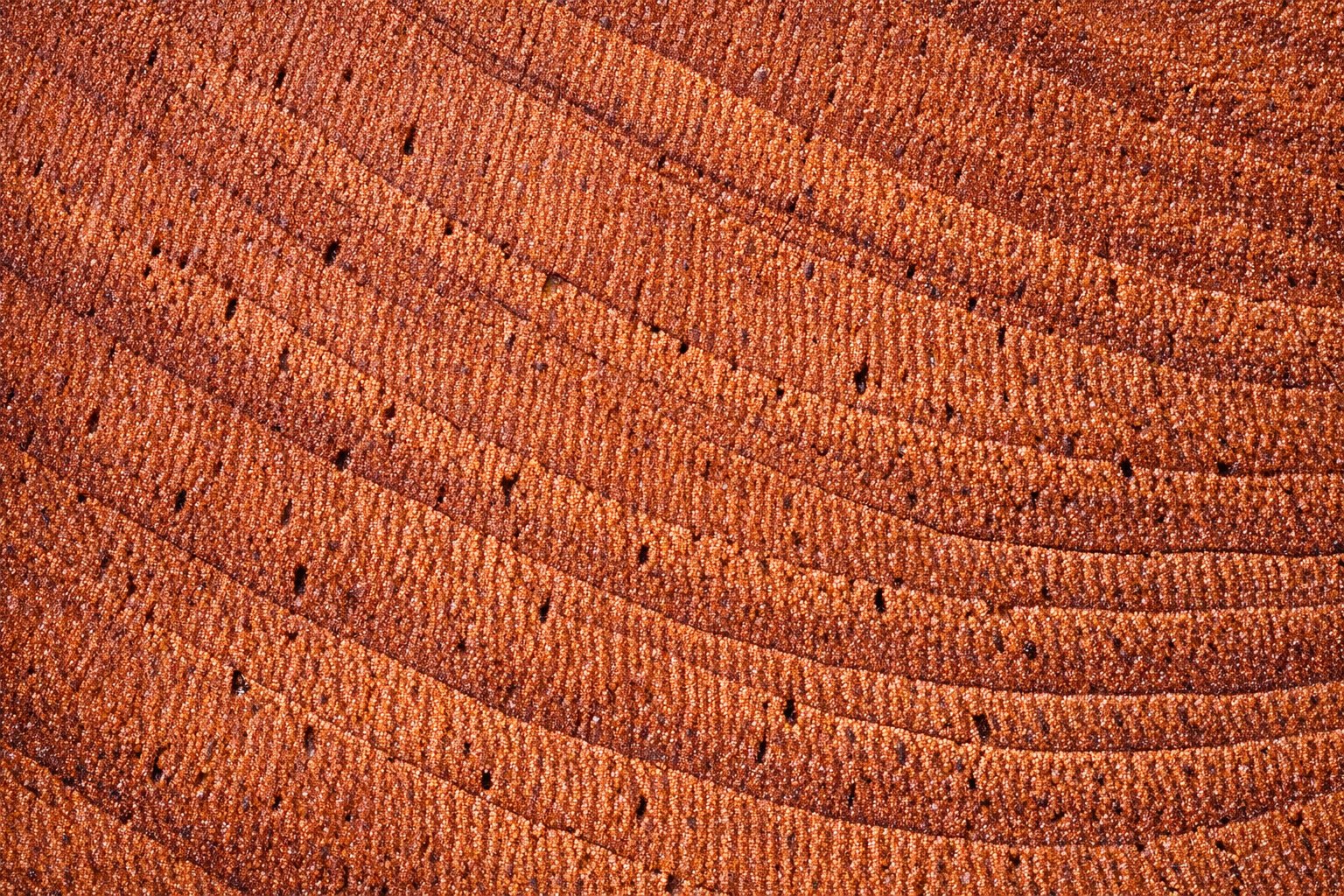
Genuine Mahogany is Swietenia macrophylla, a large broadleaf tree of the mahogany family (Meliaceae) that grows from southern Mexico down through Central America and across the Amazon basin, often reaching well over 150 feet with a clean, buttressed trunk. It is the wood the word "mahogany" was coined for — and the standard every other reddish-brown wood is still measured against.
The wood that built an age of furniture
Mahogany arrived in Europe from the Caribbean in the 1500s and by the 18th century had become the cabinet wood of the Georgian era — the material of Chippendale, Sheraton and Hepplewhite. Its stability, even color and willingness to hold crisp carved detail let makers build wide tabletops and slender chair legs that earlier woods could not. Cuban mahogany (Swietenia mahagoni) was worked so heavily that it was largely exhausted, and the trade shifted to big-leaf Swietenia macrophylla from Honduras and the wider mainland — the "Honduran mahogany" sold today.
What it is made into today
Mahogany remains the premium choice for exterior entry doors and sidelites — the use we put it to in our own shop — because it moves the least of the common door woods and carves the cleanest. Beyond doors it goes into fine furniture and casework, boat planking and brightwork, architectural panelling, mantels and mouldings, and the bodies and necks of guitars, where its stability and warm tone are prized.
Working with it
At roughly 800 on the Janka scale mahogany is soft-to-medium: it planes, carves and turns with little effort and takes glue, stain and polish beautifully. The one thing to watch is interlocked grain, which can tear out on quartersawn faces — a sharp blade and a light finishing cut solve it. Be aware, too, that "mahogany" is sold loosely in the trade: Philippine, African (Khaya, Sapele) and Santos "mahogany" are different woods. What we ship on this page is genuine Swietenia mahogany.
Mahogany — Common Questions
How is Mahogany lumber sold and priced?
What is genuine Mahogany, and how is it different from African or Philippine "mahogany"?
Is Mahogany good for exterior doors and outdoor work?
How hard is Mahogany and is it easy to work?
Does Mahogany need to be stained to get its color?
How stable is Mahogany — will it move or warp?
What do people build with Mahogany?
Where does Mahogany grow and is it sustainable?
How does Mahogany compare to Sapele?
Built to order in Mahogany
The same Mahogany we sell here go into our custom millwork
Estate Millwork mills this stock into finished, made-to-size doors, shutters, and cabinet doors — priced to your exact dimensions and shipped nationwide. Start with the product you need:
Custom Wood Doors From Our Hardwoods
The same kiln-dried stock on this page is what we mill into custom solid-wood doors — built to your exact opening, in any species. Browse by type:
- Interior Doors — solid-wood passage, closet and panel doors, any species
- Entry Doors — exterior-grade front and entry doors, built to the rough opening
- Louvered Doors — fixed or operable louver doors, cabinet height to full height
- Oak Doors — Red and White Oak, our most-ordered door species
- All Custom Doors — every style, priced live in the door designer
Custom & Bulk Quotes
Get a Custom Mahogany Lumber Quote
Truckload bulk, surfaced (S2S / S4S) stock, extra-wide or figured boards, or a species that isn’t on the calculator — tell us what you need and we’ll price it, usually within 1–2 business days.
Prefer to talk it through? Call 412.641.0177.