Poplar Rough Lumber — Yellow Poplar, Priced per Board Foot
Starting at $3.50 per board foot — 4/4 rough sawn Poplar, priced live as you configure
Buy Poplar by the board foot — the paint-grade hardwood standard: stable, close-grained and easy to work. Kiln-dried in 4/4, 8/4 and 10/4. Rough sawn, S2S or S4S. Any quantity, factory direct.
Random-width, 8 ft rough sawn boards sized to the board feet you enter.
Poplar is Estate Millwork's workhorse paint-grade hardwood — the wood we reach for when a surface will be painted and has to stay flat, machine cleanly and hold a crisp profile. Buy that same kiln-dried Poplar by the board foot — choose thickness and milling, enter the quantity you need, and add to cart.
Choose Rough Sawn for shop stock you'll mill yourself. Choose S4S for boards surfaced to 150-grit and ready to use. Choose S2S for face-surfaced material you'll joint yourself.
About Our Poplar
- Yellow Poplar ( Liriodendron tulipifera ) — also sold as tulip poplar or tulipwood; a true hardwood despite the name
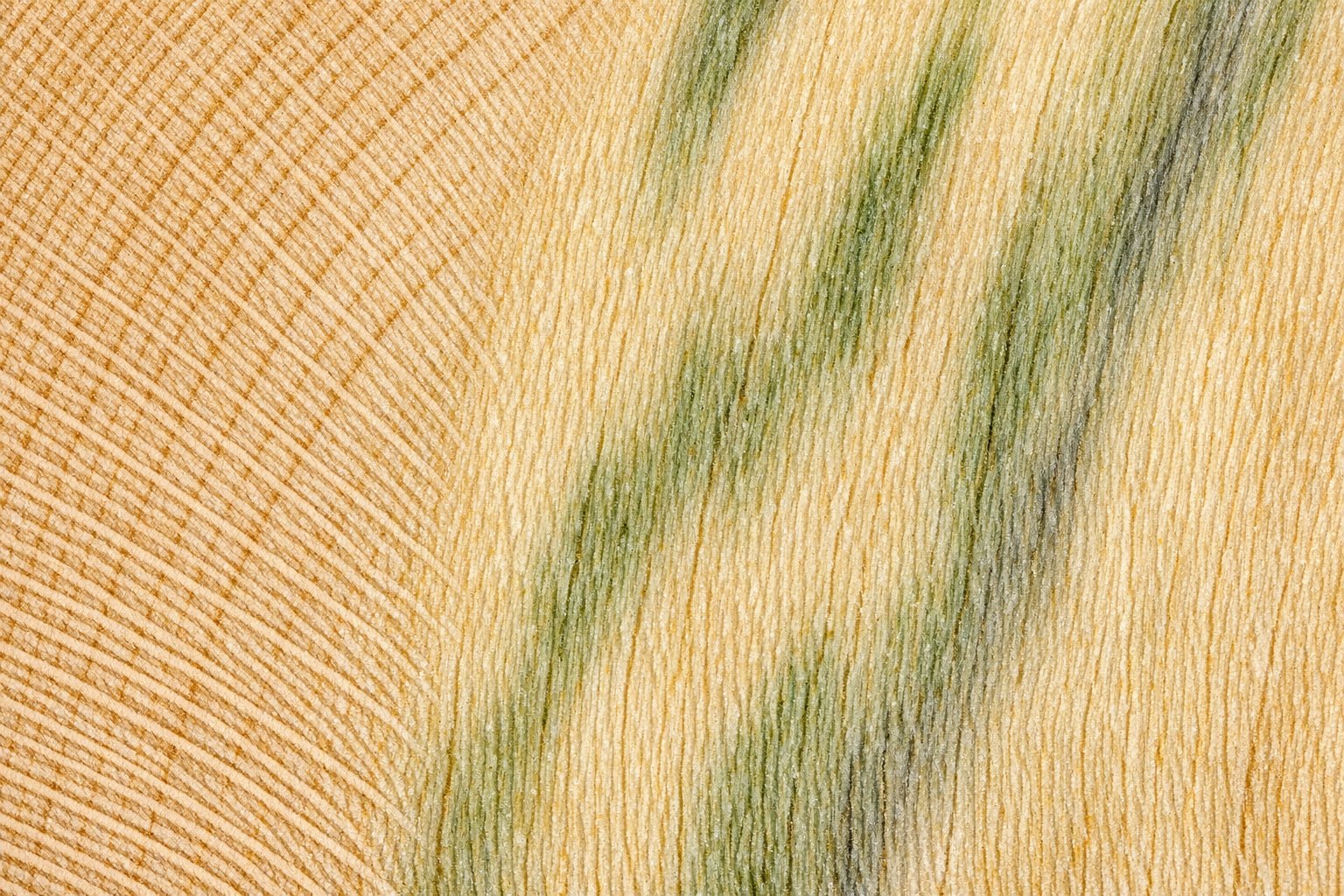
- Pale cream sapwood with olive-green to gray heartwood streaks; the color disappears under paint
- Janka hardness about 540 — soft for a hardwood, so it machines and sands easily and holds a sharp edge
- Straight, uniform, close grain that stays flat and takes paint and primer beautifully
- Kiln-dried to 6–8% moisture content, #1 Common and better grade
- An interior wood — it is not rot-resistant, so keep painted Poplar out of the weather
- Available 4/4 through 10/4 thickness
Poplar blotches under a pigmented stain — if you want a stained look use a gel stain, a dye or a toner, or choose a species like Alder or Cherry that stains evenly. For paint, nothing we stock beats it.
What Builders Make from Poplar
- Painted trim, moulding and millwork — the paint-grade standard
- Cabinet face frames, doors and painted furniture — tight, uniform grain that finishes smooth
- Drawer boxes and cabinet interiors — light, stable and economical
- Paint-grade doors and shutters — stable behind primer and paint
- Utility and shop stock — jigs, patterns and glue-ups
Grade, Thickness and Board-Foot Pricing
Our Poplar is Yellow (tulip) Poplar, #1 Common and better, kiln-dried to 6–8%, and sold by the board foot — one board foot is 144 cubic inches (a 12×12×1″ board). We stock 4/4 through 8/4; wide boards, paint-grade select and truckload quantities are quoted on request through the form below.
Call 412.641.0177 with questions or custom quantity requests.
- Poplar Finished Boards — Cut to exact width and length, per piece
- Poplar Bulk — 500 BF minimum, LTL and truckload
- All Species Rough Lumber — 16 species available
- Red Oak Rough Lumber — Appalachian, priced per board foot
- Red Oak Lumber — Appalachian, #1 Common and better
- White Oak Lumber — Closed pore, rot-resistant, exterior grade
- Cherry Lumber — Appalachian Black Cherry, patinas with light
- Maple Lumber — Maple, Janka 1,450
- Mahogany Lumber — Genuine mahogany, stable and rot-resistant
- Sapele Lumber — African ribbon-stripe, Janka 1,410
- Teak Lumber — Plantation Teak, the marine standard
- Cypress Lumber — Southern Cypress, naturally rot-resistant
- Cedar Lumber — Western Red Cedar, aromatic and rot-resistant
Yellow Poplar at a Glance
The technical properties builders, woodworkers and specifiers ask about most, for Yellow Poplar (Liriodendron tulipifera).
| Botanical name | Liriodendron tulipifera — family Magnoliaceae, the magnolia family (despite the name, it is not a true poplar / Populus) |
|---|---|
| Also known as | Tulip poplar, tulipwood, tuliptree, American tulipwood, yellow poplar, canary whitewood, whitewood |
| Where it grows | Native to eastern North America, from southern New England west to Wisconsin and south to northern Florida and Louisiana; one of the tallest hardwoods on the continent |
| Average dried weight | ~29 lbs/ft³ (465 kg/m³) — light for a hardwood |
| Specific gravity | 0.40 basic / 0.42 at 12% MC |
| Janka hardness | ~540 lbf (2,400 N) — soft for a hardwood; it machines and sands with little effort but dents more easily than oak or maple |
| Rot & insect resistance | Non-durable heartwood, susceptible to decay and insect attack — an interior wood; not recommended for ground contact or unprotected exterior exposure |
| Grain & texture | Straight, uniform, close grain with a fine to medium texture and little prominent figure — the flat, even surface that makes it the paint-grade standard |
| Color | Creamy-white sapwood; heartwood pale yellow to yellowish-brown, often with distinctive olive-green, gray or purple mineral streaks — color that disappears entirely under paint |
| Machinability | Excellent; cuts, planes, turns and sands cleanly with low cutting resistance and holds a crisp profile |
| Gluing & finishing | Glues well and paints superbly; it blotches under a pigmented stain, so use a wood conditioner or gel stain if you must stain it — or paint it, which is what most builders do |
| Paintability | Outstanding — its smooth, uniform, low-figure surface primes and paints to a flawless opaque finish with no grain telegraphing through; the reason it is the paint-grade hardwood of choice |
| Stability | Good once kiln-dried; moderate seasonal movement in service, stable enough for trim, face frames and painted panels |
| Typical uses | Paint-grade trim, moulding and millwork, cabinet face frames, doors and drawer boxes, painted furniture, upholstered-furniture frames, core stock and utility lumber |
| Sustainability | Fast-growing and abundant across its native eastern U.S. range, sustainably harvested; not listed on CITES |
The Story of Yellow Poplar
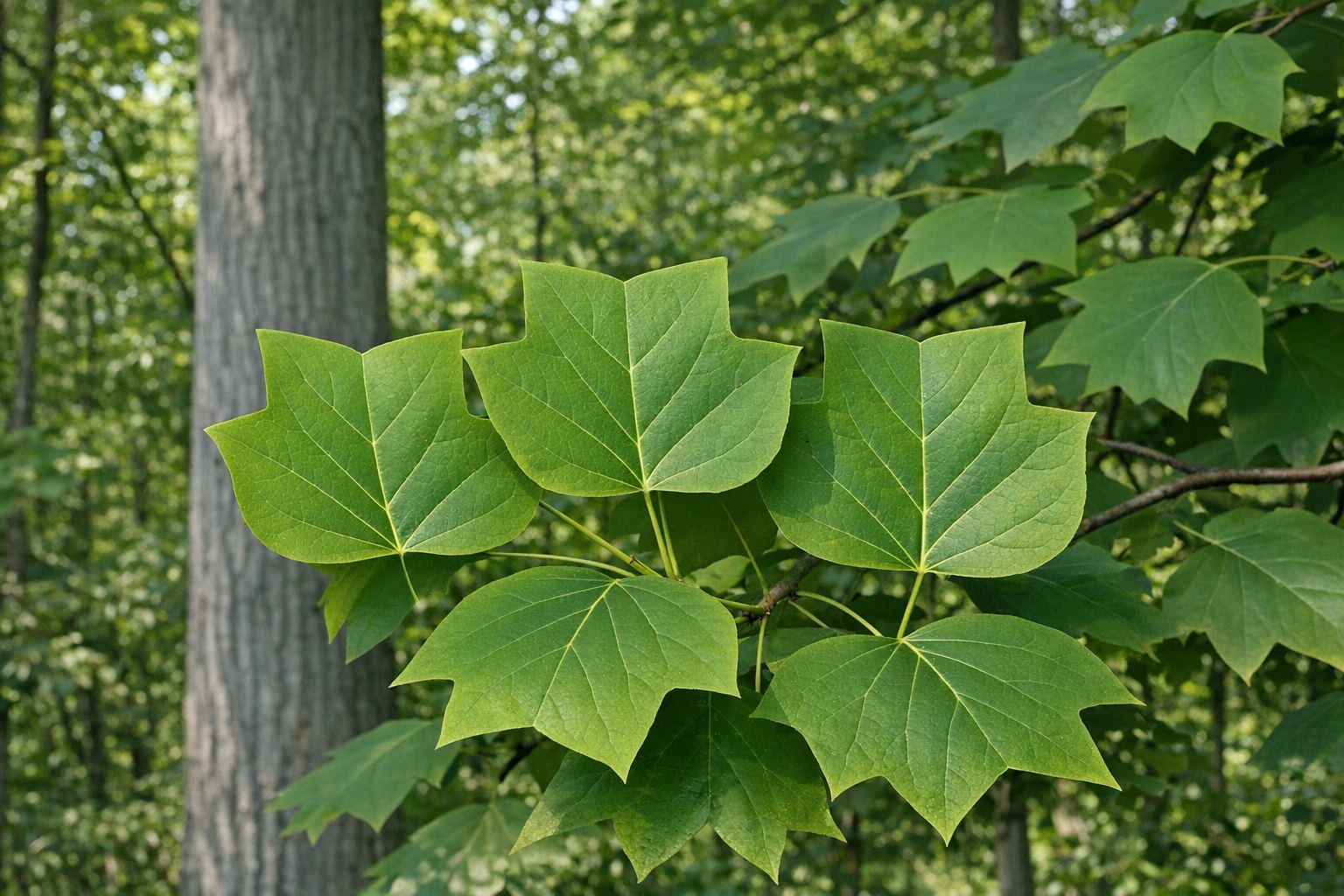
Yellow Poplar is Liriodendron tulipifera — and, despite the name, it is not a true poplar at all but a member of the magnolia family (Magnoliaceae). The tuliptree is one of the tallest hardwoods in eastern North America, growing straight and clear to 90 feet and more in the rich forests from New England down through the Appalachians to the Gulf states. That tall, fast, straight growth is exactly what gives the lumber its long, clear, knot-free boards.
The paint-grade workhorse
For generations Poplar has been the wood American shops reach for whenever a surface is going to be painted. Its fine, close, almost featureless grain primes and paints to a flawless opaque finish — no figure telegraphs through the paint — and it costs a fraction of the cabinet hardwoods. That combination made it the standard for painted trim, moulding, doors and cabinetry, and it remains the default paint-grade hardwood in millwork shops today.
What it is made into today
Poplar goes into painted trim and moulding, cabinet face frames, doors and drawer boxes, painted furniture and shutters, and the light, stable core stock and drawer sides hidden inside better furniture. Its creamy sapwood and streaked heartwood are unremarkable to look at, but under paint that is irrelevant — what matters is the smooth surface it leaves. In our own shop we mill this same kiln-dried Poplar into paint-grade doors and interior millwork.
Working with it
At around 540 on the Janka scale Poplar is soft for a hardwood, so it planes, saws, turns and sands with very little effort and holds a crisp edge — a pleasure for detailed profile work. The two things to plan for are wear and stain: its softness means it dents more readily than oak or maple, so it belongs on paint-grade rather than high-traffic surfaces, and it blotches badly under pigment stain. Most makers skip the stain and paint it — which is what it does best.
Yellow Poplar — Common Questions
How is Poplar lumber sold and priced?
What do people build with Poplar?
How hard is Poplar and is it easy to work?
Is Poplar suitable for exterior use?
Does Poplar take stain well?
Why is Poplar the paint-grade standard?
How stable is Poplar — will it move or warp?
Where does Poplar grow and is it sustainable?
Is Yellow Poplar a true poplar, and how does it compare to Alder?
Built to order in Poplar
The same Poplar we sell here goes into our custom millwork
Estate Millwork mills this stock into finished, made-to-size paint-grade doors, shutters and cabinet doors — priced to your exact dimensions and shipped nationwide. Start with the product you need:
Custom & Bulk Quotes
Get a Custom Poplar Lumber Quote
Truckload bulk, surfaced (S2S / S4S) stock, extra-wide or figured boards, or a species that isn’t on the calculator — tell us what you need and we’ll price it, usually within 1–2 business days.
Prefer to talk it through? Call 412.641.0177.