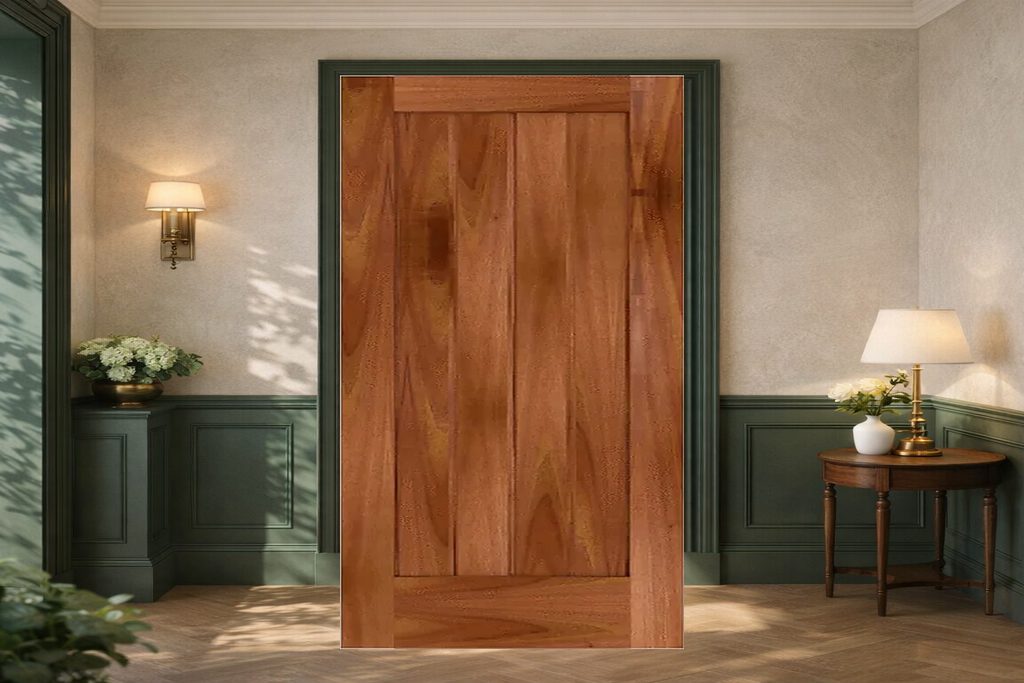
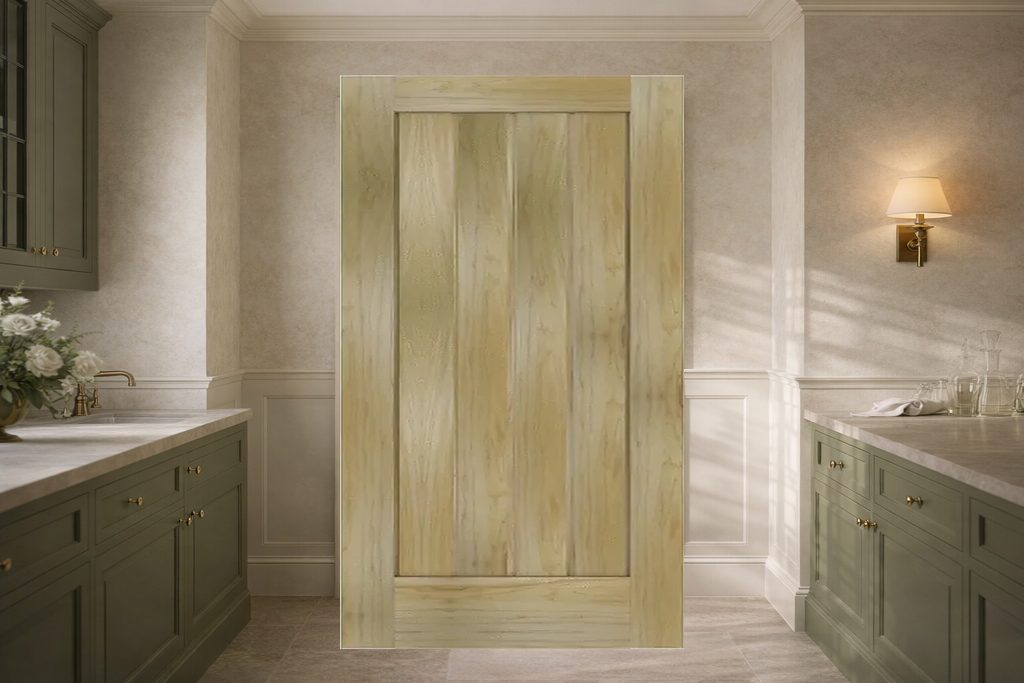
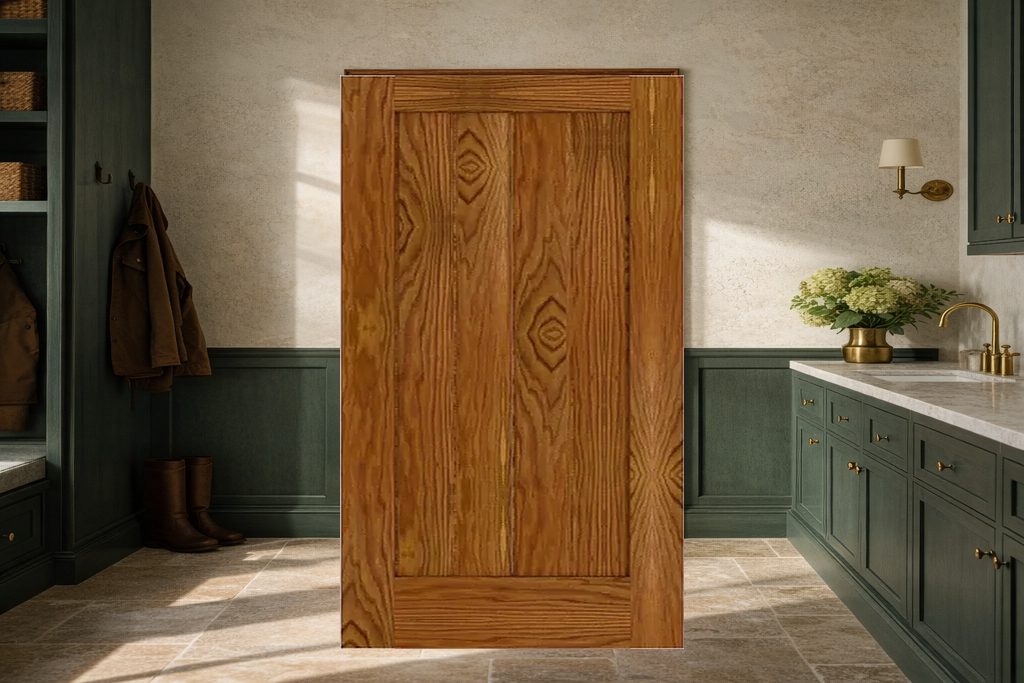
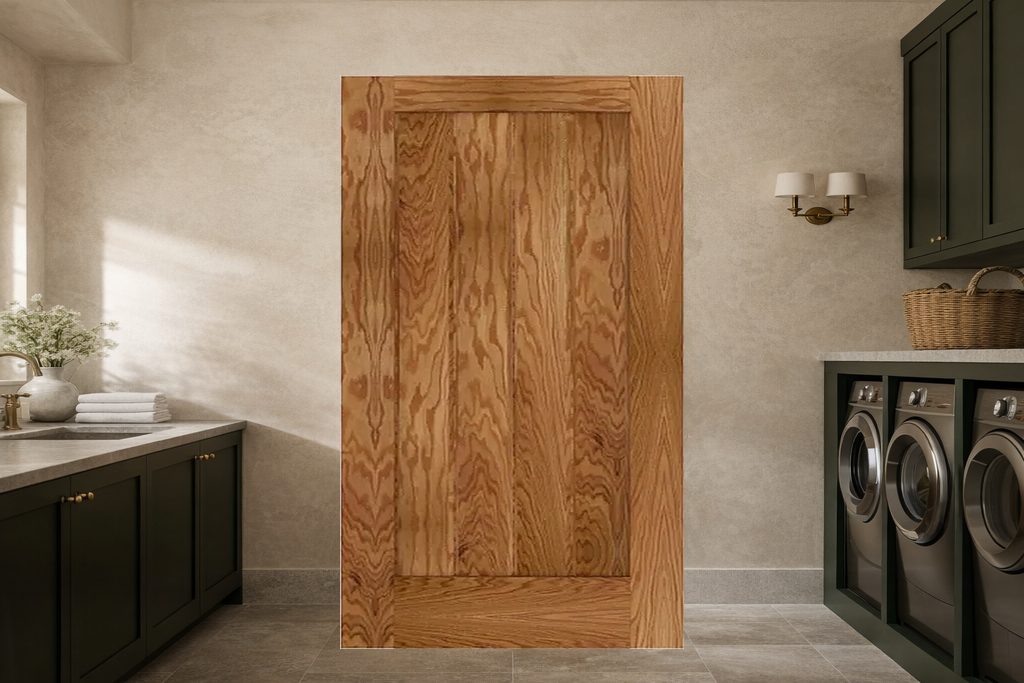
Custom Spanish Cedar Doors
Estate Millwork builds solid hardwood doors to your exact opening — interior and exterior, single or pairs, any width and any height. Nothing is rounded to a stock size and nothing is ordered in from a catalog: every door is cut, joined, and sanded to order in our Meyersdale, Pennsylvania mill and shipped factory direct.
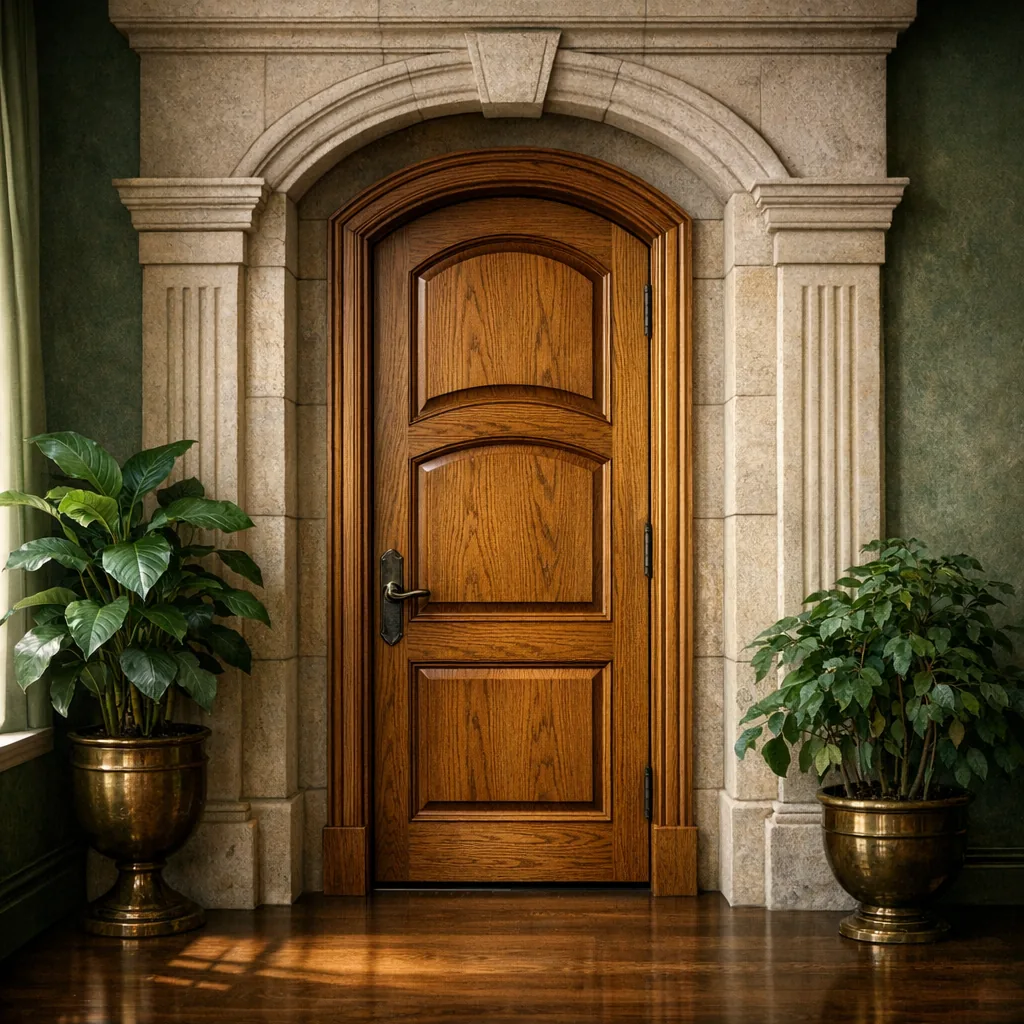
Eight door styles are available: louvered, raised panel, flat panel, French, mission, barn, arched, and fully custom work built from your drawing or CAD file. Each style can be built in 14 wood species, in a paint-grade or a stain-grade build, with or without a jamb and casing.
Price your door on this page. The configurator above quotes the exact door you specify — style, species, thickness, size, finish, jamb, and casing — and the price updates as you change it. Nothing is an estimate and nothing waits on a callback.
How Our Custom Wood Doors Are Built
Every Estate Millwork door is assembled with true mortise-and-tenon joinery, pinned with a hidden dowel plug. There are no finger-jointed stiles, no veneer over an MDF core, and no dowel-only joints — the three shortcuts that account for most of the door failures we are asked to replace. Rails and stiles are cut from full-length lumber, and base rails are double-tongued and feather-tenoned so the bottom of the door stays tight where it takes the most abuse.
Panels float in their grooves so the wood can move seasonally without splitting the frame. Louvers are precision-cut and set at a fixed pitch so a louvered door sheds rain and still moves air. Doors are built in 1 3/8", 1 3/4", and 2 1/4" thicknesses — 1 3/8" for interior passage and closet work, 1 3/4" for exterior and heavy interior doors, 2 1/4" for oversized and monumental entries.
Typical build time is about four weeks. Every door is inspected individually and crated before it ships; we have shipped more than 10,000 orders this way.
Sizes, Thickness, Jambs, and Casing
Order by finished door size when you are replacing a slab, or by rough opening when we are supplying the jamb. Width and length are entered to the sixteenth of an inch, so a 31 7/8" x 79 1/2" opening gets a door built to that size rather than a 32" x 80" door and a pile of shims.
Jamb options are: no jamb (slab only), Standard for a single swing, DoubleHung for a pair (each leaf is half the opening width), Pocket, Spanish, Modern, and Arch. Standard jamb depth is 4 9/16" for a 2x4 wall; specify 6 9/16" for a 2x6 wall. Casing can be applied to the front, the back, both faces, or left off entirely.
Finishes run from unfinished paint grade and unfinished stain grade through clear coat and factory-applied paint, including Prime White, Extra White, Dover White, Tricorn Black, Positive Red, Honorable Blue, Espalier Green, and any custom color you name. If you are measuring for the first time, our measuring guide walks through it, and door hardware can ship with the order.
Choosing a Wood Species for Interior vs. Exterior Doors
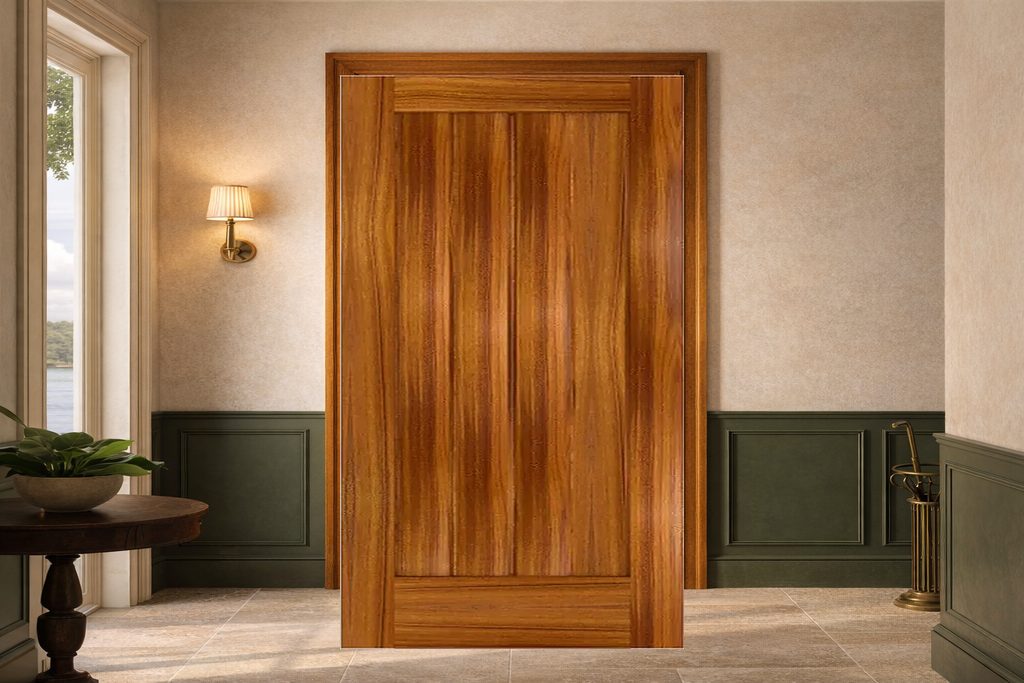
For exterior doors, the species does most of the work. Spanish cedar, teak, sapele, cypress, and genuine mahogany all carry natural decay resistance and stay dimensionally stable through wet and dry seasons; teak and Spanish cedar are the two we recommend most often on the coast. Azek is a PVC option for exposures where no wood will survive — it takes exterior paint and cannot rot.
For a painted door, poplar is the workhorse: tight, even grain that takes paint without telegraphing. Red Grandis is the paint-grade choice when the door is going outside.
For a stained interior door, red and white oak, walnut, cherry, maple, and knotty alder give you the full range from formal to rustic. White oak is the most weather-tolerant of the domestic hardwoods and is the one we would use for a stained front door. If you want to see the boards themselves, each species has its own hardwood lumber page.
Doors by Room and Application
Start from where the door is going: interior doors, exterior doors, front entry doors, wooden front doors, back doors, closet doors, bathroom doors, pocket doors, sliding barn doors, cabinet doors, and kitchen cabinet doors. Each page prices that door type directly.
If you have a drawing, an odd opening, an arch, or a historic door to match, send it over — that is ordinary work here, not an exception. Call 412-641-0177 or use the contact form on this page and a person who works in the mill will answer.
Why Choose Spanish Cedar for Your Custom Doors?
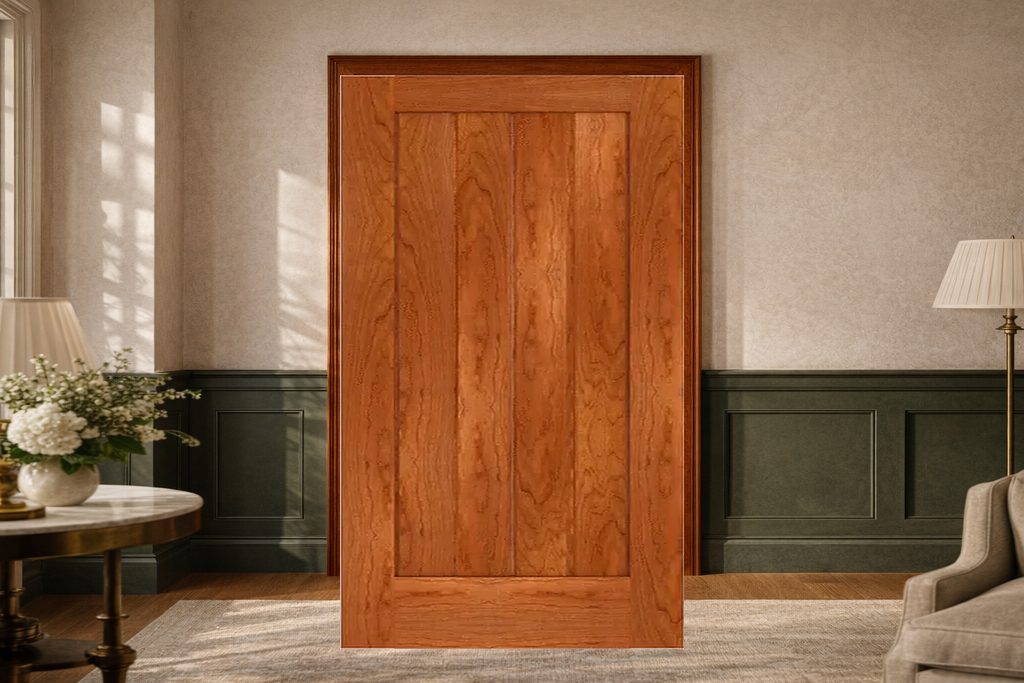
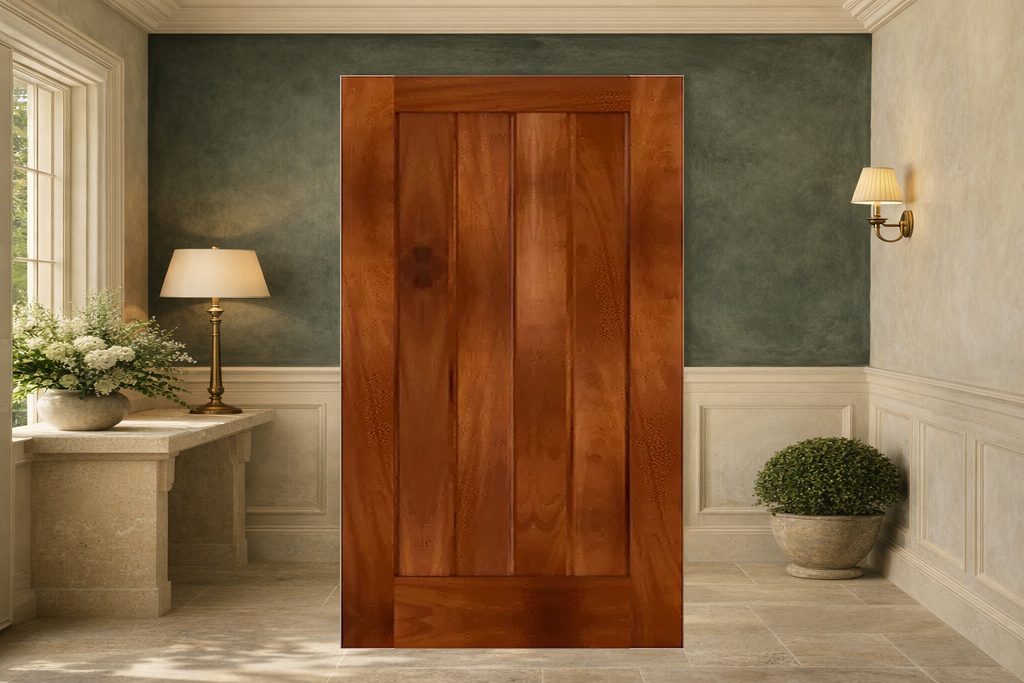
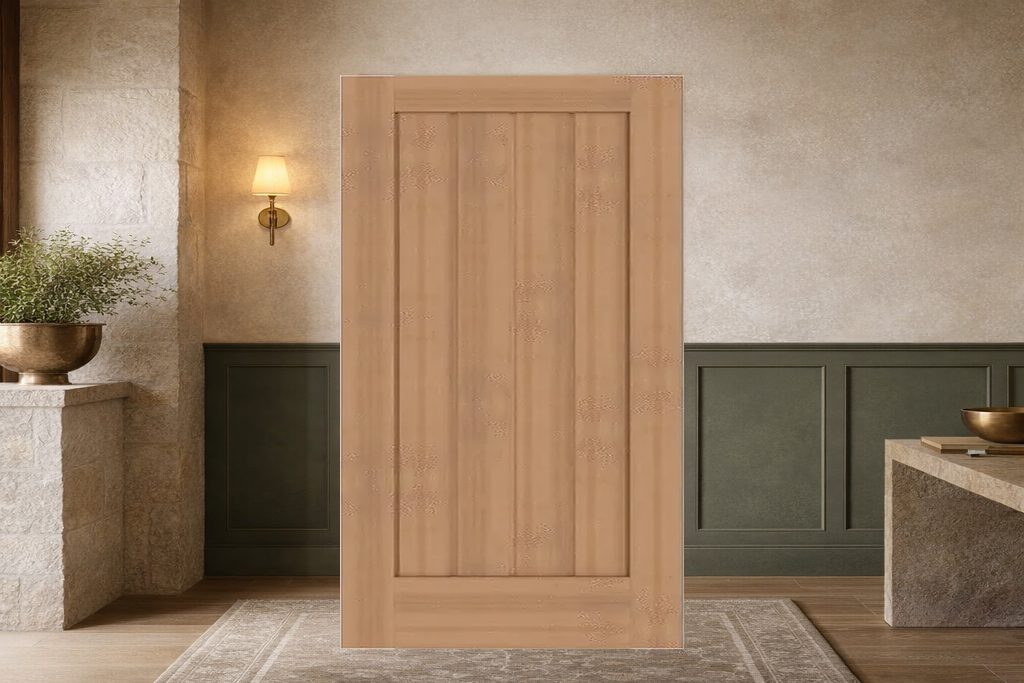
Spanish Cedar is a tropical hardwood in the mahogany family, long valued for its natural resistance to insects, rot, and moisture. It is the wood of choice for premium cigar humidors because of its aromatic oils and moisture-regulating qualities. These same properties make it an outstanding door wood, particularly for exterior applications in humid climates. Spanish Cedar is lighter and easier to work than true Mahogany while offering comparable durability. Its warm pinkish-brown color and straight grain produce doors of exceptional beauty that perform reliably in demanding environments.
Wooden Doors Fabricated from Premium Lumber Grades
Stain Grade Lumber
For our louvered door products ordered in stain grade, we use FAS clear hardwood grades for both domestic and imported lumber. For projects requiring environmentally sensitive grades, we also offer FSC certification when required. We procure all of our lumber electronically, and order only the FAS clear grades. Additionally, we pre-select and inspect each shipment of lumber, and moisture check to insure that it meets our 8% standard. And as part of our routine quality process, each board from a unit of lumber is inspected as part of our quality louvered door manufacturing process.
Paint Grade Lumber
Even our economical paint grade louvered doors are manufactured from FAS grade lumber. The FAS specification controls the type of defects that are permitted, including knots, which we exclude from our paint grade products. However, features that would be considered defects in stain grade products -- color streaks, mineral discoloration etc, are not pertinent in paint grade. Typically, we use Poplar and occasionally Oak and Soft Maple for our paint grade products.
Color and Grain Matching
For high end louvered doors, we can offer a pre-selection service whereby all of the lumber required for the entire louvered door job is picked, inspected, and designated to be assembled as a unit at one time, which often results in boards from the same tree ending up in the same door for maximum consistency. When specified we can also book match raised panels and flat panels when used in our louvered doors.
Milling and Sawing Specifications
For our highly discriminating louvered door customers, we can offer our various hardwood species to be sawn in certain way, to emphasize a desirable feature of the wood. If required, the door material can be specified as flat-sawn, quarter-sawn, rift-sawn or ribbon sawn. Talk with your Estate Millwork louvered door specialist to inquire about adding these specifications to your order.
Top Quality and Elegant Custom Wood Doors
Estate Millwork creates each custom wood door from your detailed specifications. We use premium materials, state of the art equipment, and an experienced, quality oriented staff to produce our doors. We follow each of the steps below to produce the finest wooden doors on the market.
Hand Selection and Inspection of Materials
Our lumber procurement process is computer driven so that we are sure to be getting the best possible price on the highest quality materials. Once your order is "green-lighted" for production in our plant, the lumber demand is compared to our shop inventory and automatic replenishment orders are placed if necessary. When production begins on each custom door, the material is hand selected and the best of our high quality stock is used for the solid stiles of the doors. Louvers and rails are generally selected from the same lot of material to afford the best match, within the natural variation of hardwoods.
Precision Ripping of Rails and Stiles
We minimize the costs of our high quality products by maximizing the yield on the rough lumber. Once the lumber of the appropriate thickness has been selected, it is passed through our ripping department where a specialized gang rip saw is used to get the maximum yield from each board. Our operators are trained to reject defective materials either during the selection process or during the sawing process, as some defects are latent and are not visible until the board is "opened up".
Hand Jointing of All Door Components
The next step is to hand joint each rough sawn board to get a true flat edge, and to relieve any internal stress in the solid wood. This is a step that is skipped by many modern door manufactures, but one that we believe is so important that we honor the tradition. Our most skilled craftsmen in the plant are responsible for this function which requires judgement, precision and experience. Lower quality door manufacturers skip this step, or use particle cores and veneers to fake the look of a real door. But by hand jointing each board, we insure that every other step in the process is operating on a flat, smooth board, and that the door will remain stable for its lifetime.
Handcrafted with Sustainably Harvested Lumber
Every door we build uses this same lumber and joinery. Compare every style and species side by side in our custom solid wood doors collection.
At Estate Millwork, we employ a meticulous process to ensure the quality and sustainability of our lumber. Our commitment begins with the careful air drying of much of our lumber, followed by further refinement in low wattage dehumidification kilns to achieve optimal moisture levels.
Every single piece of wood we acquire undergoes thorough utilization in our production processes. Leveraging advanced automated saws and optimization software, we achieve an exceptional yield ratio of 94 percent. This means that nearly all of the wood we purchase is transformed into usable products. The small remainder, comprising mainly sawdust and chips, is utilized efficiently: either utilized as fuel to power our operations, or repurposed by providing bedding and contributing to composting for local cattle farmers.
Our dedication to minimizing waste extends to the sourcing of our materials. A significant portion of the lumber we use hails from Amish farmers within our county. These farmers adhere to traditional practices, utilizing horses for harvesting and operating vintage 1920s sawmills. Such methods not only contribute to the preservation of heritage techniques but also entail lower environmental impact compared to modern industrial approaches.
Furthermore, our commitment to sustainability is evident in the sourcing of our imported lumber. We exclusively procure lumber from plantation-grown sources, thereby ensuring that our operations do not contribute to deforestation or the depletion of natural forests. By prioritizing responsible sourcing and efficient utilization, Estate Millwork strives to uphold environmental stewardship while delivering exceptional craftsmanship.
A Complete Guide to Choosing Custom Wood Doors
Whether you are selecting a front entry door that makes a grand first impression, interior doors that define your living spaces, or specialty doors like French doors or barn doors, understanding your options helps you make the best choice for your home and budget.
Types of Custom Wood Doors
Louvered doors feature angled slats that allow airflow and ventilation, making them ideal for closets, laundry rooms, pantries, and tropical-style interiors. Raised panel doors have solid panels with a beveled profile, offering a traditional and formal look appropriate for Colonial, Georgian, and Traditional interiors. Flat panel doors provide a clean, contemporary appearance well suited to Shaker, Craftsman, and Modern design styles. French doors feature glass panes framed by wood muntins, bringing natural light between rooms or connecting indoor and outdoor spaces. Barn doors slide on a surface-mounted track system, saving the swing clearance of a traditional door and adding a distinctive design element.
Selecting the Best Wood for Your Doors
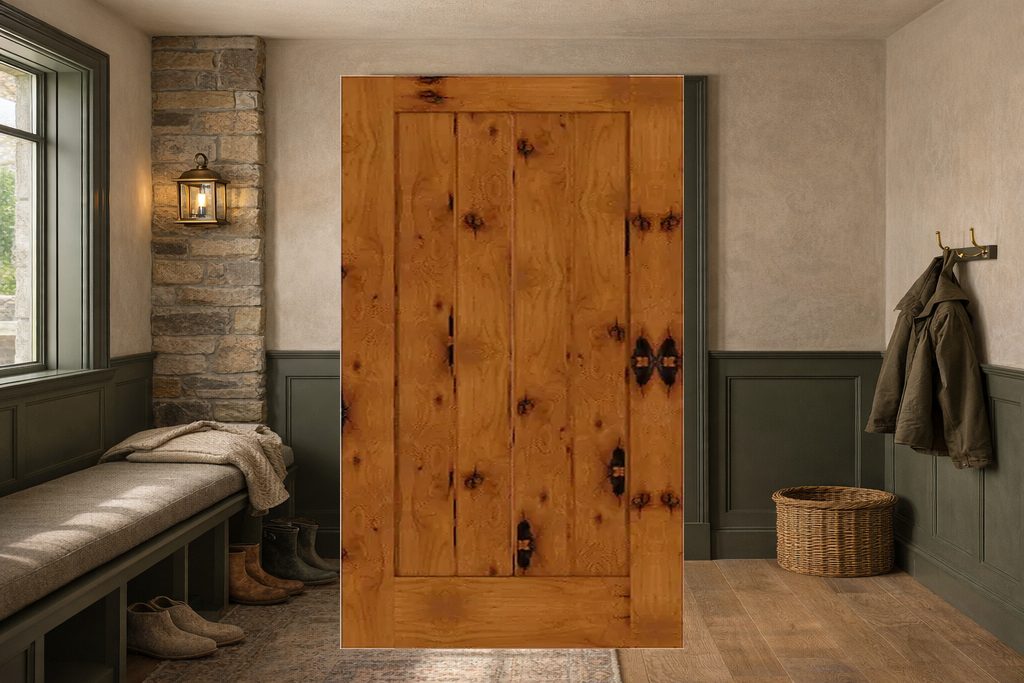
The wood species you choose determines the color, grain pattern, and character of your finished door. Mahogany is the classic choice for entry doors, prized for its rich reddish-brown color, excellent stability, and natural resistance to moisture. Cherry delivers a warm, elegant tone that deepens with age, making it a favorite for fine interior doors. Maple offers a light, uniform grain that takes stain evenly and works well in Contemporary and Transitional settings. White Oak and Red Oak provide strong grain character and excellent durability. For paint-grade doors, Poplar is the most economical solid hardwood option, with a smooth surface that produces a flawless painted finish. Knotty Alder offers a rustic look with distinctive knot patterns popular in Southwestern and Rustic decor.
How to Measure for Custom Doors
Measure the width and height of the existing door slab, or the rough opening if you are framing new. For replacement doors, measure the slab itself, not the frame. Standard interior door widths are 24, 28, 30, 32, and 36 inches, but custom doors can be built to any dimension. Standard heights are 80 inches for interior doors and 80 or 96 inches for entry doors. Measure at three points across the width and three points for the height, and use the smallest measurement. For our louvered doors and raised panel doors, we build to your exact specification to the nearest sixteenth of an inch.
Door Construction and Quality
The quality of a wood door is determined by its construction method. Our doors use traditional rail and stile construction with solid hardwood components joined by mortise and tenon joinery. This is the same construction method used by master craftsmen for centuries because it produces the strongest, most durable frame. Each joint uses a half-inch by one and seven-eighths inch tenon secured with a hardwood dowel and waterproof adhesive. Lower-quality doors use dowel joints, biscuit joints, or finger-jointed lumber that will fail over time. Solid Spanish Cedar construction ensures your door will perform for decades.
Finishing and Installation Considerations
We offer unfinished, primed, painted, and stained finish options. Exterior doors require a finish rated for UV and weather exposure, with the top and bottom edges sealed to prevent moisture wicking. Interior doors can use any interior-grade finish. For painted doors, our factory priming provides an excellent foundation. For stained doors, we recommend discussing your color preference with our specialists so we can select material with complementary grain character. When ordering a pre-hung door, specify the hinge side and swing direction. For barn doors, measure the wall space beside the opening to ensure adequate clearance for the door to slide fully open.
Custom Doors vs. Home Center Alternatives
Mass-produced doors from home improvement stores are typically hollow-core or use engineered cores with veneer faces. They come in standard sizes and limited styles. A custom solid wood door from Estate Millwork is built to your exact dimensions, from the wood species you choose, in the style you want. Every component is solid hardwood, assembled with time-tested joinery. The visual difference between a solid Spanish Cedar door and a hollow-core veneer door is immediately apparent. Solid wood doors also offer superior sound insulation, thermal performance, and a substantial feel that cannot be replicated by lightweight alternatives.
Why Choose Spanish Cedar?
Spanish Cedar is a tropical hardwood in the mahogany family, long valued for its natural resistance to insects, rot, and moisture. It is the wood of choice for premium cigar humidors because of its aromatic oils and moisture-regulating qualities. These same properties make it an outstanding door wood, particularly for exterior applications in humid climates. Spanish Cedar is lighter and easier to work than true Mahogany while offering comparable durability. Its warm pinkish-brown color and straight grain produce doors of exceptional beauty that perform reliably in demanding environments.
Explore Related Products
Browse Doors by Wood Species
CherryCypressKnotty AlderMahoganyMaplePoplarRed OakSapele Spanish Cedar
TeakWalnutWhite OakW. Red CedarAZEK Frequently Asked Questions
What types of custom wood doors are available?
The main types are louvered (ventilating, ideal for closets and pantries), raised panel (traditional, formal), flat panel (clean, contemporary), French (glass panes for natural light), and barn doors (sliding track-mounted for space saving).
What is the best wood species for custom doors?
Mahogany is the classic choice for entry doors with natural moisture resistance. Cherry offers warm, elegant tones for interior doors. Maple provides a light, uniform grain. White Oak and Red Oak offer strong character. Poplar is the most economical for paint-grade doors. Knotty Alder gives a rustic look.
How do I measure for custom doors?
Measure the existing door slab width and height, or the rough opening for new framing. Measure at three points across width and height, using the smallest measurement. Standard interior doors are 80 inches tall; entry doors are 80 or 96 inches. Custom doors are built to the nearest sixteenth of an inch.
What door construction method is most durable?
Traditional rail and stile construction with mortise and tenon joinery is the strongest and most durable method. Each joint uses a half-inch by one and seven-eighths inch tenon secured with a hardwood dowel and waterproof adhesive. This method has been used by master craftsmen for centuries.
How are custom wood doors finished?
Options include unfinished, primed, painted, and stained finishes. Exterior doors need UV and weather-rated finishes with sealed top and bottom edges. For pre-hung doors, specify hinge side and swing direction. For barn doors, ensure adequate wall clearance for the sliding track.
Why choose custom wood doors over home center alternatives?
Mass-produced doors are typically hollow-core with veneer faces in standard sizes. Custom solid wood doors are built to your exact dimensions from the species and style you choose, with solid hardwood throughout and traditional joinery. They offer superior sound insulation, thermal performance, and a substantial feel.
| | |
|---|
| Material | | SpanishCedar | Premium FAS Clear Grade | Rot Resistant, Insect Resistant Premium Exterior Lumber |
| Joinery | | 3/4" X 3" | True Mortise & Tenon, | Strongest solid wooden joint |
| Frame Thickness | | 1 3/8 " | Solid Wood | Rigid Integrity |
| Stile Width | | 5 " | Hand Jointed | Vertical Stability |
| Base Rail | | 10 " | Balance | Architecturally Correct |
| Crown Rail | | 5 " | Balance | Historically Accurate |
| Joinery | | Dowel Plug | Hidden | Unobtrusive Quality |
| Board Size | | .75 " X 6 " | V-Grooved | Traditonal Elegance |
| Batten Size | | .75 " X 6 | Cove Detail | Strengh |
| Finish | | Machine Sand 120, Hand Sanded 150 | Drum,Edge & Palm sanded | Top quality hand finish |
| Packing | | Foam Wrapped in Custom Built Carton | 1/8" Foam, 3/16 Trim Sheet 100lb | Protection against damage in transit. |
| Quantity | Description | Dimensions | Material |
|---|
| 2 | Stile | 1 3/4" X 5 " X 80 " | SpanishCedar |
| 1 | Rail | 1 3/4" X 10 " X 26 " | SpanishCedar |
| 1 | Rail | 1 3/4" X 5 " X 26 " | SpanishCedar |
| 3 | VGrooveBoard | 1 1/4" X 8 1/16 " X 65 " | SpanishCedar |
Trade & Professional Resources
Get trade pricing, project specifications, and new product announcements
Subscribe
Shutters
Louvered Shutters
Raised Panel Shutters
Bahama Shutters
Board & Batten Shutters
Bermuda Shutters
Exterior Shutters
Wooden Shutters
Hurricane Shutters
Custom Shutters
Black Shutters
Shutter Hardware
Shutter Hinges
Doors
Louvered Doors
French Doors
Interior Doors
Exterior Doors
Entry Doors
Barn Doors
Arched Doors
Pocket Doors
Bathroom Doors
Custom Doors
Wood Doors
Door Jambs
Cabinets & More
Louvered Cabinets
Cabinet Doors
Kitchen Cabinet Doors
Replacement Cabinets
Cabinet Refacing
Custom Cabinets
Pergolas
Wood Moulding
Lumber
Gallery
Shutter Catalogs
Cherry Shutters
Cypress Shutters
Mahogany Shutters
Maple Shutters
Red Oak Shutters
Sapele Shutters
Walnut Shutters
White Oak Shutters
Teak Shutters
W. Red Cedar Shutters
Spanish Cedar Shutters
Poplar Shutters
Door Catalogs
Cherry Doors
Cypress Doors
Mahogany Doors
Maple Doors
Red Oak Doors
Sapele Doors
Walnut Doors
White Oak Doors
Teak Doors
Poplar Doors
Knotty Alder Doors
Cabinet Catalogs
Cherry Cabinets
Cypress Cabinets
Mahogany Cabinets
Maple Cabinets
Red Oak Cabinets
Sapele Cabinets
Walnut Cabinets
White Oak Cabinets
Teak Cabinets
Poplar Cabinets
Cherry Drawer Fronts
Mahogany Drawer Fronts
Service Areas
New York
Miami
Charleston
Nashville
Dallas
Chicago
Los Angeles
San Francisco
Boston
Washington DC
Atlanta
Houston
Phoenix
Seattle
Denver
Philadelphia
Naples
Sarasota
Savannah
Greenwich
All 60+ Locations »
Company
About Us
Contact Us
Request a Quote
Quality
For Builders
For Homeowners
Articles
FAQ
Site Map
Privacy Policy
Return Policy