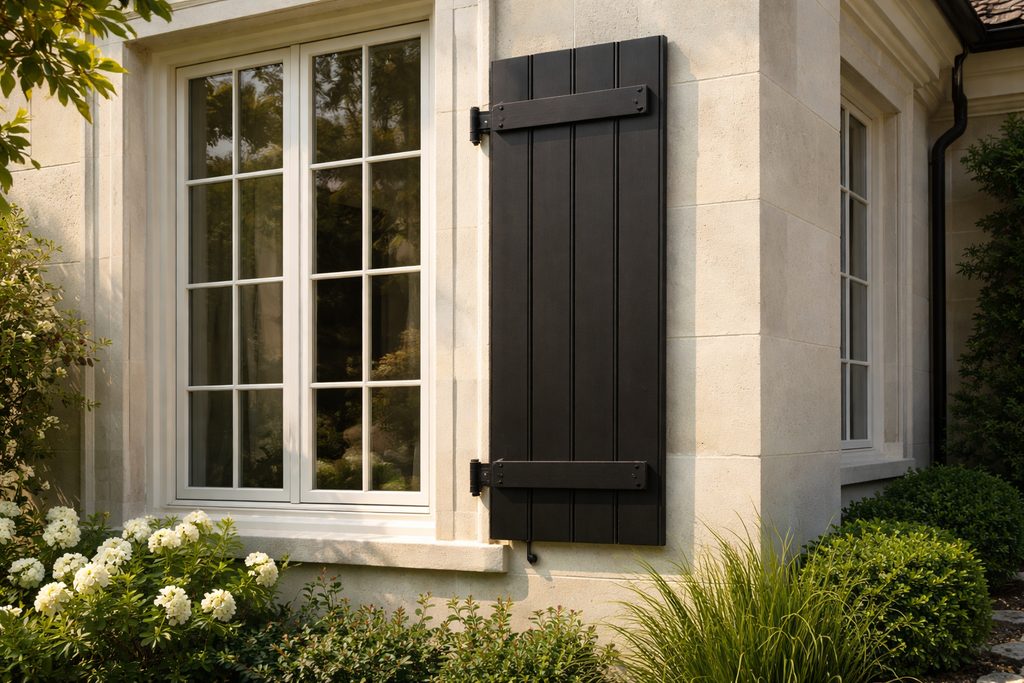
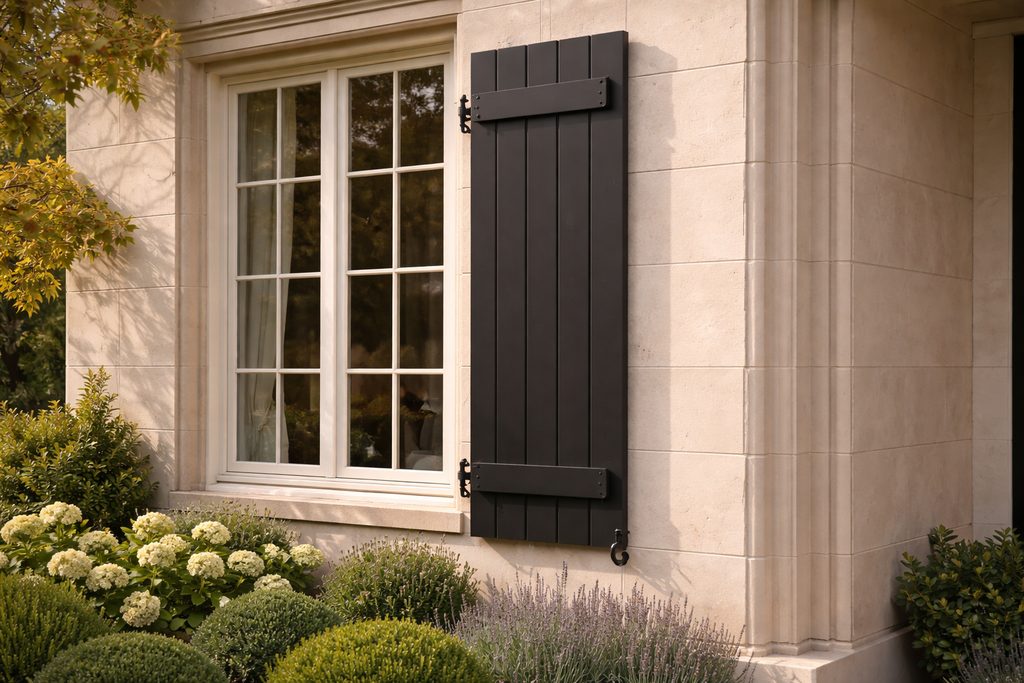
Custom Cypress Board & Batten Shutters
When it comes to enhancing the curb appeal of your home, premium wooden board and batten shutters are an exceptional choice. These shutters not only offer practical benefits like light control and privacy but also bring timeless charm and character to your home's exterior. In this article, we'll delve into the world of premium wooden board and batten shutters, exploring their unique qualities, design versatility, and the undeniable value they add to your property.
Exquisite Craftsmanship: Premium wooden board and batten shutters are a testament to expert craftsmanship. Meticulously constructed using high-quality wood, these shutters are designed to withstand the test of time while showcasing intricate details and fine finishes. Their durability and exquisite design make them a standout feature of any home.
Timeless Elegance: Wooden shutters possess a classic, enduring beauty that never goes out of style. Whether your home boasts a traditional, modern, or farmhouse aesthetic, premium board and batten shutters effortlessly complement any architectural style, adding a touch of timeless elegance.
Customization Options: One of the significant advantages of premium wooden board and batten shutters is the ability to tailor them to your unique preferences. From selecting the type of wood to choosing the perfect stain or paint color, you have the freedom to create shutters that harmonize seamlessly with your home's exterior design.
Versatility and Functionality: These shutters are more than just decorative accents. They offer practical benefits such as light control, privacy, and protection from the elements. You can adjust them to regulate the amount of natural light entering your home and enjoy the flexibility to create the ambiance you desire.
Weather Resistance: Premium wooden board and batten shutters are designed to withstand the rigors of outdoor exposure. With proper finishing and maintenance, they can resist moisture, UV rays, and other environmental factors, ensuring they maintain their beauty and integrity for years to come.
Increased Property Value: Adding premium wooden board and batten shutters to your home can significantly boost its curb appeal and overall value. Prospective buyers often appreciate the craftsmanship and timeless aesthetic of wooden shutters, making your property more appealing in the real estate market.
Easy Maintenance: Maintaining wooden shutters is easier than you might think. Periodic cleaning and re-finishing can help preserve their appearance and protect them from the elements. Any minor damage or wear can be easily repaired, extending their lifespan and value.
Introducing Exquisite Board and Batten Shutters
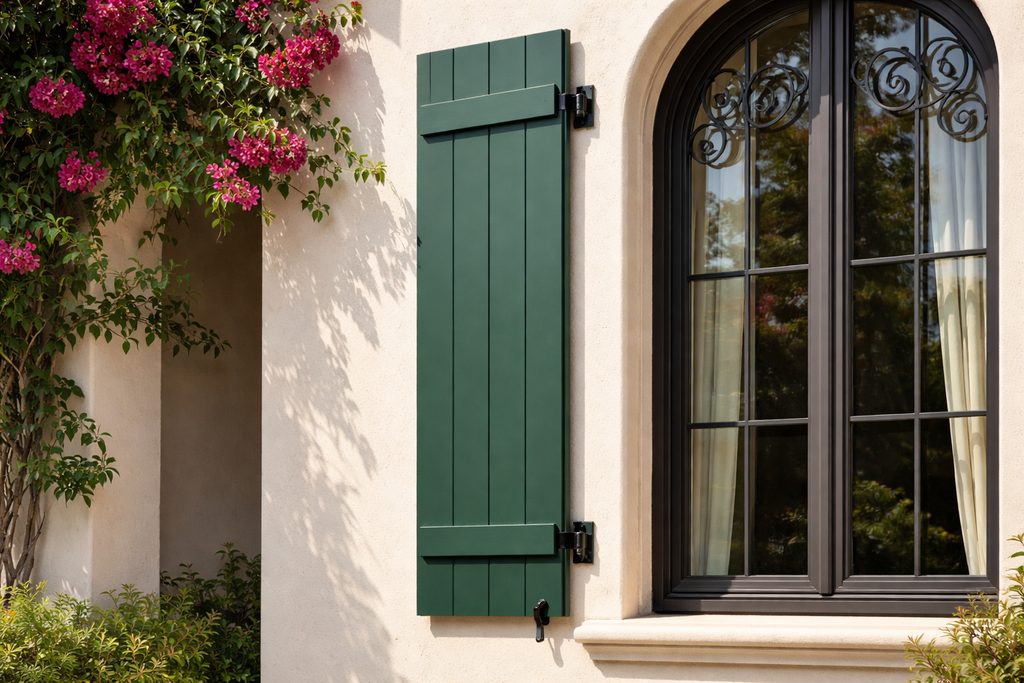
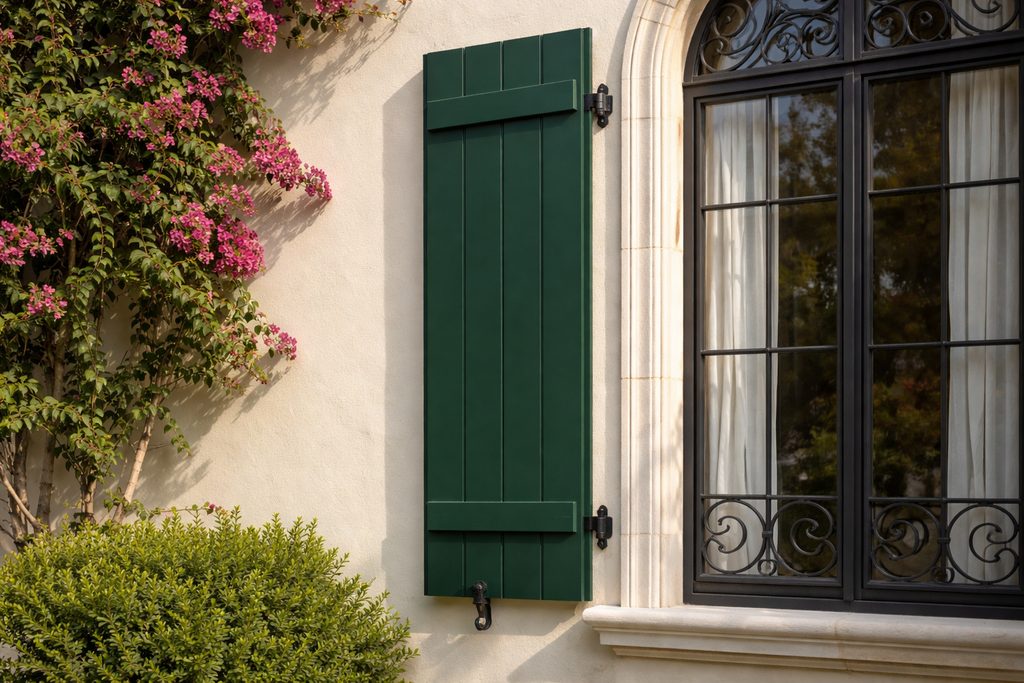
At Elegant Designs, we take pride in presenting a meticulously crafted array of board and batten shutters designed to elevate the aesthetic appeal of your home. Our collection boasts a captivating selection of wooden shutters, meticulously tailored to fit your windows' precise specifications. Crafted with care and attention to detail, these shutters serve as exquisite enhancements suitable for various architectural styles, including Mediterranean, Country French, and Santa Fe-inspired homes, among others.
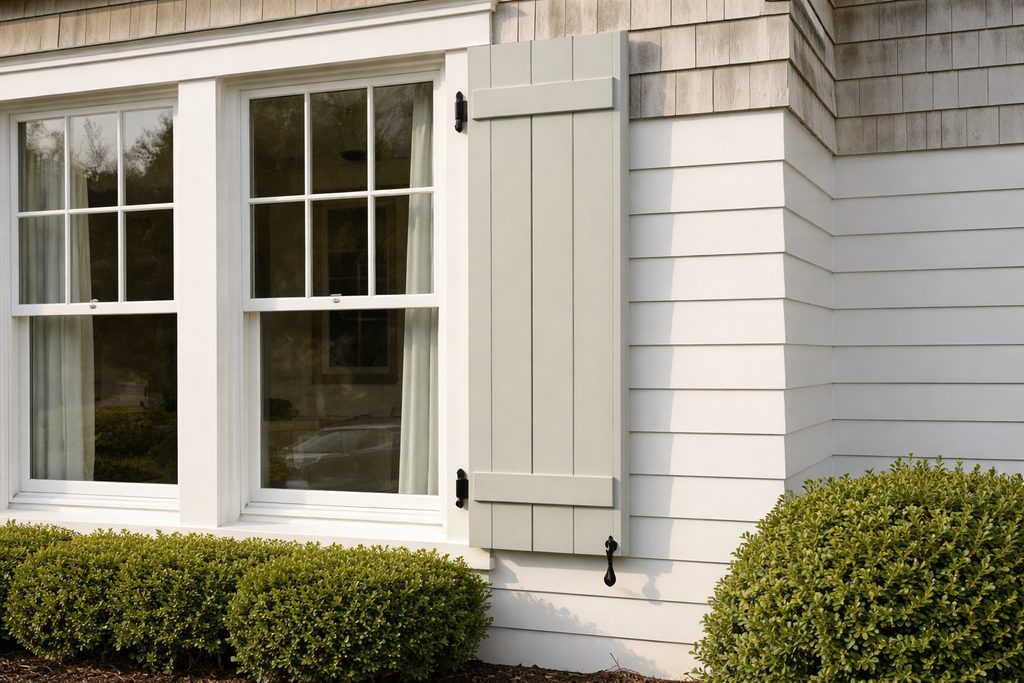
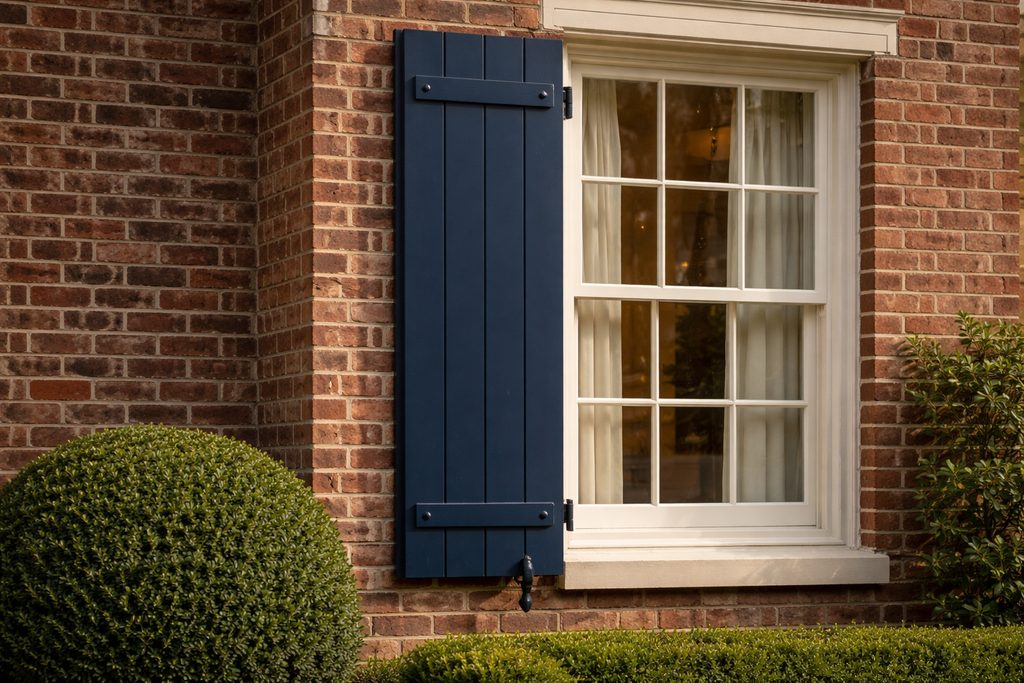
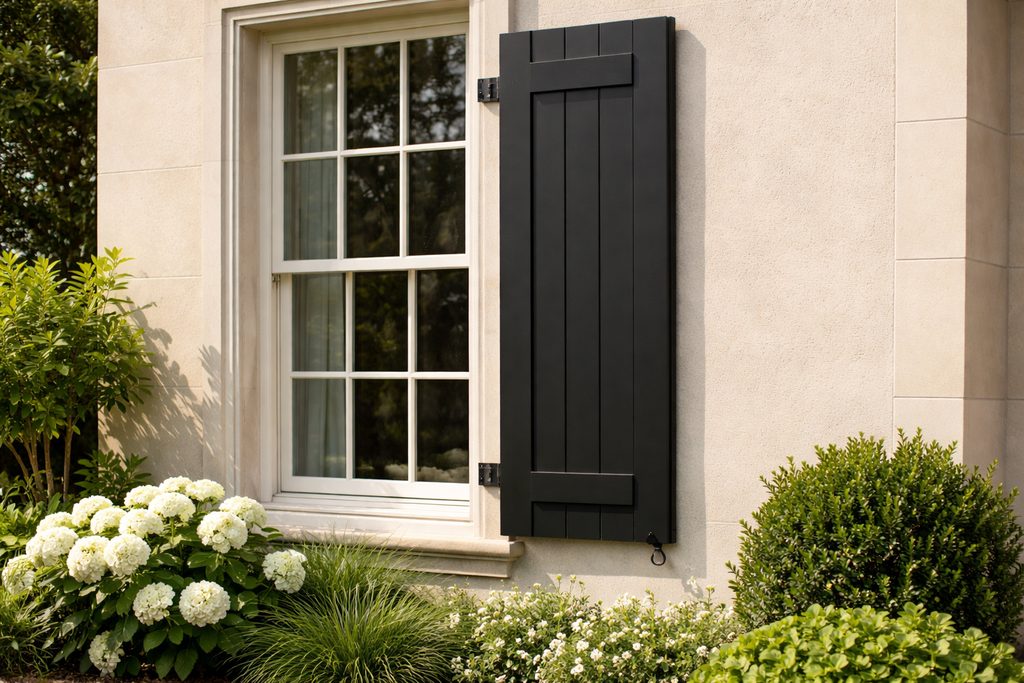
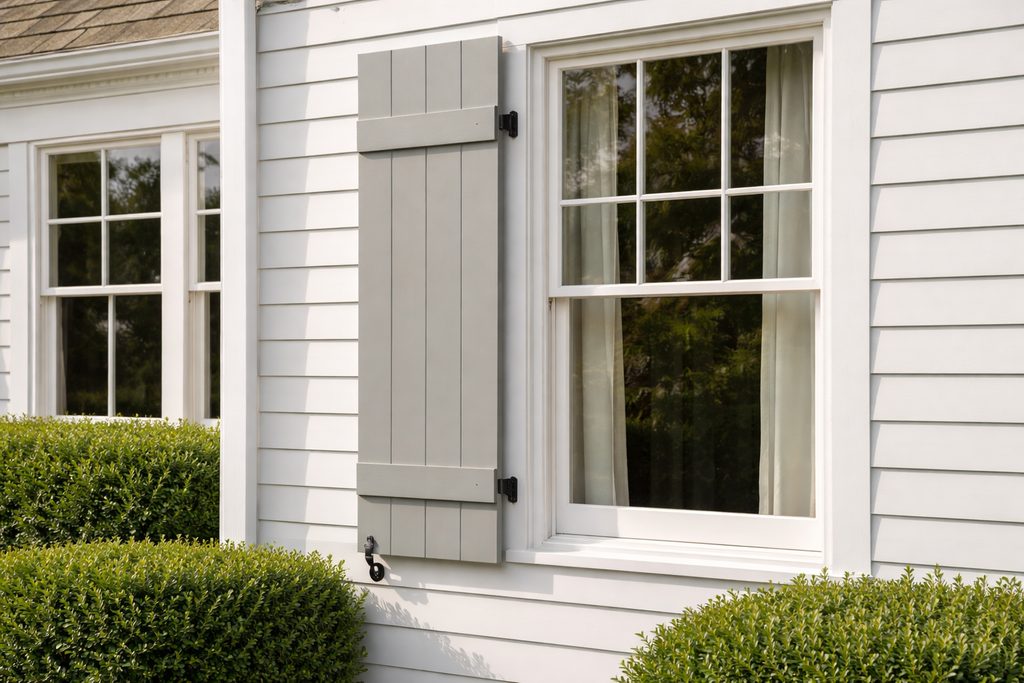
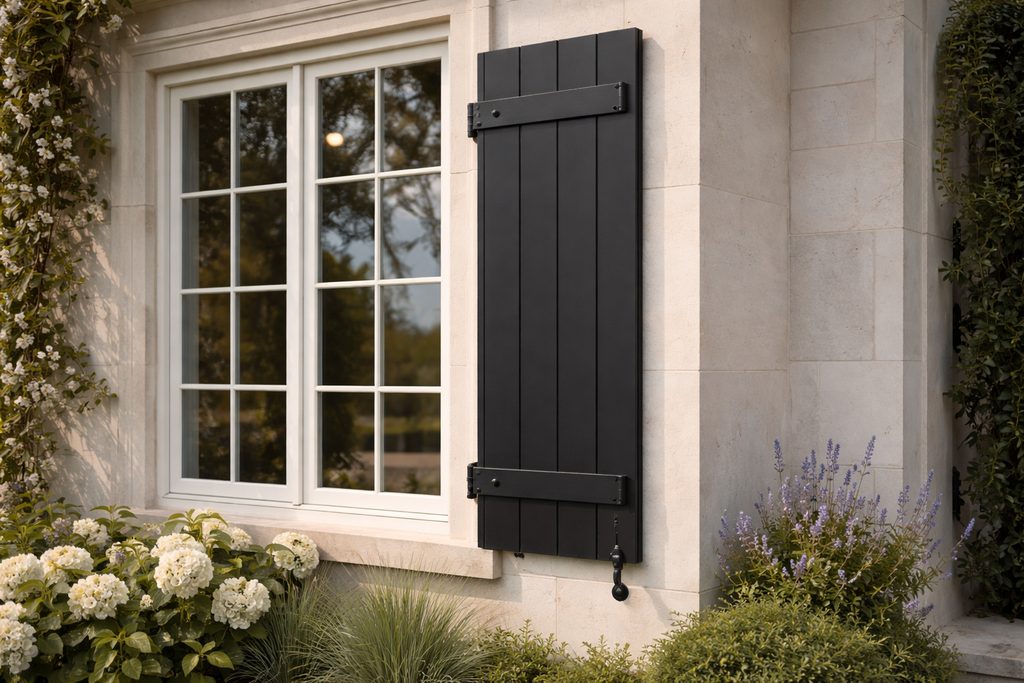
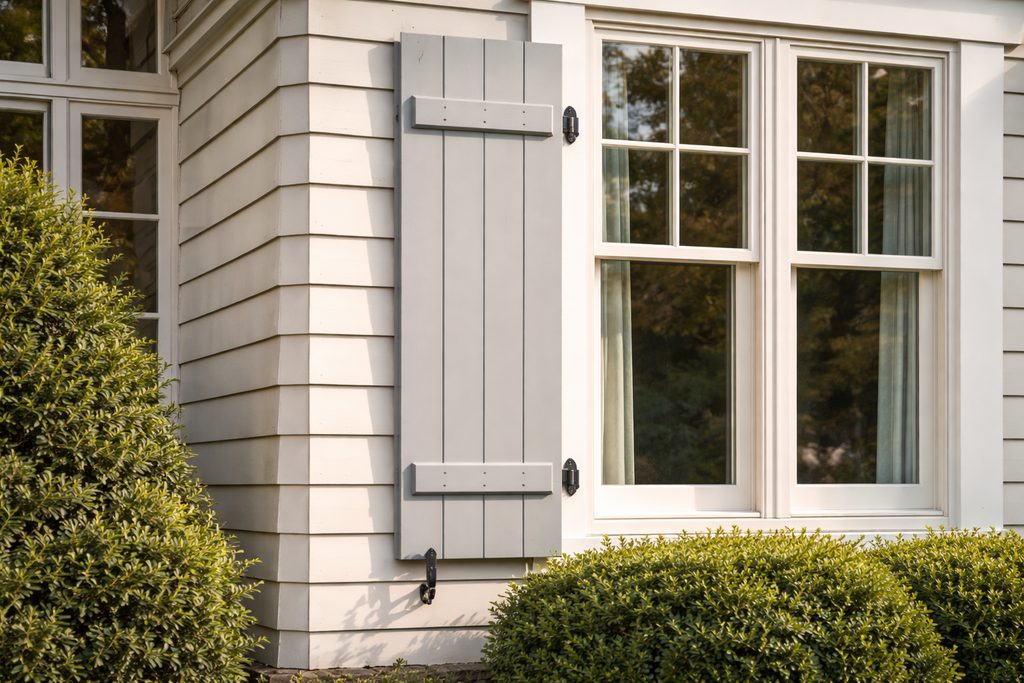
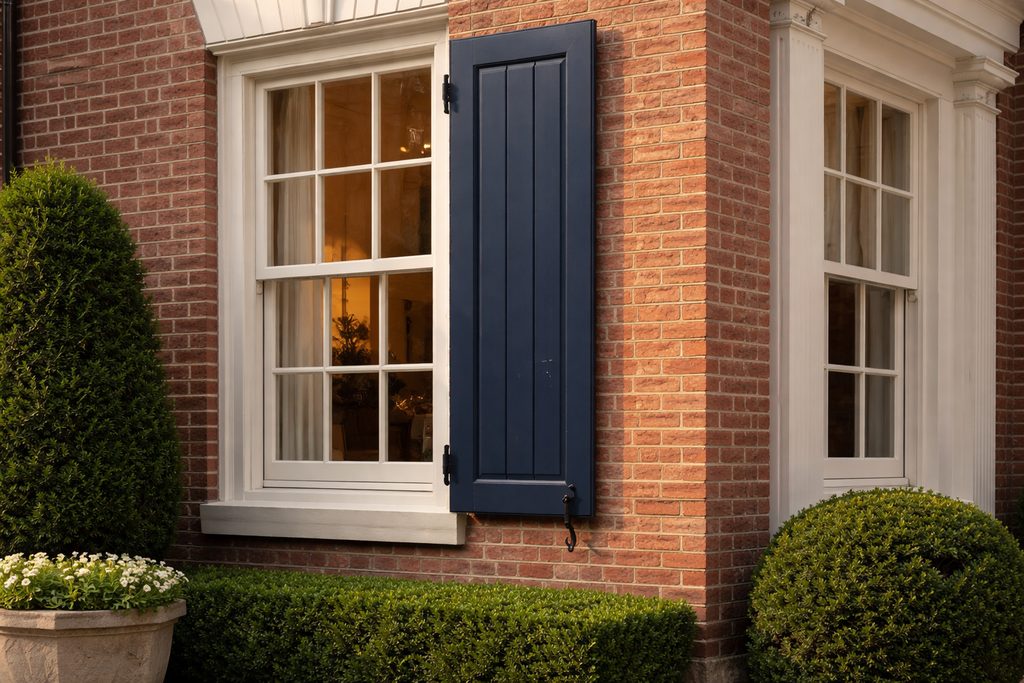
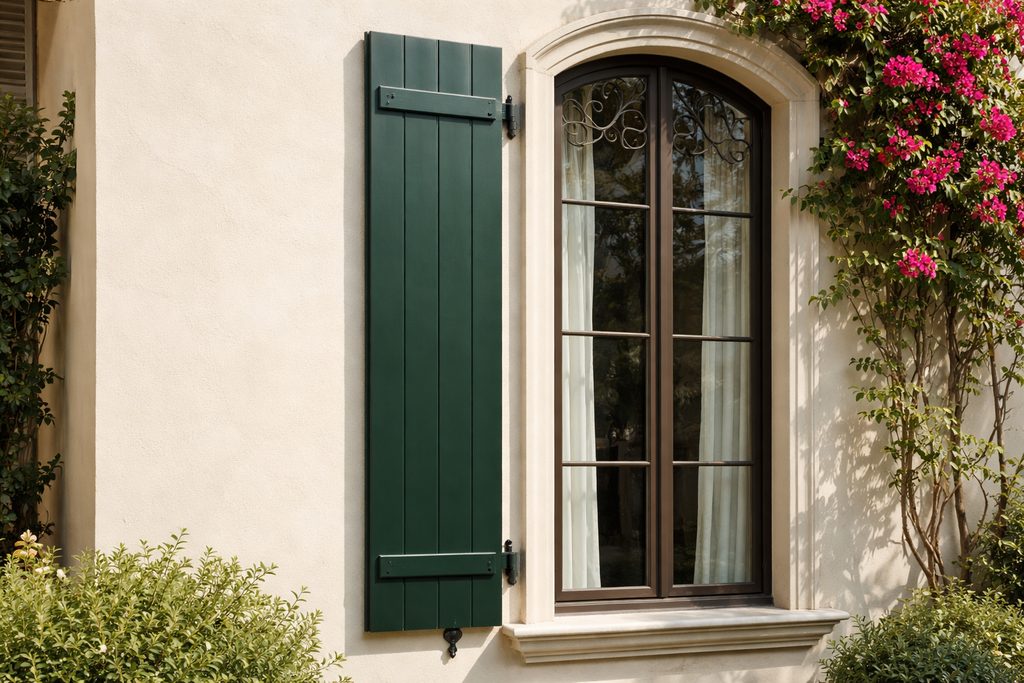
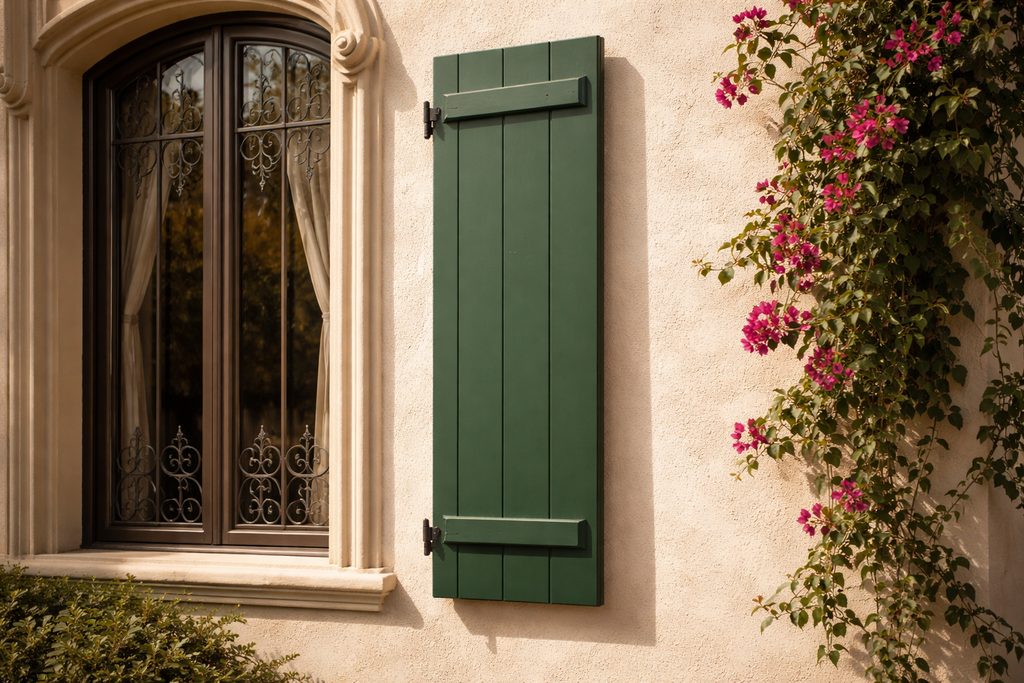
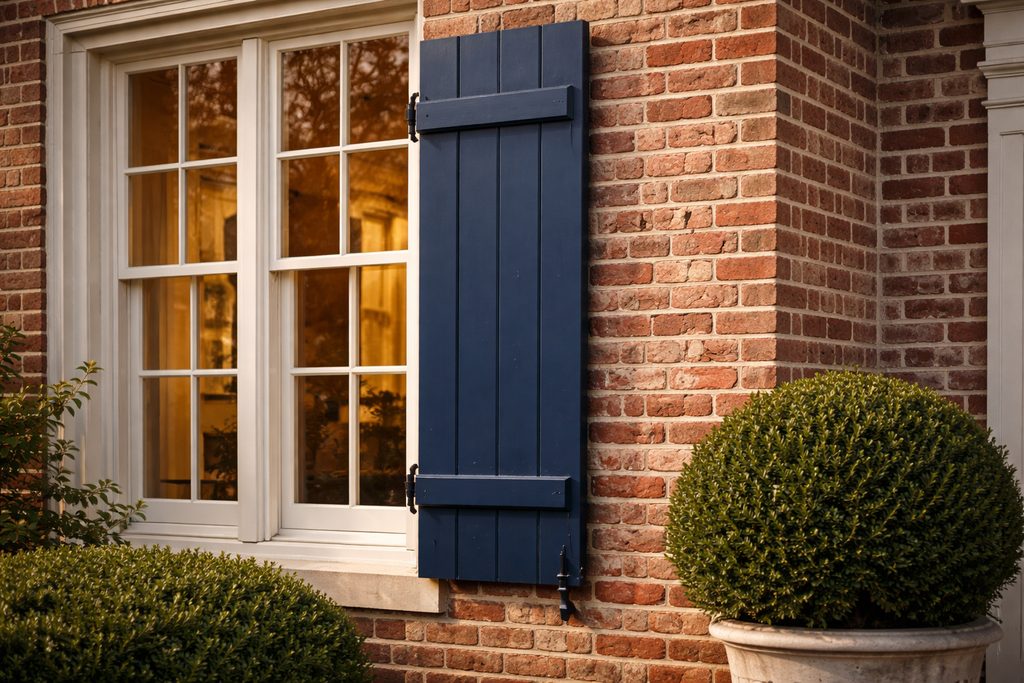
Each shutter in our collection exudes sophistication and charm, thanks to the careful integration of high-quality materials and expert craftsmanship. Our sturdy battens, intricately machined with decorative coves, are seamlessly fastened to the stylish V-grooved boards. The result? A harmonious blend of elegance and functionality, creating symmetrical accents that beautifully frame your windows.
Discover the perfect complement to your home's exterior with our board and batten shutters, where every detail is thoughtfully crafted to enhance your living space's allure.
Unveiling Exceptional Craftsmanship and Quality Materials
Step into a world of unparalleled craftsmanship and superior materials with our meticulously curated collection of board and batten shutters. Each shutter is a testament to our commitment to excellence, offering not just a window covering, but a piece of art tailored precisely to your specifications.
Crafted from the finest quality wood, our shutters exude a timeless elegance that seamlessly complements a variety of architectural styles. Whether your home boasts a Mediterranean villa, a charming Country French cottage, or a rustic Santa Fe abode, our shutters add a touch of sophistication that enhances its allure.
At the heart of our shutters lies a dedication to detail. Our sturdy battens, carefully machined with intricate decorative coves, are more than just functional elements – they are symbols of our unwavering commitment to craftsmanship. These battens are then expertly fastened to the stylish V-grooved boards, resulting in a harmonious symphony of lines and textures that beautifully frame your windows.
Experience the epitome of elegance and durability with our board and batten shutters, where every component is thoughtfully selected and meticulously crafted to elevate your home's aesthetic appeal to new heights.
Why Choose Cypress for Your Custom Shutters?
Bald Cypress is a legendary American wood with deep roots in Gulf Coast and Southern architectural traditions. Naturally resistant to decay, rot, and insect damage, Cypress has been used for centuries in the most demanding environments — from dock pilings to plantation shutters that have survived hundreds of years of Southern heat and humidity. Its tight, straight grain and natural preservative oils, called cypressene, give it durability that rivals tropical hardwoods at a domestic price point. Cypress shutters carry an authenticity that resonates with historical architecture throughout the Southeast, and their proven track record of longevity makes them a confident choice for any exterior application.
Solid Wood Mortise and Tenons
True Tenons
Our premium quality shutters are carefully constructed using a time consuming and precise operation. Whereas other lower quality shutters are made using screws, nails, dowels or biscuit joints, each of our exterior wooden shutters has a minimum of 4 hardwood tenons. The end of each rail is painstakingly machined to have a 1/2" X 1 7/8" tenon by a custom built tenoning machine that Estate Millwork developed so that we could continue to provide the best quality joinery in the industry, at an attractive price. We gave up the cost, but not the quality.
Deep Pocket Mortises
Each stile is precision machined with a minimum of two deep pocket mortises, and these mortises perfectly fit the associated tenon. Again, Estate Millwork has used precision automation to preserve the quality of our products, while reducing the cost. We have software that connects our website directly to the machines in the plant, and when a customer places an order with us, all of the precision programs for machining the mortises into the stiles are sent to the plant for automatic execution. The mortise tenon joint, is the strongest joint in millwork, and adds tremendous strength, even without the use of glue.
Hardwood Dowels
Once the tenon and mortise have been machined, the parts are put together and a hole is drilled through the mortise and the tenon. A slightly oversized hardwood dowel is driven into the hole, locking the tenon into the mortise for the life of the shutter. Even though glue is not required, Estate Millwork takes the added step of gluing the tenon into the mortise, and gluing the hardwood dowel into the stile.
Hand Assembly
In our commitment to preserving the best of quality millwork traditions in each wood shutter, we have automated much of the drudgery of some of the operations, but assembling a shutter is still something very much in the realm of craftsmanship. After all the parts of each wooden shutter are manufactured, one of our skilled craftsmen fits them together in a specialized jig for dry fitting and final assembly. We do not use pneumatic or hydraulic clamps as they can damage or over-stress the wood. The craftsman uses his innate feel for the materials to set the appropriate clamping pressure prior to drilling and doweling. Each wooden shutter receives the individual attention of craftsmen all along the way, but the final assembly is where the shutter comes together the first time, ready for years of service on your home.
Shutter Options
Thickness, Width, Height
The "slab dimensions" are the size of the actual exterior shutter from top to bottom, left to right, and the thickness. Our default standard thickness is 1 5/16", but that can be varied from 7/8" to 2 1/4" to match existing exterior shutters. The length and height can be specified to the nearest 1/16" inch. Depending upon the style of the shutter, we have made widths up to 20 feet wide, and heights up 30 feet.
Shutter Frame Dimensions
Because all of our exterior wooden shutters are custom built from true rail and stile construction, we have the ability to replicate any component dimension on existing shutters, including rail height, placement, width, thickness, and stile width and thickness. Typically, the bottom rail of our custom shutters is 4. high, and all other rails are 2 1/2" inches. Stile widths are usually 2 1/2" but we have the ability to make them of virtually any width, including different widths for left and right stiles -- sometimes used for pairs of shutters.
Custom Sticking
Out standard products are S4S, or square shoulder sticking, but we have the capability to mould any feasible profile to the inner or outer frame fields. Common choices are ogee, cove and bead, bevel, cove etc. In addition to our stock sticking profiles, we can also custom grind tooling to achieve any desired profile to either match historical wood shutters, or to meet an architects or home owner.s specifications and preferences.
Shiplapping and Beading
For operable shutters, or for decoration, our wood shutters can be machined with a bead on one face of the inside edge of the shutter, and with a ship lap on the other, allowing the shutters to overlap by 3/8" when they are in the closed position - permitting a tighter fit. The left and right shutters are machined as pairs so that in the closed position, each face of the pair has a decorative bead visible.
Panel Profiles
Our raised panel shutters can be raised with our standard scoop profile, but we offer bevels, coves, ogeees and other profiles as well. Additionally, for the extremely discriminating home owner or architect we can create new tooling to match existing historical panel profiles, or to meet with a unique custom requirement.
Louver Styles
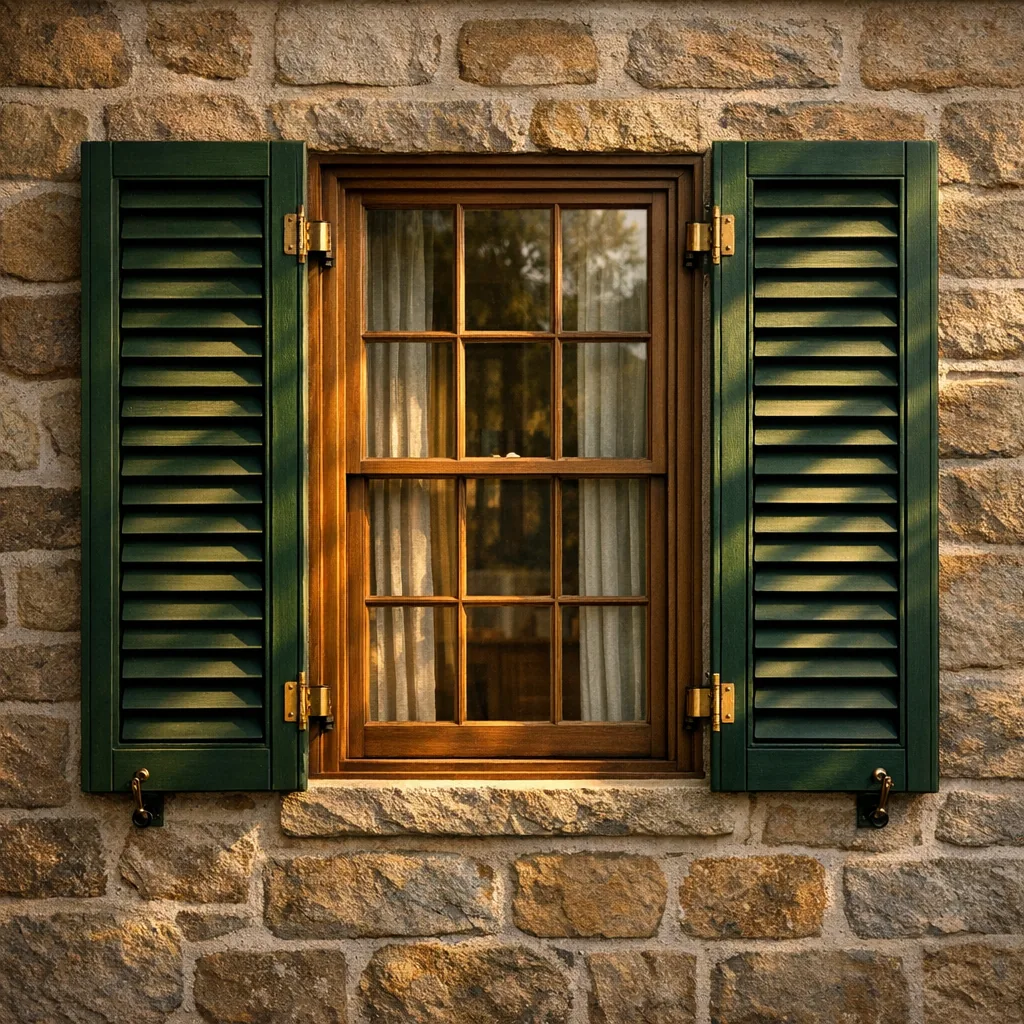
Our louvered shutters can be fitted with either our standard bullnose louvers in 3 sizes, or with a chevron or bevel profile as options. And because we are a custom shutter maker, we can also accommodate any special profiles that are specified by the customer.
Cut Outs
Raised Panel and Flat Panel Shutters can have a limitless variety of decorative cut outs machined into the center of the panels. Common shapes are moons, anchors, trees, hearts and we have a large number of stock cut outs which we offer, as well as the ability to match custom patterns that are provided by the customer
Finishes
Estate Millwork can ship our custom wooden shutters in natural, primed, painted or stained finishes. We can match national brand color numbers, pre-tint primers for light or dark finishes, and apply hand rubbed stain finished, even to the time consuming louvered shutters.
Handcrafted with Sustainably Harvested Lumber
Building from raw stock? Shop Cypress lumber by the board foot →
At Estate Millwork, we employ a meticulous process to ensure the quality and sustainability of our lumber. Our commitment begins with the careful air drying of much of our lumber, followed by further refinement in low wattage dehumidification kilns to achieve optimal moisture levels.
Every single piece of wood we acquire undergoes thorough utilization in our production processes. Leveraging advanced automated saws and optimization software, we achieve an exceptional yield ratio of 94 percent. This means that nearly all of the wood we purchase is transformed into usable products. The small remainder, comprising mainly sawdust and chips, is utilized efficiently: either utilized as fuel to power our operations, or repurposed by providing bedding and contributing to composting for local cattle farmers.
Our dedication to minimizing waste extends to the sourcing of our materials. A significant portion of the lumber we use hails from Amish farmers within our county. These farmers adhere to traditional practices, utilizing horses for harvesting and operating vintage 1920s sawmills. Such methods not only contribute to the preservation of heritage techniques but also entail lower environmental impact compared to modern industrial approaches.
Furthermore, our commitment to sustainability is evident in the sourcing of our imported lumber. We exclusively procure lumber from plantation-grown sources, thereby ensuring that our operations do not contribute to deforestation or the depletion of natural forests. By prioritizing responsible sourcing and efficient utilization, Estate Millwork strives to uphold environmental stewardship while delivering exceptional craftsmanship.
How to Choose the Right Custom Wood Shutters for Your Home
Selecting custom wood shutters is one of the most impactful decisions you can make for your home's curb appeal. Whether you are replacing worn-out shutters or adding shutters for the first time, understanding the available options helps you make a choice you will be happy with for decades.
Choosing the Right Shutter Style
The four main shutter styles are louvered, raised panel, flat panel, and board and batten. Louvered shutters feature angled slats and are the most popular style in the United States, offering a classic look that suits Colonial, Federal, and Cape Cod architecture. Raised panel shutters have a solid center panel with a beveled edge, lending a formal appearance ideal for Georgian and Traditional homes. Flat panel shutters provide a clean, simple look that complements Craftsman, Farmhouse, and Contemporary homes. Board and batten shutters use vertical boards held together by horizontal battens, delivering a rustic character well suited to Country, Cottage, and Rustic styles.
Understanding Wood Species for Exterior Shutters
The wood species you choose affects the durability, appearance, and cost of your shutters. Spanish Cedar is the premier choice for exterior shutters because of its natural resistance to rot and insects, its dimensional stability, and its beautiful straight grain. Mahogany is another excellent exterior wood that machines well and accepts finishes beautifully. Western Red Cedar offers natural weather resistance at a moderate price. For paint-grade shutters, Poplar provides an economical option with a smooth surface that takes paint exceptionally well. Teak and White Oak are premium choices for coastal homes where salt air demands extreme durability.
How to Measure for Custom Shutters
Accurate measurements are essential for custom shutters that look right on your home. For decorative shutters, each shutter panel should be half the width of the window opening. Measure the window height from the top of the upper trim to the bottom of the lower trim. For functional shutters that actually close, measure the inside width of the window opening and divide by two, then subtract one-quarter inch for clearance. Always measure each window individually, as openings in older homes often vary by a quarter inch or more. When in doubt, our product specialists can review photos and measurements to confirm your specifications before production begins.
Interior vs. Exterior Shutters: Key Differences
While both serve decorative purposes, exterior and interior shutters differ in construction. Exterior shutters must withstand rain, sun, wind, and temperature swings, so they require weather-resistant wood species, waterproof adhesives, and finishes rated for UV exposure. Interior shutters can use a wider range of wood species including Cherry, Maple, and Red Oak, and are typically finished with interior-grade stains or paints. Our exterior shutters use marine-grade waterproof glue and deep-pocket mortise and tenon joinery to ensure decades of service.
Shutter Maintenance and Finishing
Proper finishing is the single most important factor in the longevity of exterior wood shutters. We recommend a high-quality exterior primer followed by two coats of acrylic latex paint, or a penetrating exterior stain with UV inhibitors. Inspect your shutters annually for any finish failure, especially on south-facing and west-facing walls where UV exposure is greatest. Touch up any bare wood promptly to prevent moisture penetration. With proper finishing and maintenance, our custom wood shutters will serve your home beautifully for twenty years or more. Our factory priming option provides an excellent base coat applied under controlled conditions for optimal adhesion.
Why Choose Custom Over Stock Shutters
Stock shutters from big-box retailers are typically made from vinyl, composite, or finger-jointed pine with stapled joints. They come in limited sizes, and if your windows are not standard dimensions, the shutters look obviously wrong. Custom wood shutters are built to your exact measurements, from solid hardwood, with traditional mortise and tenon joinery. The difference in appearance and longevity is dramatic. A custom Cypress shutter built with our deep-pocket mortise and tenon construction will outlast any stock alternative by a wide margin, and it will look right because it was made specifically for your home.
Why Choose Cypress?
Bald Cypress is a legendary American wood with deep roots in Gulf Coast and Southern architectural traditions. Naturally resistant to decay, rot, and insect damage, Cypress has been used for centuries in the most demanding environments — from dock pilings to plantation shutters that have survived hundreds of years of Southern heat and humidity. Its tight, straight grain and natural preservative oils, called cypressene, give it durability that rivals tropical hardwoods at a domestic price point. Cypress shutters carry an authenticity that resonates with historical architecture throughout the Southeast, and their proven track record of longevity makes them a confident choice for any exterior application.
Explore Related Products
Browse Board And Batten Shutters by Wood Species
Cherry Cypress
Knotty AlderMahoganyMaplePoplarRed OakSapeleSpanish CedarTeakWalnutWhite OakW. Red CedarAZEK Frequently Asked Questions
How do I choose the right custom wood shutters for my home?
Consider four main styles: louvered (classic, most popular), raised panel (formal, traditional), flat panel (clean, contemporary), and board and batten (rustic, farmhouse). Match the shutter style to your home's architecture for the most authentic look.
What wood species is best for exterior shutters?
Spanish Cedar is the premier choice for exterior shutters due to natural rot and insect resistance. Mahogany and Western Red Cedar are also excellent. For paint-grade shutters, Poplar offers a smooth surface at a lower price. Teak and White Oak are premium choices for coastal homes.
How do I measure for custom shutters?
For decorative shutters, each panel should be half the window width. Measure window height from top to bottom trim. For functional shutters, measure the inside opening width, divide by two, and subtract one-quarter inch for clearance. Always measure each window individually.
What is the difference between interior and exterior shutters?
Exterior shutters require weather-resistant wood species, waterproof adhesives, and UV-rated finishes to withstand rain, sun, and temperature changes. Interior shutters can use a wider range of woods like Cherry, Maple, and Red Oak with interior-grade finishes.
How do I maintain exterior wood shutters?
Apply a high-quality exterior primer and two coats of acrylic latex paint, or a penetrating stain with UV inhibitors. Inspect annually, especially south-facing and west-facing walls. Touch up bare wood promptly. With proper care, custom wood shutters last twenty years or more.
Why choose custom wood shutters over stock shutters?
Stock shutters are typically vinyl or finger-jointed pine with stapled joints in limited sizes. Custom wood shutters are built to your exact measurements from solid hardwood with traditional mortise and tenon joinery, resulting in dramatically better appearance and longevity.
| | |
|---|
| Joinery | | Dowel Plug | Hidden | Unobtrusive Quality |
| Board Size | | 7/8" X 4 " | V-Grooved | Traditonal Elegance |
| Batten Size | | 7/8 " X 4 | Cove Detail | Strength |
| Applications | | | | Built to your requirements |
| Finish | | Machine Sand 120, Hand Sanded 150 | Drum,Edge & Palm sanded | Top quality hand finish |
| Packing | | Foam Wrapped in Custom Built Carton | 1/8" Foam, 3/16 Trim Sheet 100lb | Protection against damage in transit. |
| Quantity | Description | Dimensions | Material |
|---|
| 4 | VGrooveBoard | 7/8" X 4 " X 48 " | Cypress |
| 2 | Batten | 7/8" X 4 " X 14 " | Cypress |
Trade & Professional Resources
Get trade pricing, project specifications, and new product announcements
Subscribe
Shutters
Louvered Shutters
Raised Panel Shutters
Bahama Shutters
Board & Batten Shutters
Bermuda Shutters
Exterior Shutters
Wooden Shutters
Hurricane Shutters
Custom Shutters
Black Shutters
Shutter Hardware
Shutter Hinges
Doors
Louvered Doors
French Doors
Interior Doors
Exterior Doors
Entry Doors
Barn Doors
Arched Doors
Pocket Doors
Bathroom Doors
Custom Doors
Wood Doors
Door Jambs
Cabinets & More
Louvered Cabinets
Cabinet Doors
Kitchen Cabinet Doors
Replacement Cabinets
Cabinet Refacing
Custom Cabinets
Pergolas
Wood Moulding
Lumber
Gallery
Shutter Catalogs
Cherry Shutters
Cypress Shutters
Mahogany Shutters
Maple Shutters
Red Oak Shutters
Sapele Shutters
Walnut Shutters
White Oak Shutters
Teak Shutters
W. Red Cedar Shutters
Spanish Cedar Shutters
Poplar Shutters
Door Catalogs
Cherry Doors
Cypress Doors
Mahogany Doors
Maple Doors
Red Oak Doors
Sapele Doors
Walnut Doors
White Oak Doors
Teak Doors
Poplar Doors
Knotty Alder Doors
Cabinet Catalogs
Cherry Cabinets
Cypress Cabinets
Mahogany Cabinets
Maple Cabinets
Red Oak Cabinets
Sapele Cabinets
Walnut Cabinets
White Oak Cabinets
Teak Cabinets
Poplar Cabinets
Cherry Drawer Fronts
Mahogany Drawer Fronts
Service Areas
New York
Miami
Charleston
Nashville
Dallas
Chicago
Los Angeles
San Francisco
Boston
Washington DC
Atlanta
Houston
Phoenix
Seattle
Denver
Philadelphia
Naples
Sarasota
Savannah
Greenwich
All 60+ Locations »
Company
About Us
Contact Us
Request a Quote
Quality
For Builders
For Homeowners
FAQ
Site Map
Privacy Policy
Return Policy